
Dao Bu Ke Dao
People have found time and again that religion and art are like twin sisters. Many of the artworks left to us from human history are inseparably bound up with religion. This is because in remote antiquity religious faith reflected people’s hopes and aspirations toward nature and society, and art was precisely the visual expression of those hopes and aspirations. Later, because of people’s boundless awe of the gods and immortals, “they sang the praises of their majesty and power and lavished beauty on altars and temples; over time this advanced further, and cultural artifacts multiplied” (Lu Xun, A Brief History of Chinese Fiction, “Myths and Legends”), thus giving rise to a religious art with a distinctive style.
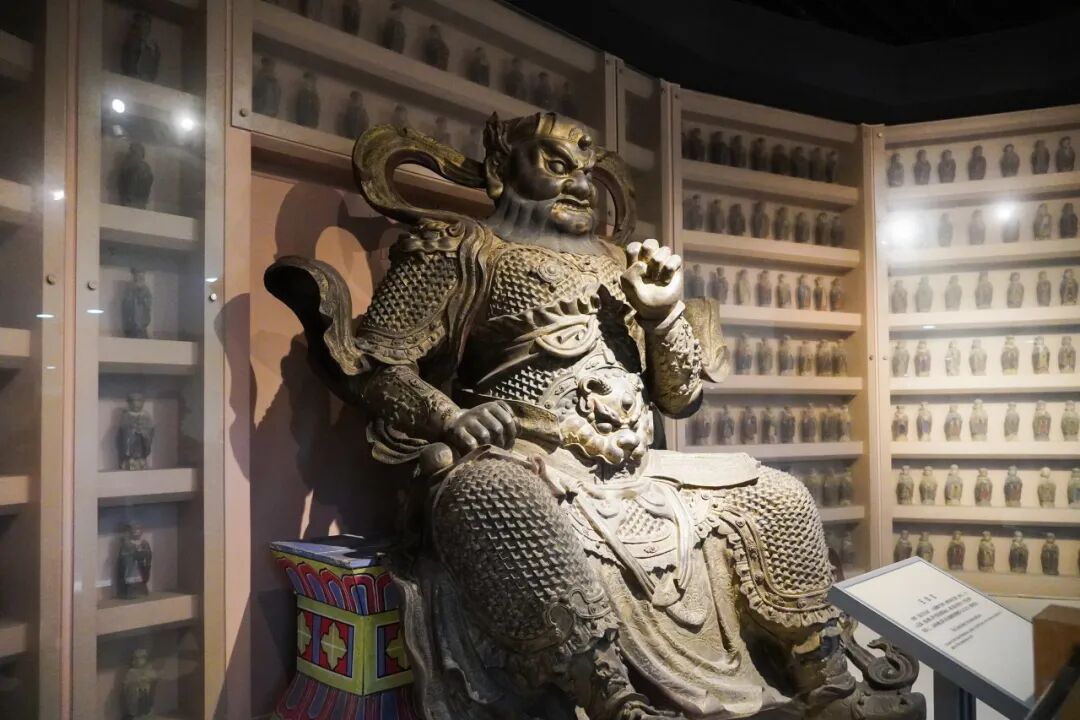
In ancient China it was precisely people’s worship, reverence, and awe toward the gods and immortals that gave rise to Taoism and to Taoist culture and art. The great number of Taoist sacred images still preserved in Taoist temples and monasteries across the country are both a vivid embodiment of people’s faith in the immortals and a precious artistic legacy that Taoist culture and art have left to people today.
1. The Origins and Artistic Thought of Taoist Sacred Images
According to historical records, Taoism originally did not enshrine images of deities. The Xiang’er Commentary on the Laozi (generally regarded as a work of the founding stage of Taoism in the Eastern Han) says: “The Tao is supremely venerable, subtle and hidden, and has no shape or image; one can only follow its precepts—it cannot be seen or known.” In the reign of Emperor Ming of the Eastern Han, shrines to Huang-Lao and to Futu (the Buddha) were set up in the palace to make offerings to the Buddha and to Laozi, yet there is no record of images being made. Nevertheless, painting and sculpture depicting the forms and deeds of gods and immortals have a very long history in ancient China.
Examples include the relief of the Queen Mother of the West on the wall of the Eastern Han tomb of Wang Deyuan in Suide, Shaanxi; the Eastern Han reliefs of immortals and marvels unearthed at Wu’an in Jiaxiang, Shandong; and the Western Han brick carving of the King Father of the East riding a dragon unearthed in Zhengzhou, Henan. It is only that these gods and immortals had not yet become images enshrined in temple halls—or, one might say, they were images without temples.
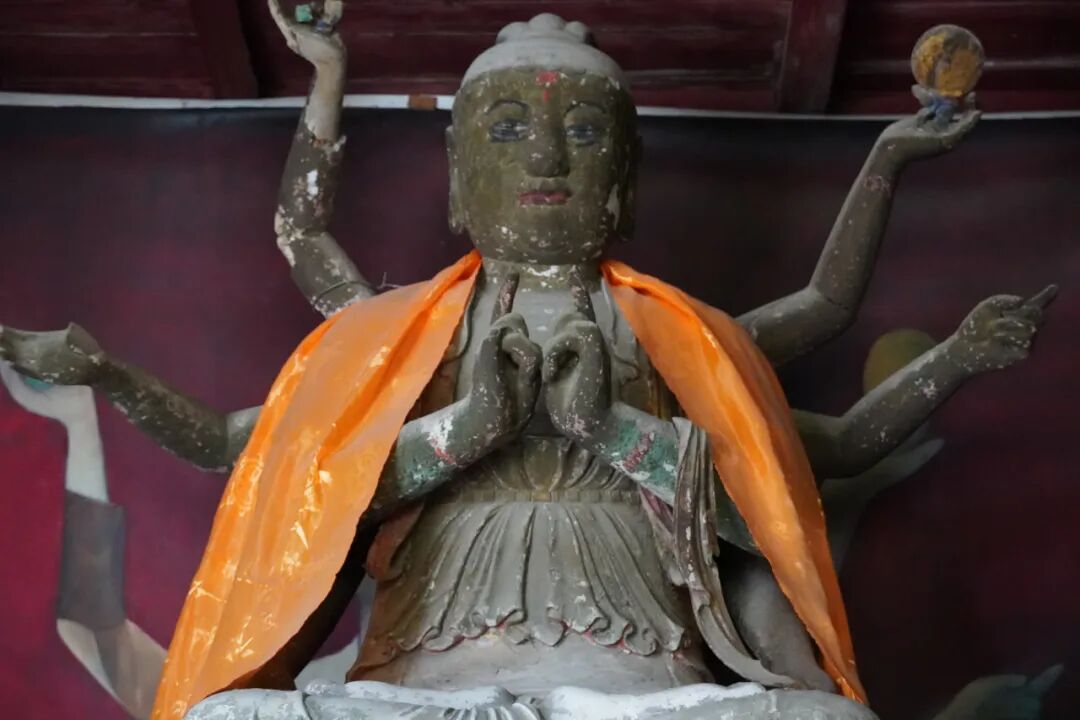
The Tang monk Falin, in his own note to chapter 6 of his Treatise on Distinguishing the Correct (Bianzheng Lun), says: “Examining the period before the Liang, Chen, Qi, and Wei, [Taoists] merely kept their scriptures in gourds and originally had no images of the Heavenly Worthy. According to Renzi’s Discourse on the Tao and Master Du’s Seeking the Hidden: ‘The Tao has no form or substance; it is the essence of yin and yang.’ The Inner Biography of Tao the Recluse says: ‘On Mount Mao he set up a Buddhist hall and a Taoist hall and paid homage in them on alternate days. The Buddhist hall had images; the Taoist hall had none.’” The “Treatise on Classics and Books” in the Book of Sui records that under Emperor Taiwu of the Northern Wei, Kou Qianzhi “raised an altar and hall southeast of the capital Dai … and carved images of the Heavenly Worthy and the immortals, making offerings to them.” Mr. Chen Guofu, in Appendix 2, “An Inquiry into the Origins of Taoist Images,” of his Studies on the Origins and Development of the Taoist Canon, writes: “… Wang Chun’s Treatise on the Three Teachings says: ‘Taoist priests of recent times, seeking a living by any means and wishing people to come over to their faith, learned from the Buddhists to make images. They falsely called them the Heavenly Worthy and his two attendant Perfected on the left and right, and set them in their Taoist halls to secure food and clothing. Lu Xiujing of the Song also made such images.’” Thus Taoism already had images in the Liu Song period. That the Taoist hall set up by Tao Hongjing of the Liang had no images shows that image-making in Taoist halls was not yet very widespread in the Liang.
From these records we can see that early Taoism did not enshrine images of deities, and that image-making began only after the Liu Song. As Buddhist image-making art flourished and spread in China, Taoism too began to borrow its forms and started its own practice of making images. The Wei, Jin, and Northern and Southern Dynasties were a period of great development for Taoism in doctrine, scriptures, ritual norms, and belief in the immortals.
In the Eastern Jin, Ge Hong wrote the Biographies of Divine Immortals (Shenxian Zhuan) and the Baopuzi; in the Northern Wei, Kou Qianzhi “purified and reorganized Taoism,” establishing methods of music and of reciting precepts; in the Southern Dynasties, Lu Xiujing compiled the Catalogue of the Scriptures of the Three Caverns and works on fasts, precepts, and ritual norms; and in the Qi and Liang, Tao Hongjing wrote the Chart of the Ranks and Functions of the Perfected and Numinous Beings (Zhenling Weiye Tu), the Essential Collection of Images, the Declarations of the Perfected (Zhen’gao), and other works. Their activities provided the intellectual and theoretical conditions for Taoist image-making.
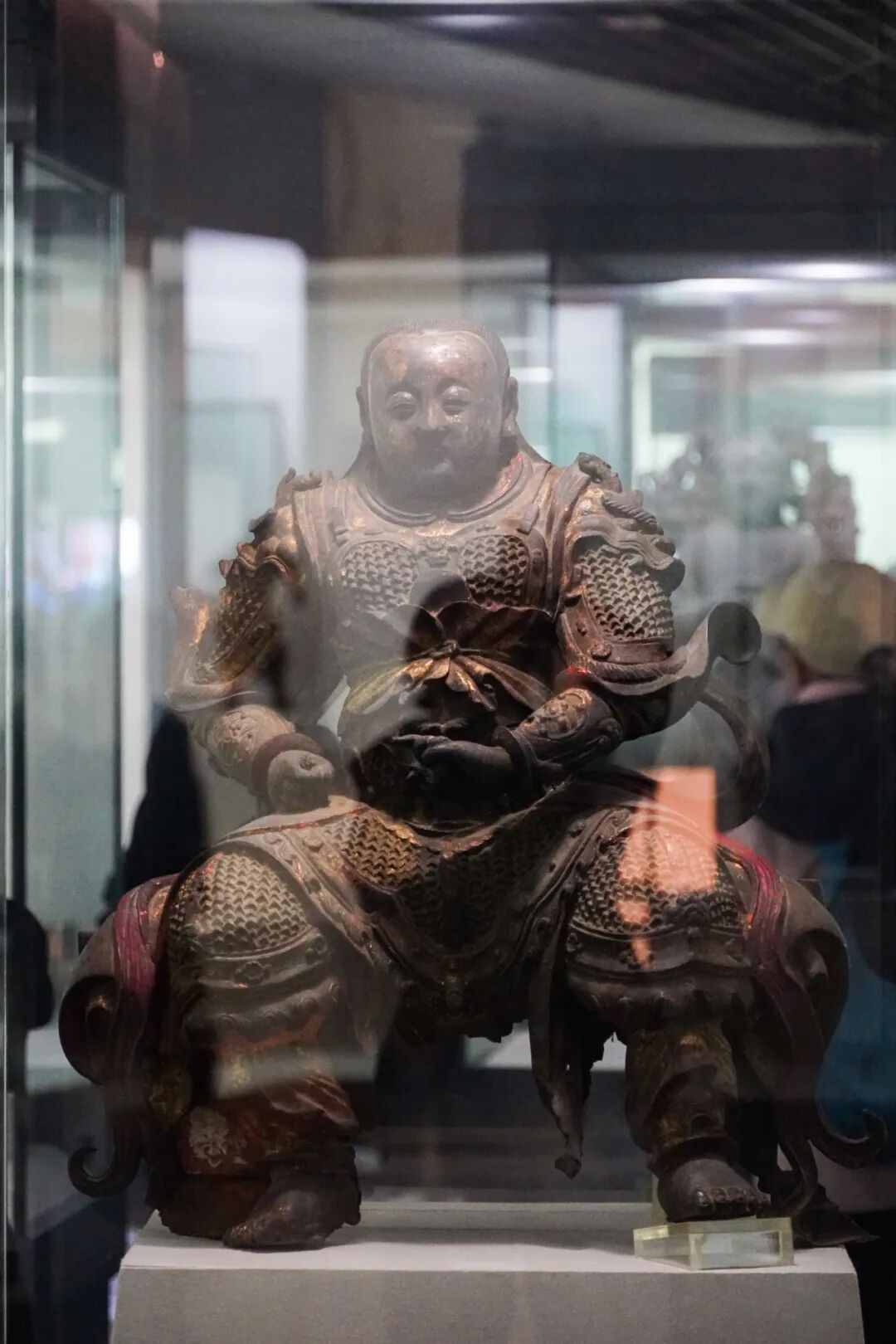
Thereafter, Taoism held that deities were enshrined in temples because “those who preserve the Perfected fix their thoughts on the holy countenance; therefore they depict the forms with vermilion and blue, gold and green” (Rules and Precepts for Venerating the Tao in the Three Caverns of the Dongxuan Lingbao). Worshipping the immortals not only allows one to “make offerings with utmost sincerity, obtain blessings according to one’s heart, and receive karmic reward” (Scripture of the Most High Dongxuan Lingbao on Kings Practicing the Tao), but also to cultivate oneself and nurture one’s nature, becoming an immortal and attaining the Tao. For this reason, Taoist believers applied the achievements of China’s traditional fine arts and plastic arts to the making of sacred images, creating countless exquisite and vivid works.
Every art form bears the characteristics of its nation, its era, and its society. China’s art of sacred images is closely linked to traditional philosophical thought. It is highly exaggerated, abstract, and expressive; it emphasizes the beauty of freedom in the realm of the spirit, values spiritual loftiness far above the dust of the world, and pursues the harmony of moral beauty and goodness. It does not seek to verify art against concrete objective things, but stresses “making intent primary” and “portraying form through spirit”: spirit dwells within form, while form is outward and merely formal—only the expression of a figure’s inner spiritual bearing is the true essence.
Besides inheriting the traditional Chinese style of image-making, Taoist image-making art fully embodies Taoism’s own aesthetic thought. Taoist aesthetics has a transcendent, world-renouncing side: it advocates “perfecting oneself in solitude,” seeking a distinctive individuality and liberation, and pursuing clarity and stillness and non-action (wuwei). Yet it also advocates following naturalness, valuing life and abhorring death, and does not wholly abandon the present world, so it also contains world-engaged features. Taoism holds that “heaven and earth have great beauty but do not speak”; form is merely a revelation, a symbol, and invariably expresses a certain principle and character. Zhuangzi says: “What pervades heaven and earth is virtue; what moves through the myriad things is the Tao.” “Form is not born without the Tao; life is not made bright without virtue.” (Zhuangzi, “Heaven and Earth”)
Therefore Taoist image-making art must illuminate not only the Tao but also virtue; it must reflect not only the divinity of the deity but also the tenets of Taoist faith; it must express not only the deity’s dignity as a god but also its morality, inner beauty, and supernatural powers. Taoist sacred images are thus the concrete, personified embodiment of Taoist morality.
For example, the Jade Emperor is sculpted as dignified, gracious, and kind yet solemn and austere, eyes lowered, wearing a flat-topped imperial crown and court robes, conveying a calm, ethereal, and detached bearing that shows his supreme authority and superhuman wisdom. The Earth God is sculpted as a warm, kindly old man, plump and round-faced, eyes cast down, with a long white beard, so that people feel he is an amiable and selfless elder who gives his wealth to humanity without reserve. The guardian deity Marshal Wang Lingguan has raised brows and glaring eyes, with an extra upright eye on his forehead, exaggerated facial muscles, golden armor, a golden whip in his hand, and wind-and-fire wheels under his feet, showing him as a “divine being” of boundless power who can inspect all good and evil and make ghosts and spirits tremble at the sight of him. In short, whether the kindly Earth God, the benevolent Lord Lao the Most High (Taishang Laojun), the stern-faced Celestial Master Zhang and Wang Lingguan, or even hideous and terrifying malevolent ghosts, all reflect the hopes, pursuits, ideals, likes, and dislikes of Taoist believers. By shaping sacred images, Taoism creates an emotional exchange between the artistic images of the immortals and the believers, strengthening the devotion of faith through empathy.
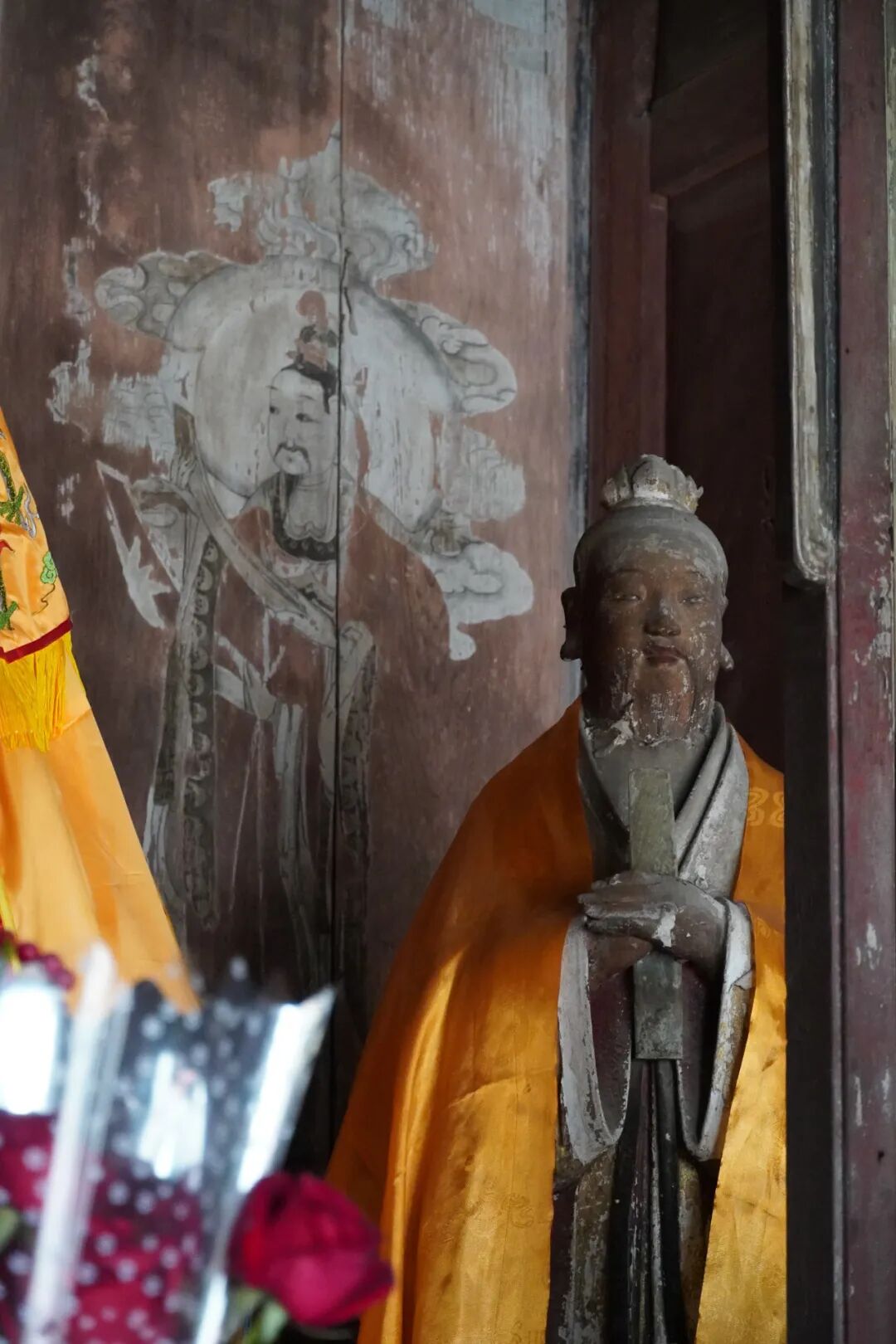
Because Taoism advocates both transcending the world and engaging with it, and does not give up purifying present life while seeking liberation, its immortals include not only the gods of the heavenly realms but also many revered sages, philosophers, famous generals, and great ministers of the human world. In image-making art, this shows as a breath of worldly life permeating the wondrous, mysterious, majestic, and solemn, making the images feel approachable and familiar. For example, images of the Eight Immortals are witty and humorous, warm and approachable; the Lady Who Bestows Birth is kindly and generous; and the City God is sculpted entirely in the likeness of a local official.
Taoist belief in the immortals fully reflects China’s many ethnic groups, its vast territory, its long history of a closed, feudal natural economy, and its very undeveloped transportation. Taoist belief in the immortals originally came from the primitive beliefs of the many ancient peoples; later, the long-closed, self-sufficient small-peasant economy meant that the immortals worshipped in each region differed, forming Taoism’s polytheistic character. In image-making art, this shows as a colorful variety of images of the immortals, each with its own expression, and each region with its own methods and style of image-making.
In short, tradition and diversity, the sacred and the secular, achieve a high degree of unity in Taoist image-making art, thereby forming the distinctive art of Taoist sacred images.