
Dao Bu Ke Dao
In keeping with the tenets of Taoist faith and its aesthetic thought, Taoist image-making also developed a complete set of models and norms, with different requirements and rules for deities of different rank. The Rules and Precepts for Venerating the Tao in the Three Caverns of the Dongxuan Lingbao in the Taoist Canon says: “The rule states: all images are to be made with their ritual appearance as set out in the scriptures … Robes, crowns, and splendid seats must all accord with the rules. The Heavenly Worthy is to wear over his shoulders a nine-colored gauze or five-colored clouds and rosy mists, brocade of mountains and waters, a yellow skirt, and a golden or jade crown,” and “pure purple, vermilion and blue, or jade green must not be used.” “The Perfected, moreover, must not have loose hair, long ears, or a single horn, and must all wear the lotus, flying-cloud, or Primordial crowns.” “The two Perfected on the left and right are all to be making offerings or holding scriptures and tablets, or holding incense and flowers; all must be reverent and solemn, not sprawling hand and foot or with their clothes askew. The Heavenly Worthy sits upright, his fingers pinching the Great Void; his hands hold no ruyi scepter or whisk, but are simply empty.” The vajra guardians are “twelve hundred zhang tall, pressing on swords and holding staves, clad in heavenly robes of flying mist, with jeweled crowns, their feet treading on great mountains, divine beasts, huge rocks, and ghosts, standing in the posture of slaying ghosts,” and so on. If an image is not made according to the rules, or shows even slight irreverence, then “ghosts and spirits will punish the people; since this is no mere presumption or excess, how could disaster be avoided?” Thus Taoism not only treats sacred images as objects of worship, but also integrates the whole process of making them with its faith, so that the work of image-making itself becomes a form of expressing faith in the immortals.
2. The Features of Taoist Images Through the Dynasties and Surviving Masterpieces
China’s plastic arts have a long and glorious history. As early as the Paleolithic, the remains of Upper Cave Man include many carefully carved ornaments, which may be called the beginning of sculpture. By the Neolithic there were finely made pottery figures, and above all the Terracotta Army of the First Emperor of Qin, unearthed in recent decades—vast in scale and vivid in form—can be called a marvel in the world history of sculpture.
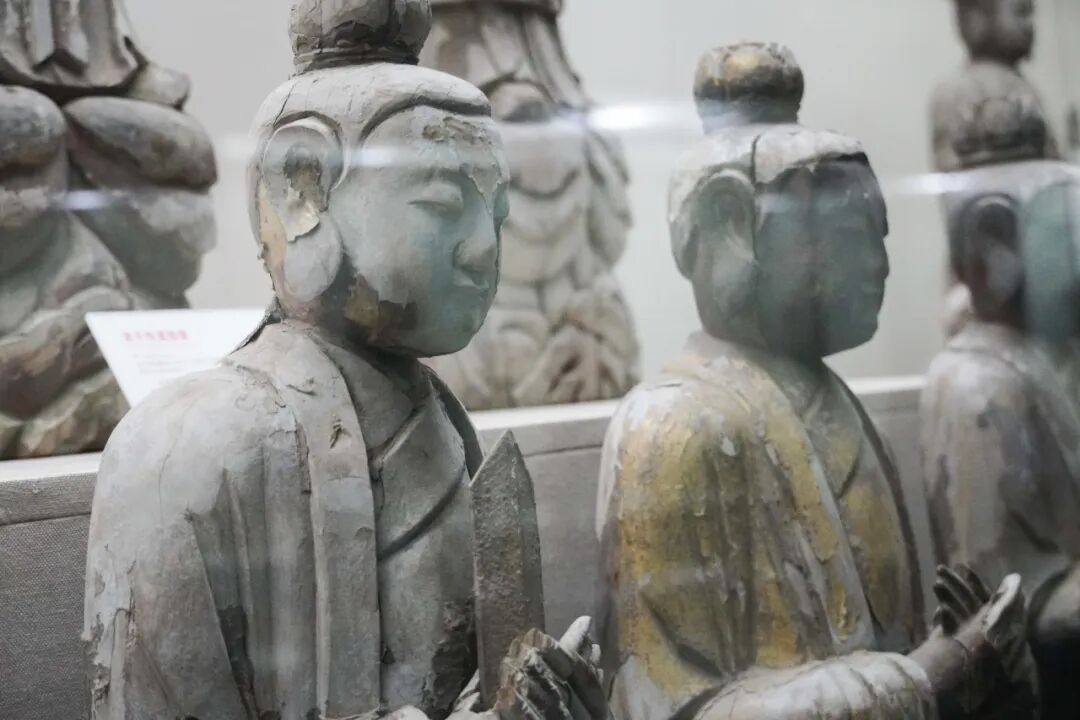
As mentioned above, Taoist image-making began in the Wei, Jin, and Northern and Southern Dynasties. The images of this period were influenced by Buddhism in both technique and style, and some Buddhist and Taoist images were even made together. For example, the Taoist triad of the second year of the Yongping era (509) of the Northern Wei in the Shihong Temple grottoes in Fu County, Shaanxi, has a large central figure flanked by two small Perfected, with palms joined and a boat-shaped mandorla behind—both the “joined palms” and the “boat-shaped mandorla” resembling Buddhist images. Another example is the Buddhist-Taoist stone stele of the first year of the Shiguang era (424) of the Northern Wei, divided into left and right niches, the left holding a Taoist image and the right a Buddhist one. Some twenty-odd Taoist images survive from the Wei, Jin, and Northern and Southern Dynasties through the Sui, some of which have been lost overseas. The figures of the early images all wear loose, voluminous robes, with slender bones and delicate features; the folds of the drapery are cut deep, straight, and in flat steps, even, fine, and raised. From the late Northern and Southern Dynasties to the Sui, the folds became raised in a semicircular cross-section and more widely spaced, and the figures fuller—as in the image of the Primordial Heavenly Worthy (Yuanshi Tianzun) made by Ren Chengzong in the fifteenth year of the Kaihuang era (595) of the Sui, in Taoist dress, holding a talisman in his right hand and wearing a Taoist crown, with two Perfected beside him—a great change from the early period.
The Li imperial house of the Tang revered Taoism, honoring Laozi as the Mysterious Primordial Emperor and building Taoist temples and monasteries everywhere, and Taoist image-making developed greatly, gradually forming a distinctive style. Tang figures are full and rounded, mostly rendered in flowing curved lines, with drapery folds that bend and stretch freely. The main surviving Tang Taoist images include the Heavenly Worthy of Constant Yang in Shanxi, the Three Sovereigns in the Celestial Master Cave on Mount Qingcheng in Sichuan, and the cliff carvings at the Jade Maiden Spring. The image of the Heavenly Worthy of Constant Yang in the Shanxi Museum was made in the seventh year of the Kaiyuan era (719); originally at Anyi in Yuncheng, Shanxi, it is 1.5 meters tall and carved of white stone. The figure is plump, with a harmonious and gentle expression, holding a fan in his right hand and resting his left on a small table, seated cross-legged on a rectangular stone base whose four sides are carved with inscriptions and the names of donors—a beautiful figure executed with consummate skill. The stone images of the Three Sovereigns in the Celestial Master Cave on Mount Qingcheng, Sichuan, were made in the eleventh year of the Kaiyuan era (723). The Yellow Emperor Xuanyuan is one meter tall, in court robes and crown, one hand resting on his knee and the other gripping his belt, seated on a stone base, dignified in bearing, with flowing drapery. Fuxi is one meter tall, with a topknot bulge on his head and long curly hair falling over his shoulders, wearing a cape and apron made of leaves joined together and holding a diagram of the Eight Trigrams (bagua) and the Supreme Ultimate (Taiji), symbolizing his creation of the Changes. Shennong is one meter tall, with two topknot bulges on his head and curly beard and hair, wearing a cape and apron of leaves and holding medicinal herbs, his lips half-open and his expression natural, as if tasting the hundred herbs. The three figures differ in form, vividly reflecting the different characters and roles of each.
On the rock walls of the Jade Maiden Spring and at the Ziyun Pavilion on Xishan in Mianyang, Sichuan, there are twenty niches of Taoist stone images made in the twelfth year of the Xiantong era (871) of the Tang. The large images are nearly one meter tall and the small ones only 0.26 meters. Among them, Lord Lao, with his hair bound up and in Taoist dress, looks kindly and gentle, with two attendant figures on either side; the niche of the Three Pure Ones contains more than ninety small images.
On Mount Heming in Jiange, Sichuan, there are several dozen carved stone images, one in the open air and the rest carved in niches. The open-air image is a free-standing sculpture in the round, with a full, rounded face and a simple, archaic form. The image of the Heavenly Worthy is the representative work, in Taoist dress, solemn and majestic. There are also several groups of warrior figures in relief, powerful and imposing, made in the eleventh year of the Dazhong era (857) of the Tang.
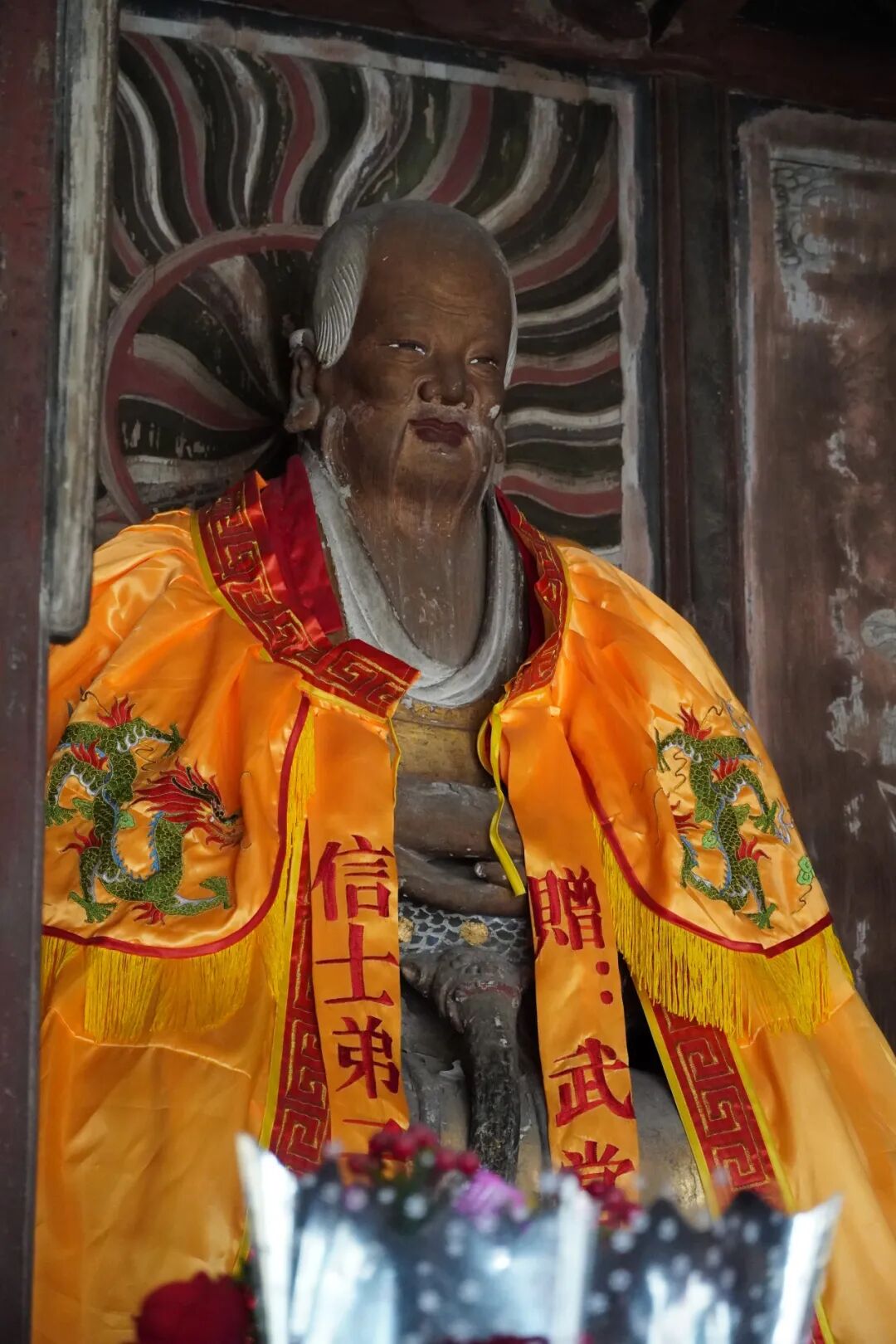
The Song dynasty was a flourishing period for Taoism, and the emperors’ esteem for Taoism promoted the development of image-making, which finally formed its own style. Images of this period emphasized the “divinity” of the deities, highlighting their supernatural “extraordinariness,” while the makers also shaped the immortals they worshipped according to their own aesthetic ideals, giving the images a strong worldly coloring. Such images, re-created through imagination, are richer in the breath of life and feel more familiar. In technique, the figures are refined and handsome, the drapery loose and natural; there are no longer works with thin robes and broad sashes revealing the body. The images are dignified and realistic but lack the vigor and romantic color of Tang images. This change reflects, to some extent, the gradual rise to dominance of Song–Ming Neo-Confucianism in society, by which Taoist image-making could not help but be influenced.
Among the better-known surviving Song Taoist images are the giant stone statue of Lord Lao on Mount Qingliang in Quanzhou, Fujian; the carvings on Mount Shizhuan and on Nanshan in Dazu, Sichuan; the maidservant figures in the Hall of the Holy Mother at the Jin Ancestral Temple, the sculptures of the Temple of the Two Immortals in Jincheng, and the maidservant figures of the Jade Emperor Temple, all in Shanxi; and the Three Pure Ones of the Xuanmiao Temple in Suzhou, Jiangsu. The stone statue of Lord Lao in Quanzhou is 5.1 meters high, 7.2 meters deep, and 7.3 meters wide, carved from a single natural boulder. Lord Lao sits cross-legged, his left hand on his knee and his right leaning on a small table, his face kindly and serene, the folds of his robe clearly defined, the carving bold and exaggerated yet still refined.
The stone carvings on Mount Shizhuan in Dazu County, Sichuan, date from the fifth year of the Yuanyou era (1090) of the Northern Song and include images of all three teachings—Confucian, Buddhist, and Taoist. The Taoist images are mainly of Lord Lao, the Holy Mother, and Perfected, carved with skill and assurance. The Nanshan (Mount Guanghua) carvings in Dazu were made during the Shaoxing era of the Southern Song. The Jade Emperor Abbey there has six niches of images in all, represented above all by the Three Pure Ones Cave, the Three Sovereigns Cave, the Holy Mother Cave, and the Dragon Cave. The Three Pure Ones Cave is 3.8 meters high, 6.8 meters wide, and 5 meters deep. In its center a square stone pillar is cut, joined to the ceiling; on its front a niche is carved with the three figures of Jade Clarity, Highest Clarity, and Grand Clarity, flanked by six Lords of the Tao, and on both sides there are 220 figures of Heavenly Worthies in relief. On the main wall of the Holy Mother Cave are carved three Holy Mothers seated on dragon thrones, dignified in expression and cleanly and crisply carved; the maidservant figures are light and graceful, ethereal and delicate. In the Three Sovereigns Cave the Three Sovereigns are dignified and kindly. In both technique and figures, the Nanshan carvings are rare achievements among Taoist images.
The maidservant figures in the Hall of the Holy Mother at the Jin Ancestral Temple in Taiyuan are famous Song sculptures. The hall contains forty-five statues; the figure of the Holy Mother Yi Jiang and two small figures behind the niche were added by later hands, while the other forty-two are original Song sculptures. The maidservants differ in expression, age, character, and duties: some older, some young, some innocent, some thoughtful, some joyful, some sorrowful and pensive. Each holds something in her hands, some attending to daily life and meals, others to grooming, sprinkling, and sweeping. Their faces are delicate or round, their figures full or slender, their expressions melancholy or innocent, all natural. The proportions are apt, the drapery simple, and the modeling superb; they may be called the representative works of Chinese sculpture of the Song.
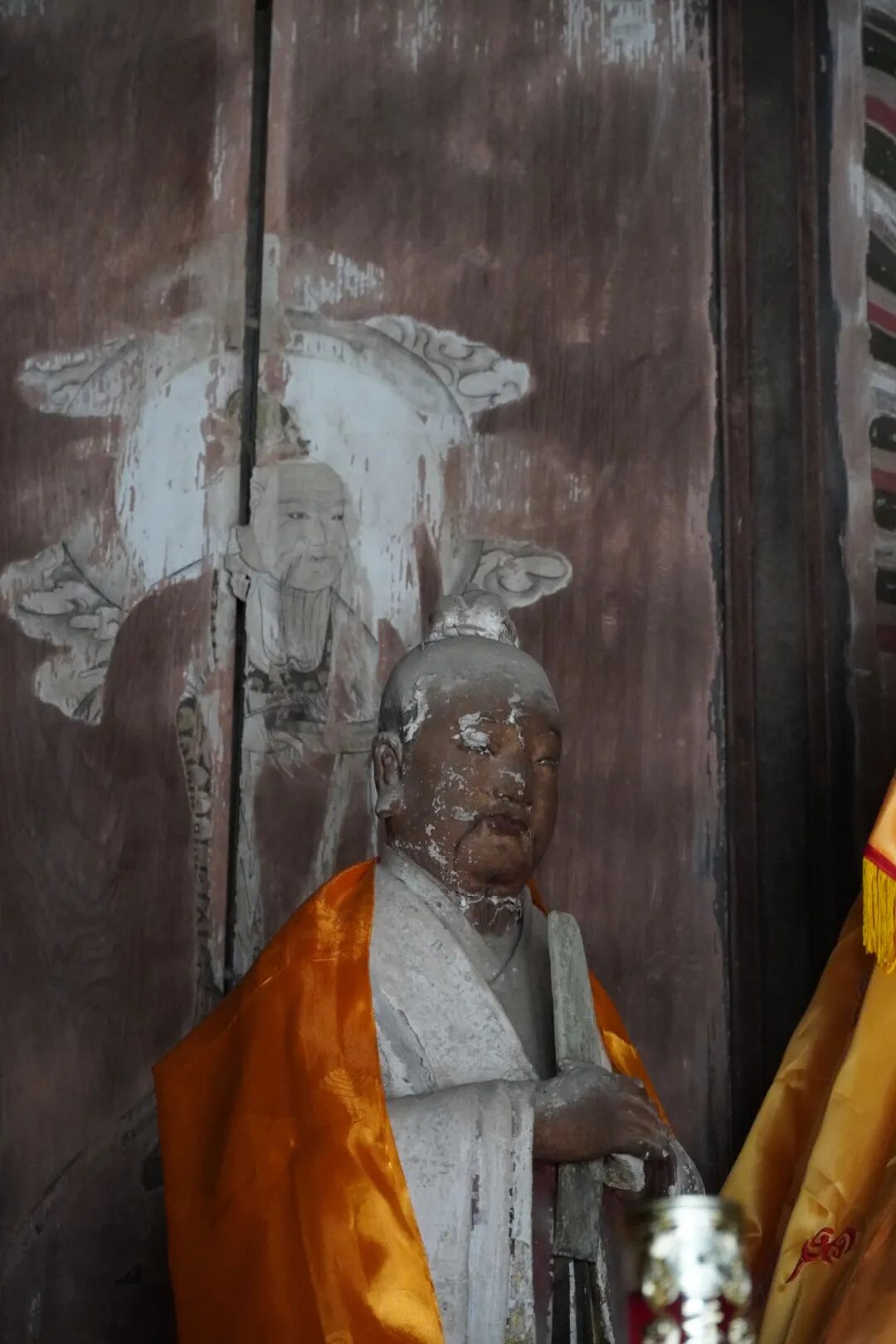
In the Jade Emperor Hall of the Jade Emperor Temple in Jincheng there are more than fifty statues, mostly works of the Song and Jin periods, dignified and generous in bearing, serene and elegant. Among them the maidservant figures have lovely faces and graceful, lithe figures, their long skirts clinging to the body, closely resembling the maidservants of the Jin Ancestral Temple.
In the Jin and Yuan periods the Quanzhen school (Complete Perfection) arose, and Quanzhen temples flourished in the north. Along with them appeared many fine works of image-making, and a group of outstanding sculptors emerged, such as Liu Yuan and Araniko. It is said that Liu Yuan’s Three Pure Ones had “solemn countenances and a deep air of the Tao,” while in his Divine Lords of the Three Primes, “the Lord of the Upper Prime holds a register and, turning his head, asks a question as if in doubt; a clerk kneels and answers, trembling greatly; the whole hall seems to listen in awe—truly a peerless art.” This shows how accomplished sculpture had become at the time. The main surviving Yuan works include the carvings of the Longshan Grottoes in Taiyuan, the Yuan sculptures of the Water God Temple in Hongtong, of the Jade Emperor Temple in Jincheng, and of the Holy Maiden Temple in Gaoping, all in Shanxi. Yuan image-making emphasized expressiveness and the depiction of the figures’ inner psychology, achieving an artistic effect in which spirit and form are both complete; the figures are handsome and lively. This was the high point of Taoist image-making.
The Longshan Grottoes in Taiyuan were built by the early Yuan Taoist priest Song Defang. There are eight niches in all: the Void Sovereign niche, the Three Pure Ones niche, the Reclining niche, the Mysterious Perfection niche, the Three Heavens Master niche, the Seven Perfected niche, and two Debating the Tao niches. Seven of these contain carved stone images and one contains clay sculptures; together the eight niches hold more than sixty images, the vast majority Yuan works. The carving is simple and unadorned, the clothing dignified; the ceilings of the niches are carved with dragons, phoenixes, and lotus patterns, and the walls bear Yuan inscriptions. They are among the few Taoist grotto sculptures in China.
The Jade Emperor Temple in Jincheng, Shanxi, was first built in the ninth year of the Xining era (1076) of the Song and was repaired and enlarged in later dynasties. It covers more than 4,000 square meters and today holds more than 300 Taoist sculptures of the Song, Jin, Yuan, Ming, and other periods. The figures of the Twenty-Eight Lunar Mansions in the western side hall are rare treasures among surviving Yuan Taoist images in China. Each is 1.5 meters tall and made of richly painted clay; five are damaged and twenty-three intact. The Twenty-Eight Star Lords are the twenty-eight lunar mansion deities worshipped in Taoism, divided into four groups of seven: the Azure Dragon of the East, the Black Tortoise of the North, the White Tiger of the West, and the Vermilion Bird of the South. The sculptor combined realism with expressiveness, imagination with symbolism, stressing the depiction of the figures’ inner spirit and turning the twenty-eight heavenly deities into concrete persons with distinct personalities, achieving an art in which spirit and form are both complete.
Among the Twenty-Eight Mansions, the female figures are gentle and serene. The Lou Metal Dog, for instance, is a young married woman with a pretty face, fine brows, and a small mouth, her high chignon decorated like a flower, an embroidered shawl over her shoulders; her left hand holds the cuff of her right sleeve, and she sits calmly as if lost in thought, while a white dog stands at her left, stretching its neck to look up at her. The Kang Metal Dragon is a young woman with a full, rosy face, raised brows and bristling hair, bewitchingly beautiful, her body twisted to the right and both hands reaching out to the right as if stroking a dragon, which coils beneath her right knee. The Xu Sun Rat is a middle-aged woman with long hair falling down her back and a gentle face, stretching her neck and gazing intently, gentle and composed; her form closely resembles Western images of the Madonna, and she is the representative work among the female deities of the group. The male figures are bold, fierce, and free-spirited in expression. The Wei Moon Swallow, for instance, is a middle-aged man with a respectful, scholarly face, leaning to the left, his left hand propped on his seat and his right raising a moon in which a flying swallow is painted, his pose easy and elegant. The Wei Fire Tiger is a military general with a red face and bristling hair, eyes narrowed and mouth open, clad in armor, raising his arm and clenching his fist to fight a tiger—extremely imposing. The Wei Earth Pheasant is an old man, his left hand raising an object (now lost) and his right stroking a pheasant, in voluminous robes, seated upright with his right knee folded and left leg extended, mouth open and gazing intently as if looking or calling out—utterly lifelike, one of the masterpieces of the group. In addition, the maidservant figures, the Twelve Earthly Branch Spirits, the Thirteen Luminary Star Lords, the Three Officials, the Four Saints, and other images are all fine Taoist sculptures of the Song, Jin, Yuan, and Ming. These statues are well proportioned and portray character in the finest detail—truly works of original genius. The Yuan sculptures of the Jade Emperor Temple carry on the Chinese tradition of emphasizing spiritual resonance, vigor, and radiant vitality, bringing the craft of painted sculpture since the Tang and Song to a new height; they are of great historical value for the study of ancient Chinese plastic arts, folk customs, dress, and the development of Taoism in the Song and Yuan.
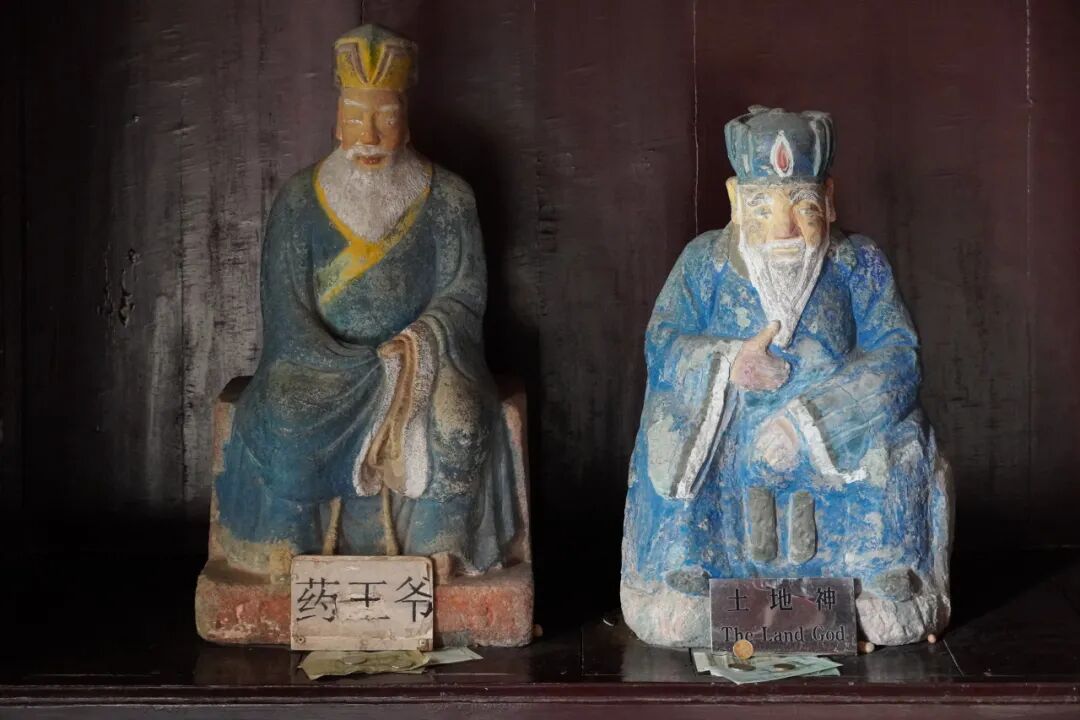
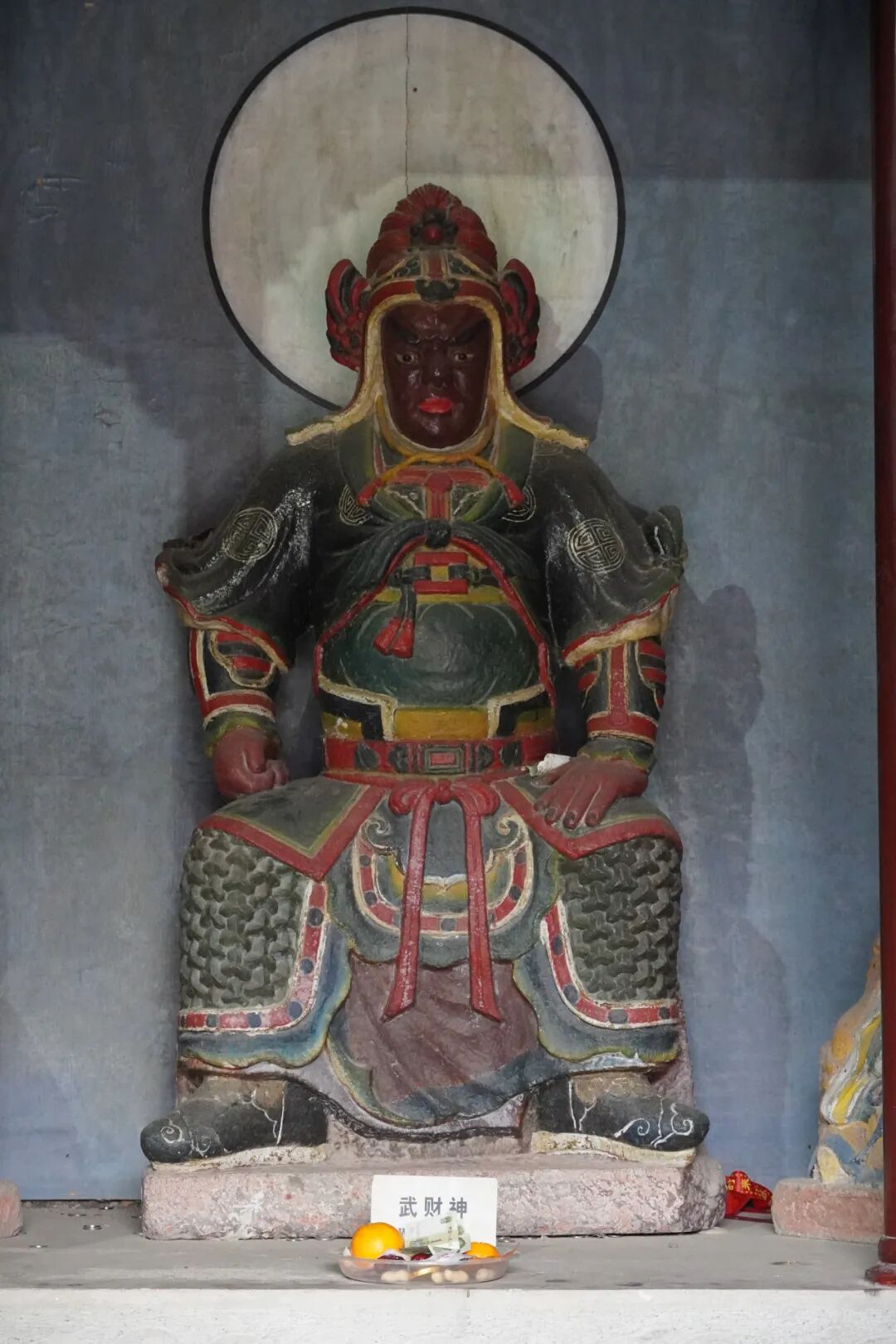
From the Ming and Qing onward, popular urban literature and art developed greatly; in particular, the spread of the novel Investiture of the Gods (Fengshen Yanyi) made Taoist images, like Buddhist ones, increasingly secular. The many statues made at this time of the City God, Lord Guan, the King of Medicine, and others are rich in the flavor of everyday life. But the style shifted from the earlier concise, lively, solid, and majestic to the slack and delicate; although sculptural technique grew ever more refined, it had more craftsmanship and ornament than vigor, and some works even appear fussy and vulgar.
Many Taoist images of the Ming and Qing survive, found almost everywhere, and there is no lack of fine works among them. The gilded bronze statue of Xuanwu, the Dark Warrior, in the Golden Hall of the Wudang Mountains in Hubei was cast in the Yongle era of the Ming and weighs about 20,000 jin (some ten tonnes). His face is full, his hair loose and his feet bare, his robe falling in easy folds, his bearing ethereal. The Golden Boy and Jade Maiden on either side are respectful, graceful, and elegant, and the Water and Fire generals bearing banner and sword are brave and imposing. The cast bronze statue of Patriarch Zhang Sanfeng at the Yuzhen Palace, dressed in a patched cotton robe and straw sandals and seated smiling in a chair, is full of the flavor of life and may be called a masterpiece of Ming bronze casting.
Other outstanding Ming and Qing images include the statue of Lord Guan (Guandi) reading the Spring and Autumn Annals at the Guandi Temple in Xiezhou, Shanxi, and the statues of Lord Guan and Lady Guan at the Guandi Temple in Changping Village; the statue of the Primordial Sovereign of the Azure Clouds (Bixia Yuanjun) at the Bixia Shrine on Mount Tai, Shandong; the images of the Dongyue Temple in Pu County, Shanxi; the Three Pure Ones of the Chongxu Abbey on Mount Luofu, Guangdong; and at the White Cloud Temple (Baiyun Guan) in Beijing, the wooden statues of the Jade Emperor and Marshal Wang Lingguan, the gauze-draped Three Pure Ones, and the bronze statues of the Four Celestial Masters, the Divine Lord Wenchang, the Perfected Warrior, Supreme Emperor of the Dark Heaven (Zhenwu), Tianpeng, and Tianyou. The Jade Emperor Cave grottoes at Fengxianggang in Dayong County, Hunan, cut in the fifth year of the Jiaqing era (1800) of the Qing, comprise eight caves, including the Heavenly Gate, Kuixing, and Wenchang caves; vast in scale and finely carved, they are among the few Taoist grotto sculptures of the Qing.
Others include the ancient carved wooden City God at the City God Pavilion in Zhongwei County, Ningxia, two meters tall, carved in upper and lower halves that are assembled together so that it can sit up and move—a work of consummate skill and a supreme achievement of Taoist image-making—and the statue of King Yu at the Palace of King Yu in Nanjiang County, Sichuan, carved from a single piece of camphor wood, four meters tall, dignified and stalwart in form, a rarity among Taoist images.
After the founding of the Republic, Taoism declined steadily; many temples fell into ruin, much of the craft of image-making was lost, and no good works have come down to us. After the Third Plenary Session of the Eleventh Central Committee of the Communist Party of China (the “Third Plenum of the Eleventh Central Committee”), religious policy was implemented anew; many temples across the country were restored and reopened, and new statues were made. Besides inheriting traditional methods, these new images are largely influenced by contemporary sculptural styles, the most typical being the statues of Li Bing and his son at the Temple of the Two Kings in Guan County, Sichuan.
The Sixty Jiazi Year Spirits newly sculpted at the White Cloud Temple in Beijing in 1984 are among the better Taoist images of recent years. The sixty star deities are sculpted as persons differing in appearance, age, character, status, and temperament—some refined and cultivated, some strong and martial, some kindly and gentle, some hideous and terrifying—each with its own bearing and all lifelike. They can be called fine examples of newly made sacred statues of recent years.
Taoist image-making represents an important component and an outstanding achievement of the image-making art of the Han Chinese. The history of the development of Taoist image-making is, in a certain sense, the history of Han Chinese image-making itself.
On the one hand, Taoist image-making art drew widely on traditional Chinese plastic arts to serve the aim of spreading Taoism; on the other hand, as Taoism spread, traditional Chinese plastic arts, through people’s worship of the Taoist immortals, gained richer subject matter, which promoted the development of traditional image-making. At the same time, the development of Taoist art is closely tied to the direction of China’s cultural development: Taoist image-making went from rough to refined and from sacred to gradually secular, reflecting the path Chinese culture has traveled over several thousand years. Therefore the study of the development and features of Taoist image-making is an unavoidable part of understanding China’s traditional plastic arts, and its significance goes far beyond Taoism itself. This author offers these modest explorations of Taoist image-making in the hope that they may serve as a humble brick to draw forth jade in the study of Chinese Taoist image-making.