
Chiyang Daoren, Eastern Taoism
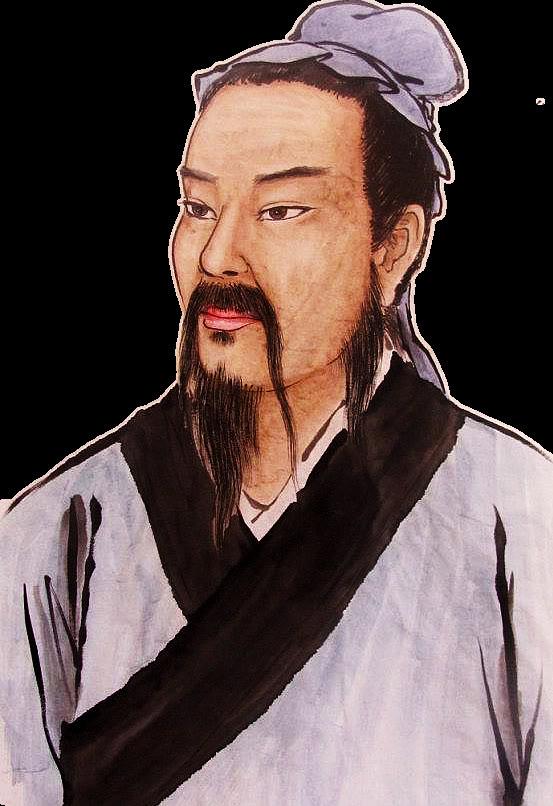
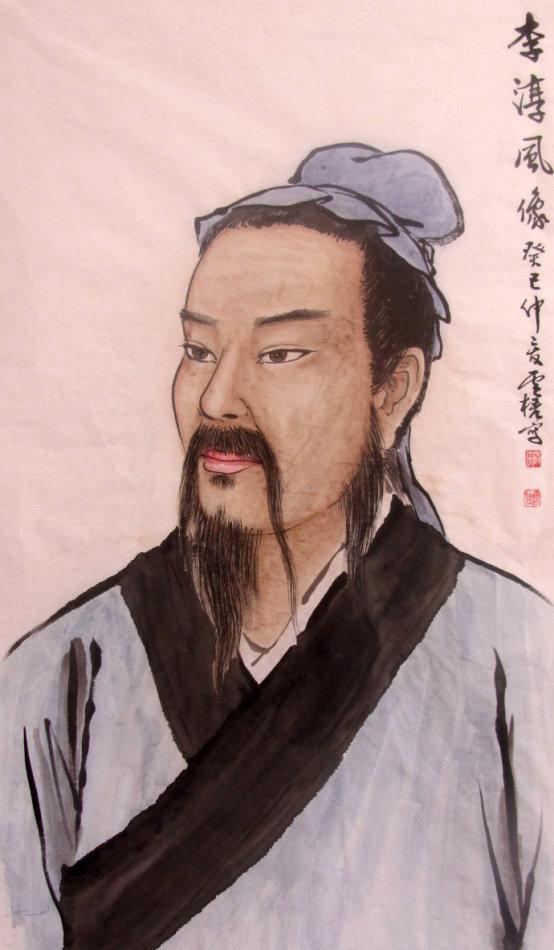
Li Chunfeng was born in the second year of the Renshou era of the Sui (a Renxu year, 602) in Yong, Qizhou (present-day Fengxiang County, Shaanxi). The biography of Li Chunfeng in the Old Book of Tang and the “Biographies of Technicians” in the New Book of Tang record that his forebears were from Taiyuan. His father, Li Bo, a district defender of Gaotang under the Sui, gave up his post to become a Taoist; he was quite literary, called himself Huangguanzi (Master of the Yellow Cap), and was also an astronomer, author of the Rhapsody on the Great Images of the Heavens. Deeply influenced by his father, Li Chunfeng was bright and studious from childhood, read widely, and was broadly learned. He was one of history's most accurate prophets, especially expert in astronomy, calendar science, mathematics, face reading, divination, and the learning of yin and yang.
Early in the Zhenguan era, for his rebuttal of Fu Renjun's calendar proposals, he was appointed Gentleman for Rendering Service and posted to the Astrological Bureau.
In the fifteenth year of the Zhenguan era of the Tang (641), he became an Erudite of the Court of Imperial Sacrifices and soon after was promoted to Assistant Grand Astrologer. He took part in writing the “Astronomy,” “Harmonics and Calendar,” and “Five Phases” treatises of the Book of Jin and the History of the Five Dynasties. He also compiled the Essentials of Literary Thought.
In the twenty-second year of the Zhenguan era of the Tang (648), he was promoted to Grand Astrologer.
In the second year of the Longshuo era of the Tang (662), he was reappointed as Director in the Palace Library. At that time the Wuyin Calendar was gradually drifting out of true, so Li Chunfeng revised Liu Zhuo's Huangji Calendar, adding and deleting, recast it as the Linde Calendar, and presented it to the throne; people of the time all praised its precision.
Early in the Xianheng era of the Tang, when official titles reverted to their old forms, he again became Grand Astrologer.
He died of illness in the third year of the Zongzhang era of Emperor Gaozong of Tang (670). His works, such as the Introduction to the Golden Lock and Flowing Pearls and the Commentary on the Three Registers of the Most High's Red Script of Dongshen, are included in the Taoist Canon (Daozang).
Li Chunfeng was a disciple of Yuan Tiangang. Yuan Tiangang was nineteen years older, and the two lived in almost the same period. Precisely because of this, which of the two was the stronger inevitably became the topic most discussed by later generations.
First, a brief introduction to his main achievements: (1) he classified wind force into grades, more than a thousand years earlier than Europe; (2) he wrote the Yisi Zhan, the earliest monograph in the history of world meteorology; (3) he was the first to discover that comets do not give off light of their own, their light being reflected from the sun, centuries ahead of the rest of the world; (4) he accurately predicted the time of a solar eclipse; (5) he created the armillary sphere, the most advanced astronomical observation instrument in the world at the time; (6) he produced a new calendar, the Linde Calendar, which also spread to Japan; (7) he was the first person in the world to accurately predict a total solar eclipse; (8) he was a famous Tang mathematician who compiled mathematics textbooks of enormous influence on later ages; (9) together with Yuan Tiangang he wrote the most extraordinary book of Chinese prophecy, the Tuibei Tu (Back-Pushing Chart).
Among ordinary people, what is best known about Li Chunfeng is his Tuibei Tu. Strictly speaking, Li Chunfeng should be classed as a scientist, astronomer, and mathematician. Dr. Joseph Needham of Britain judged that he was perhaps the greatest commentator on mathematical works in all of Chinese history. It is only that later generations, taking a “practical” view, have focused on his identity as a Taoist priest, so that people looking at him are used to highlighting his abilities in feng shui and predicting fate.
As for the Tuibei Tu, it is known to everyone; it is called the “most extraordinary book” of Chinese prophecy. Beginning from the Tang dynasty, this extraordinary book calculated the rise and fall of China's national fortunes for more than two thousand years to come, which cannot but amaze people.
The story goes that the Tang emperor Taizong, Li Shimin, had originally only asked them to calculate the fortunes of the great Tang, but Li Chunfeng grew more and more absorbed in the calculations and could not stop, until Yuan Tiangang suddenly gave him a push on the back and warned: “The secrets of heaven must not be leaked any further; go back and rest.” Only then did Li Chunfeng reluctantly write the closing lines: “Here we seek the vast numbers of heaven; the rise and fall of the world is not free to choose. Ten thousand upon ten thousand things could never all be told; better to push the back and go home to rest.” This is how the book Tuibei Tu got its name.
It can be said that both of these extraordinary men have basketfuls of legendary stories, and really judging which was superior is indeed difficult, so to this day there is no final verdict. But if one must rank the two, then analyzing their overall strength, Li Chunfeng should still come out ahead. Why do we say so?
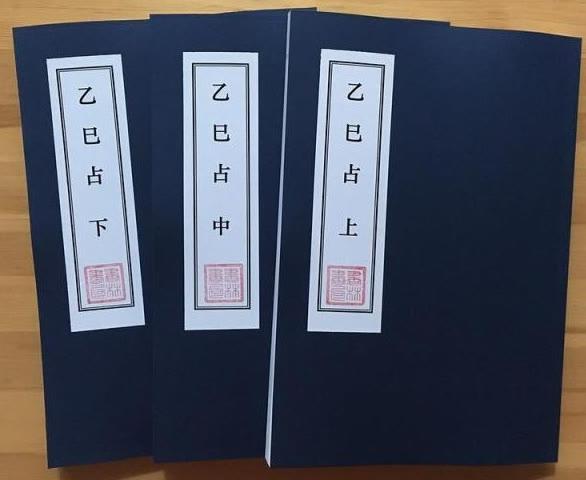
Li Chunfeng is most famous for writing the extraordinary Tuibei Tu together with Yuan Tiangang; besides this, he once predicted that Wu Zetian, then still a child, would later become the Son of Heaven of the great Tang dynasty, and he and Yuan Tiangang each found for Wu Zetian a feng shui site suitable for building her tomb. So Li Chunfeng's arts of physiognomy and feng shui truly reached a level of consummate mastery. In addition, he wrote many works on physiognomy and feng shui, such as the Song of Weighing the Bones, the Five Elements Book of Physiognomy, and the Mysterious Essentials of the Mirror of Changes; unfortunately, most of them are now lost.
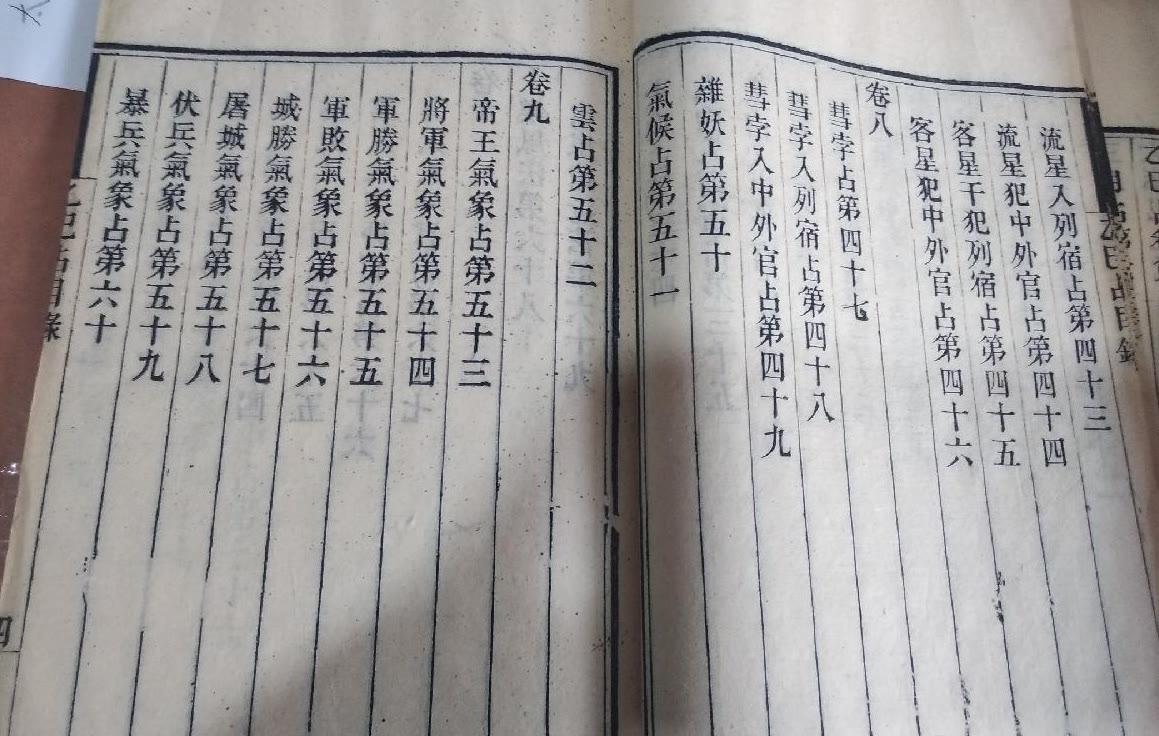
We know that, besides writing the Tuibei Tu with Yuan Tiangang and searching for tomb sites together—which show his extraordinary ability in physiognomy and feng shui—he was also a very famous astronomer and mathematician. Many people may not know that Li Chunfeng was the first person in the world to grade wind force. He designed a device called the “three-legged rooster wind vane” to observe and measure the wind. Not only that, Li Chunfeng divided wind force into eight grades; only more than a thousand years later did Europeans refine this into thirteen grades, and with ever finer division the wind scale has now grown to eighteen grades. His famous Yisi Zhan is, moreover, the earliest monograph in the history of world meteorology.
“A comet's body has no light; it relies on the sun for its light. So when seen in the evening it points east, and when seen in the morning it points west.” In the “Treatise on Astronomy” of the Book of Jin, Li Chunfeng stated clearly that a comet has no light of its own and “shines” because the sun illuminates it, and that a comet's tail always points away from the sun. The ancient Chinese observed comets very early; the Spring and Autumn Annals records (613 BCE): “There was a bushy star entering the Northern Dipper.” Some, however, say that the world's earliest recognized record of a comet is in the “Basic Annals of the First Emperor of Qin” in the Records of the Grand Historian (Shiji): “A comet's light appeared in the east and was seen in the north; in the fifth month it was seen in the west; the comet appeared again in the west.” Records of comets in Chinese historical sources, up to 1910, should number no fewer than 500. But the first person to observe why comets shine was Li Chunfeng.
It can be said that this discovery came several hundred years earlier than in the West.
Because the ancients were limited in their understanding of nature, they always considered phenomena like solar and lunar eclipses inauspicious. Then the emperor had to come forward and summon his ministers, and everyone beat drums without stopping to make a great noise, hoping in this way to rescue the sun and the moon. In fact, the Chinese understood solar and lunar eclipses as natural phenomena by the Han dynasty at the latest. The “Treatise on the Celestial Offices” in the Records of the Grand Historian records: “The eclipses of sun and moon occur at the conjunction of sun and moon. When the moon travels on the ecliptic and covers the sun, there is a solar eclipse; this is called yin overcoming yang, and the portent is grave.”
Li Chunfeng once accurately predicted a solar eclipse. He wrote two works on the calendar, the Treatise on Calendrical Phenomena and the Linde Calendar; the latter was used from 665 to 726. The Linde Calendar established the arrangement of the calendar by the true new moon, a method used ever after.
In the reign of Emperor Gaozong of Tang, he found that a solar eclipse would occur on a certain day and at once reported it to the court. This was a great matter, and Emperor Gaozong took it very seriously. But when everything was ready, no eclipse appeared. The displeased emperor challenged Li Chunfeng: “If the eclipse does not appear, this is a capital crime.” Li Chunfeng stood by his calculation. It is said that he drew a mark on the wall and, pointing at it, said: “Your Majesty, when the sunlight moves another half a finger's width, to this mark I am pointing at, the eclipse will appear.” Before long, a piece of the sun was indeed missing; the eclipse appeared at exactly the time Li Chunfeng had said, and the sound of beating went on without end. Of course, Li Chunfeng had in fact been rather worried himself. He quietly wiped his forehead and took the opportunity to say to Emperor Gaozong: “Your servant has used the new calendar to check the eclipses recorded by our predecessors, and there has not been a single error. Today its accuracy has been verified once again. I hope Your Majesty will issue an edict as soon as possible to promulgate the new calendar.”
In ancient times the calendar held a very important place. The imperial household in choosing dates for sacrifices, the common people for weddings and funerals, farmers for sowing, and other major ceremonies all relied on the calendar. By verifying the accuracy of the Linde Calendar with a real case, Li Chunfeng also conveyed a message: only by adopting the new calendar soon could the state follow heaven, know its mandate, benefit the country, and give peace to the people. So Emperor Gaozong promulgated the Linde Calendar on the spot. This Linde Calendar spread not only to Silla, that is, present-day Korea, but also to Japan, where it was renamed the Yifeng Calendar. Although, because it did not incorporate the precession of the equinoxes, the Linde Calendar was said to show that “even the wise, in a thousand considerations, will make one mistake,” this does not diminish its importance.
For this reason Yang Weizhen of the Ming dynasty said in his preface to the Shuofu: “Of all who have understood astronomy and calendrical calculation, past and present, Li Chunfeng and the monk Yixing stand first.”
If you think this is all Li Chunfeng did, you are greatly mistaken. He also made a new armillary sphere. Earlier armillary spheres had only two layers, the sighting-tube ring and the six-directions ring; after Li Chunfeng's reworking they had three: the six-directions ring on the outside, the three-luminaries ring in the middle, and the sighting-tube ring innermost. Its greatest advantage was that it could measure ecliptic coordinates, equatorial coordinates, and horizon coordinates alike, and this improvement at a stroke created the most advanced astronomical observation instrument in the world at the time.
Besides his many contributions in physiognomy, feng shui, and the calendar, Li Chunfeng's achievements in mathematics are equally not to be underestimated. The ten mathematical classics he edited and annotated, known as the “Ten Mathematical Classics,” not only became the mathematics textbooks of the School of Mathematics of the Tang Imperial Academy, exerting a very great influence on the development of Tang mathematics, but also created the conditions for the high development of mathematics in the Song and Yuan.
In addition, Li Chunfeng compiled and annotated the “Astronomy,” “Harmonics and Calendar,” and “Five Phases” treatises of the Book of Jin and the Book of Sui, and wrote Li Chunfeng's Classic of Dwellings; adding the Yisi Zhan, the Tuibei Tu, and others, his lifetime output was truly prolific. From all this it is easy to see that Li Chunfeng had not only extremely deep attainments in physiognomy and feng shui but equally lofty attainments in astronomy, mathematics, and calendrical calculation.
To ordinary people, someone who can predict eclipses is an extraordinary person who must surely also be able to calculate the day of his own death. Many eminent masters renowned for attaining the Tao were like this: one day they would say to their disciples, “Tomorrow I shall go to see our founding master,” and the next day they would indeed depart as immortals. Li Chunfeng entered the Taoist path at the age of nine; he can certainly be called one of the highest-ranking of such masters.
In fact, Li Chunfeng was even more obsessed with the heavens. In his eyes there were always only the stars, the sun, and the moon; looking at what he did throughout his life, almost everything revolved around astronomy, and for this he improved the armillary sphere for observing the heavens.
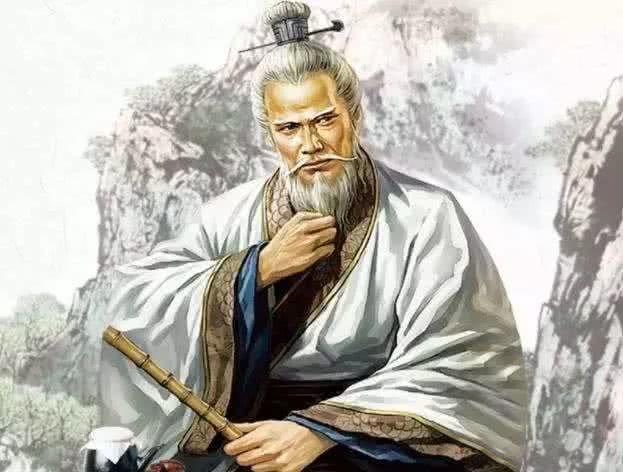
Lu Xinyuan of the Qing dynasty judged Li Chunfeng as follows: “Although he is famed for the occult arts, his chapter on cultivating virtue repeatedly cites the classics and their commentaries, taking correcting faults and turning to goodness as its admonition; his chapter on the office of heaven sets out the failings of the Sui in depth, and earnestly urges accepting remonstrance and keeping flatterers at a distance. It does not fall short of the words of a Confucian scholar and is beyond the reach of later practitioners of the arts.” So, analyzing their overall strength, Li Chunfeng clearly surpasses Yuan Tiangang. Of course, as for these two supreme feng shui masters of Chinese history, which was ultimately stronger depends on each person's point of view; the benevolent see benevolence, and the wise see wisdom.