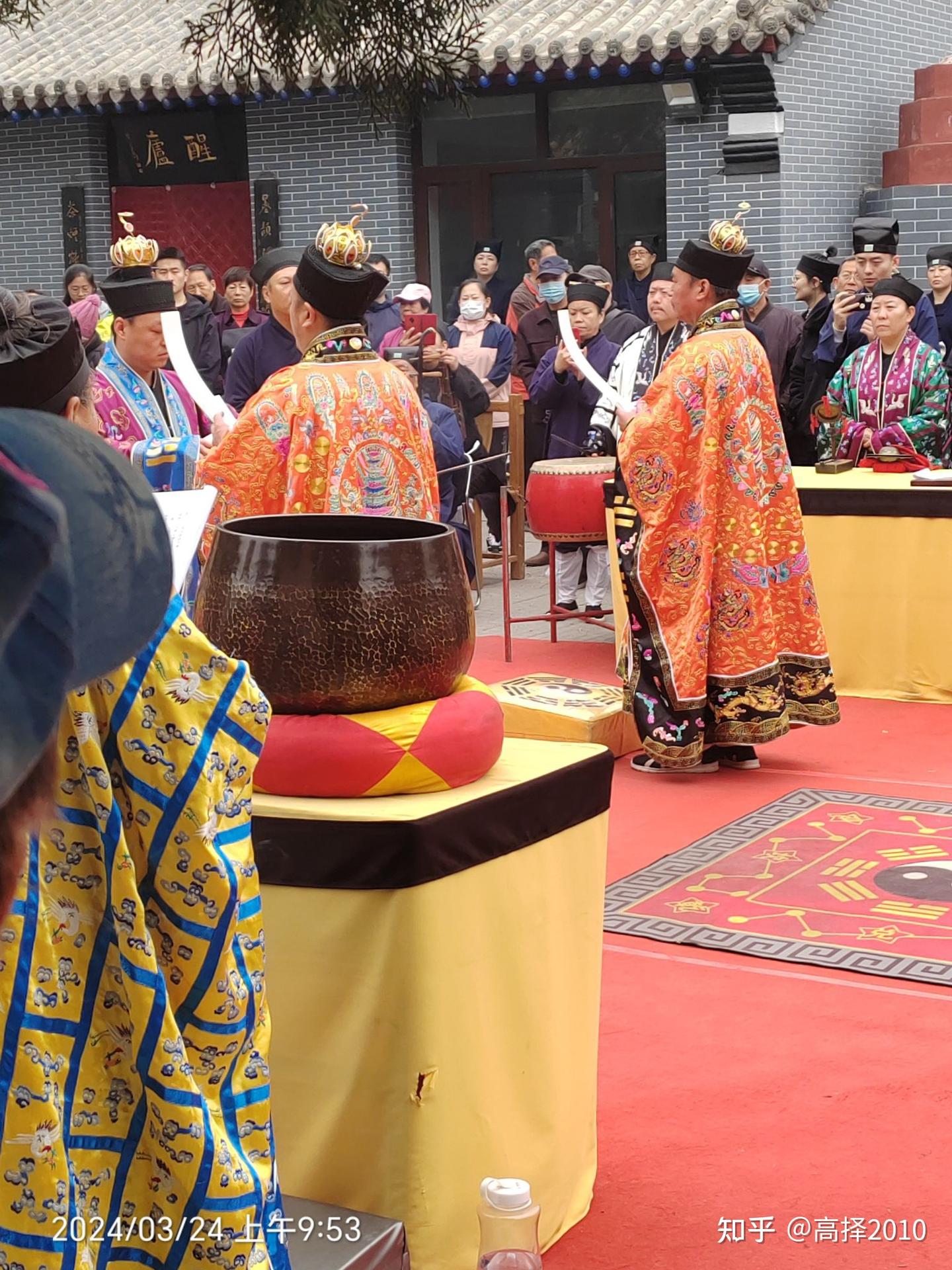
Chiyang Daoren, Eastern Taoism
The Shifang Yuan Taoist temple (also called the Jinque Palace, or Palace of the Golden Gate) stands outside the West Gate of Luquan District (formerly Huolu County), Hebei Province, on the south bank of the Taiping River. It is a famous Taoist temple in Hebei and the province's only Taoist public monastery. According to the county gazetteer: “The Jinque Palace, that is, the Shifang Yuan, is outside the West Gate… It was built in the seventh year of Kangxi (1668) by the magistrate Tang Yi and the Taoists Tang Guoxiu and Zhang Zhigui.” In recent years, however, cultural-heritage experts have found that the decorative eave tiles on the back wall of the temple's Yuanchen Hall are of Yuan-dynasty form, so the temple may first have been built in the Yuan dynasty.
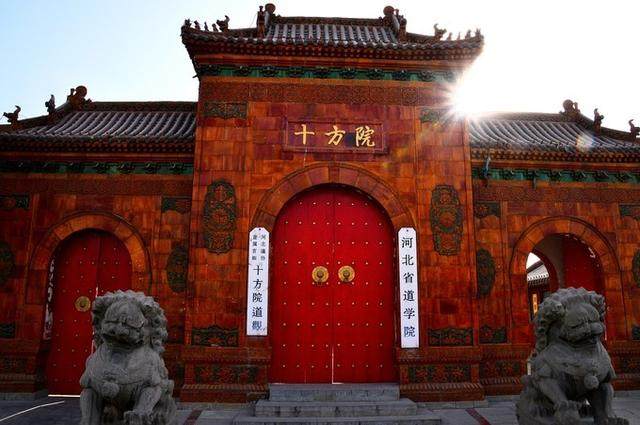
The Shifang Yuan faces north from the south and consists of four successive courtyards, 135 meters long from north to south and 32 meters wide from east to west. The main buildings on its central axis include:
The mountain gate: a three-arched gateway in the style of a memorial archway with yellow glazed tiles, symbolizing the three realms of the Ultimate of Nothingness (Wuji), the Supreme Ultimate (Taiji), and the manifest world.
The Lingguan Hall: a building with a five-ridged hip-and-gable roof and a surrounding veranda, enshrining the guardian deity Marshal Wang Lingguan.
The Jade Emperor Hall: enshrines the Jade Emperor. It was converted to a flat roof in the 1950s and later restored to its original appearance.
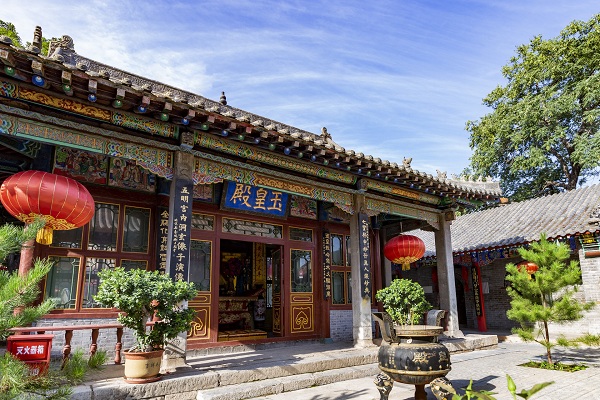
The Hall of the Three Ancestors: offers sacrifices to three founding ancestors of Taoism, the Yellow Emperor, Laozi, and Zhang Daoling.
The Dipper Mother Hall: the main building, enshrining the Dipper Mother (Doumu), Primordial Sovereign; in front of the hall stands a thousand-year-old pine.
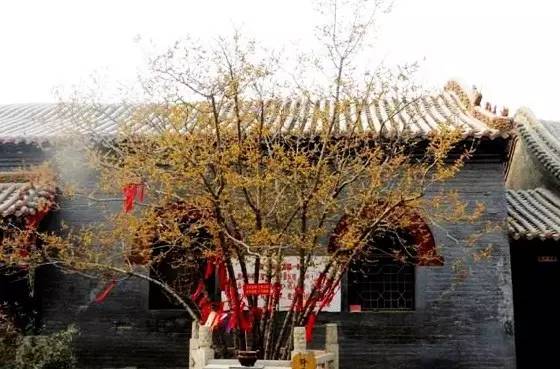
The 300-year-old wintersweet: planted in the Qianlong reign of the Qing dynasty, it is covered with golden blossoms in winter and richly fragrant. It is called the “matchmaking tree” (a pun on the name of the wintersweet), and legend has it that sincere prayer here can bring a happy marriage.
The thousand-year-old Tang cypress: an ancient cypress in front of the Hall of the King of Medicine, more than a thousand years old, a witness to the temple's long and eventful history.
The courtyard gate of the Shifang Yuan is a three-arched gateway in the style of a memorial archway with a yellow glazed-tile roof. Inside the gate, directly ahead, is the Lingguan Hall; further in is the Jade Emperor Hall, with a five-ridged hip-and-gable roof and verandas on all sides. Behind the Jade Emperor Hall is the Hall of the Three Ancestors, with a rolled-ridge roof. Passing along the walkways on either side of the Hall of the Three Ancestors, one reaches the innermost Hall of the Three Pure Ones.
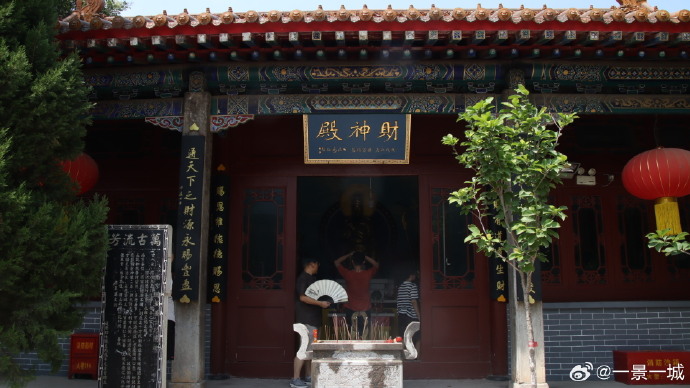
These main buildings are all arranged along the central axis. On the eastern side are the Hall of the King of Medicine and the Cihang Hall; on the western side are the Hall of the God of Wealth, the City God Hall, and the Yuanchen Hall. The whole compound is rigorously laid out, pleasingly varied in height, and grand in scale.
An earthquake stele was originally set into the front wall of the Hall of the King of Medicine. Its inscription records the rebuilding of the Shifang Yuan after an earthquake in the Guangxu era of the Qing dynasty—a rare inscription recording a disaster.
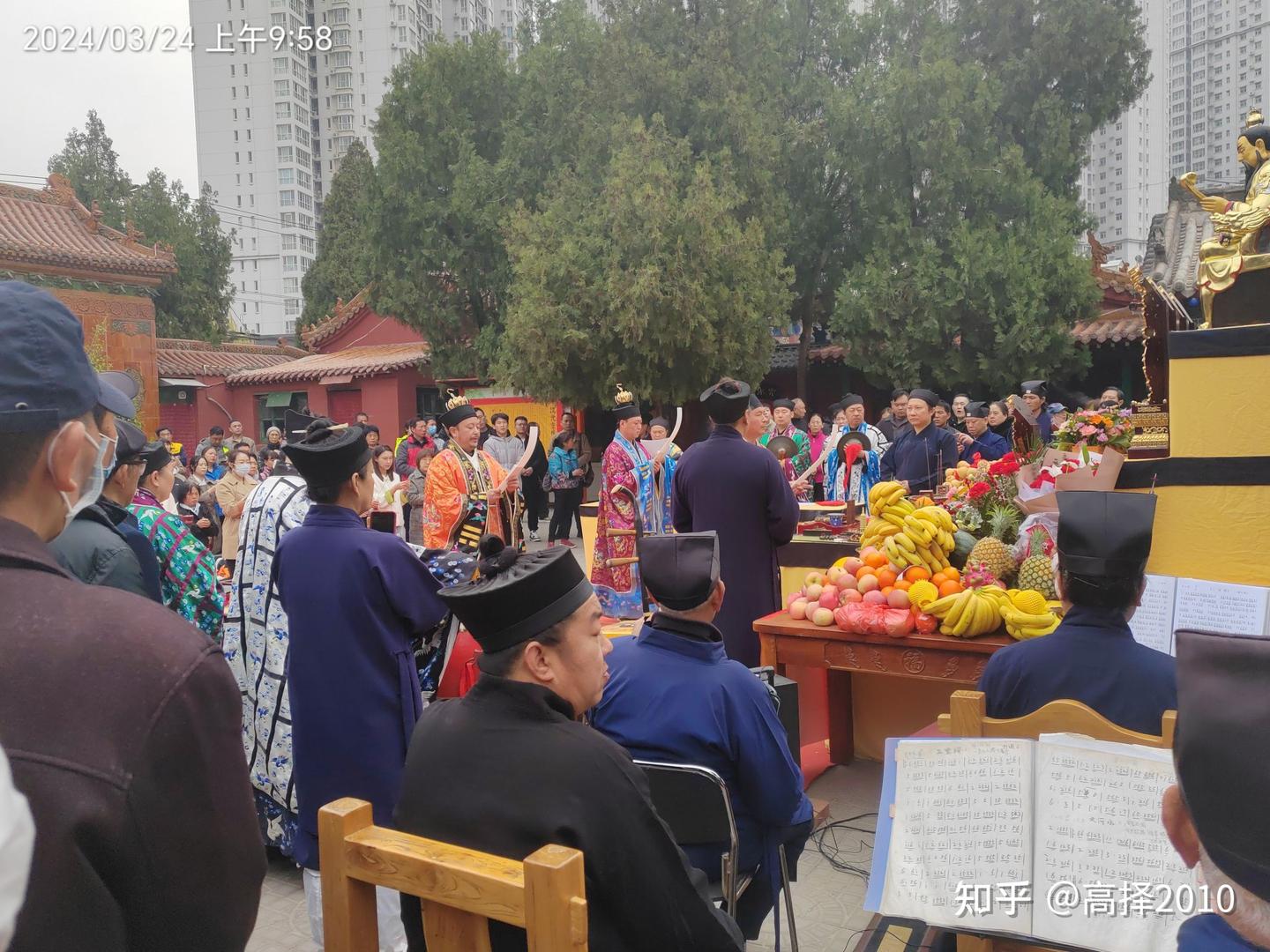
The Shifang Yuan is thriving with incense offerings and filled with devotees, owing to a deep belief that the Taoism of the Quanzhen school can protect and grant long life, drive out evil and uphold the upright, increase wealth and bring children, and bring about happy marriages.