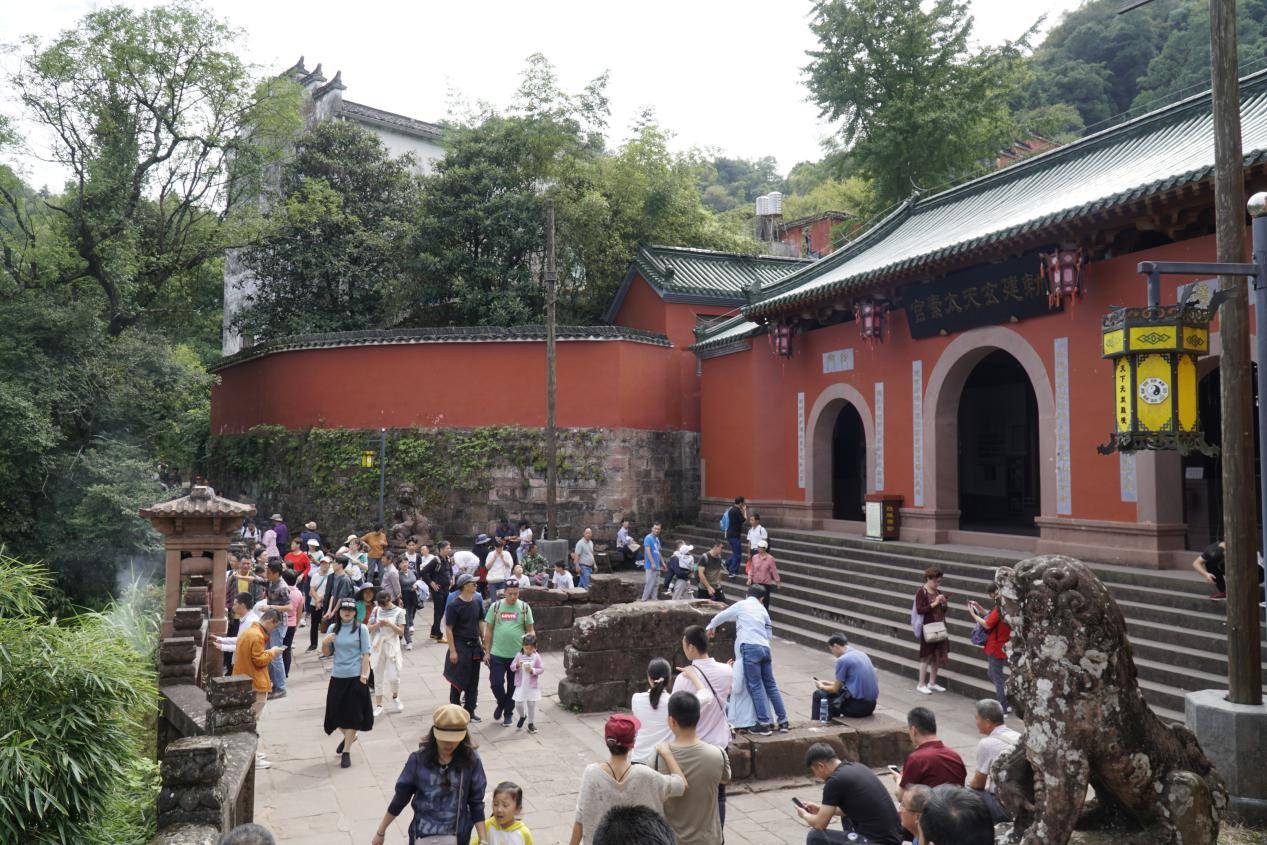
Chiyang Daoren, Eastern Taoism
Mount Qiyun lies 15 kilometers west of the county seat of Xiuning, Huangshan City, Anhui Province, China. It rises 585 meters, covers more than a hundred square kilometers, and consists of nine peaks, including Qiyun, Baiyue, Qishan, and Wanshou. Known in ancient times as Baiyue, it takes its name, Mount Qiyun (Level with the Clouds), from “a single rock piercing the sky, reaching straight into the clouds, level with the blue clouds.” Together with Mount Longhu in Jiangxi, the Wudang Mountains in Hubei, and Mount Qingcheng in Sichuan, Mount Qiyun is one of the Four Sacred Mountains of Taoism in China. With Mount Huang and Mount Jiuhua it is known as one of the “Three Beauties of Southern Wan (Anhui Province),” and it has long been praised as “a scenic wonder unmatched under heaven, the foremost famous mountain of Jiangnan.” Mount Qiyun is an important site of Taoist activity in China, a national 4A scenic area, and a National Geopark of China.
1. The Development of Taoism on Mount Qiyun
Taoism on Mount Qiyun has a long history. Taoist activity began in the Qianyuan era of the Tang, more than 1,200 years ago, and its incense has spread across East China and the countries of Southeast Asia.
In the Qianyuan era of the Tang (758–760), the Taoist priest Gong Qixia came here in his wanderings and lived in seclusion at Tianmen Cliff in the mountains. In the fourth year of the Yuanhe era (809), Wei Shou, prefect of Shezhou, built the Shimen Monastery at Stone Bridge Cliff. In the first year of the Xiangfu era of the Northern Song (1008), the court built the Miduo Cloister south of Mount Baiyue. In the Baoqing era of the Southern Song (1225–1227), the Taoist priest Yu Daoyuan came into the mountains to cultivate himself and founded the Shrine of the Perfected Warrior, Protector of the Sage, at Qiyun Cliff. After that, occult practitioners and lay practitioners who admired Taoism came to the mountain one after another, chose sites, and built, and the scale of Taoist buildings grew day by day.
In the Ming dynasty, Taoism reached its height. In the Jiajing and Wanli eras, the Zhengyi school of Mount Longhu in Jiangxi took up residence on Mount Qiyun, and its incense grew ever stronger. From this time Mount Qiyun became a center of Taoist activity in Jiangnan and joined the ranks of the nation's famous Taoist mountains; it became one of the Four Sacred Mountains of Taoism in China and was called the “Little Wudang of Jiangnan.”
In the fifteenth year of the Hongwu era of the Ming (1382), the court set up a Taoist Assembly Office at the Chongshou Temple in the county seat to oversee Taoist affairs in the whole county, and a Taoist priest on the mountain was appointed its head. In the eleventh year of the Jiajing era (1532), Celestial Master Zhang, the Perfected Heir to the Zhengyi Teaching from Mount Longhu, stayed on the mountain. Because his prayers for Emperor Shizong to have an heir were answered, the Xuantian Taisu Palace was built by imperial order, along with a Mansion of the Perfected, and Taoist officials of every level were assigned: the Taisu Palace had a superintendent; the Mansion of the Perfected had an Assistant of the Teaching, a steward, and an abbot and presiding master; the county had a Taoist Assembly Office, the subprefecture a Taoist Rectification Office, the prefecture a Taoist Discipline Office, and at the highest level in the capital there was a Central Taoist Registry, among other bodies.
The Qianlong Emperor of the Qing highly praised Mount Qiyun as “a scenic wonder unmatched under heaven, the foremost famous mountain of Jiangnan,” and it earned the fine name “Little Wudang of Jiangnan.”
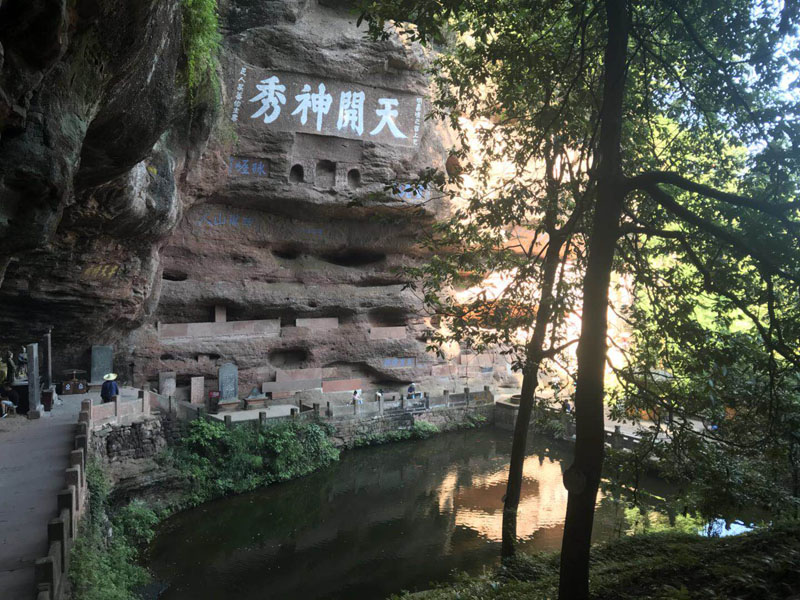
Mount Qiyun's principal deity is the Great Emperor Zhenwu, the Perfected Warrior, Supreme Emperor of the Dark Heaven. Legend says that Zhenwu, wandering here and seeing the superb feng shui, appeared to the Taoist Yu Daoyuan in a dream and had him make a statue and build a shrine. Ming documents record that Zhenwu's statue was “molded from mud carried in the beaks of a hundred birds,” and so incense flourished; people said, “The incense of the Dark Emperor is called Wudang in Junzhou and Qiyun in Huizhou.”
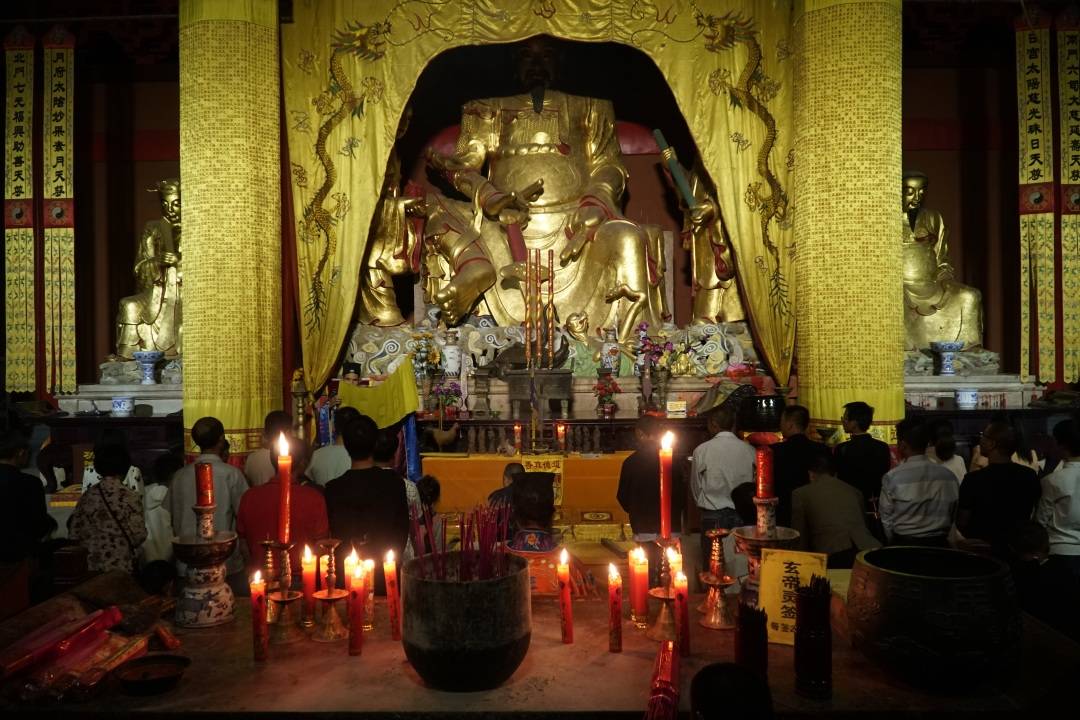
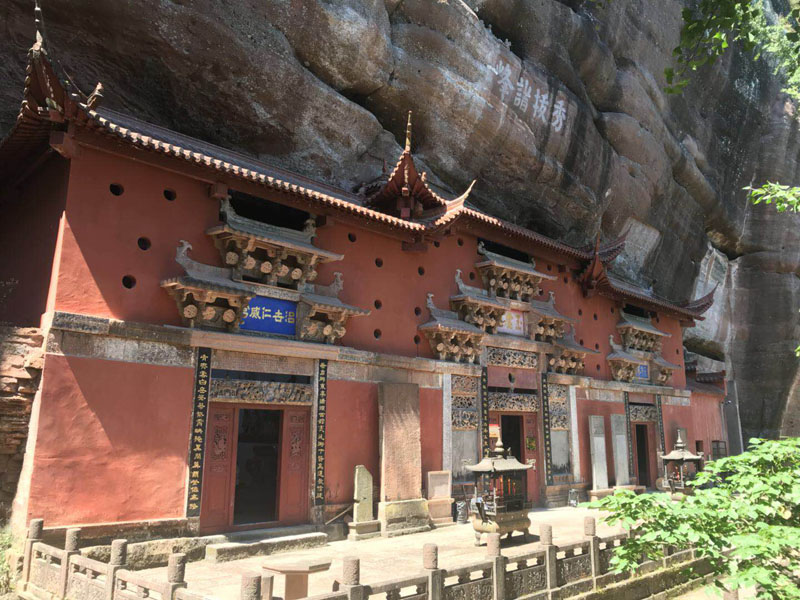
On Mount Qiyun the Taisu Palace and other sites serve as the main Taoist ritual centers. Their architectural system imitated that of the Wudang Mountains in Hubei, vast in scale and magnificent in presence. Later, through long neglect and repeated war and fire, many buildings were destroyed one after another. More than ten palaces, temples, halls, pavilions, terraces, and towers survive today, all rebuilt.
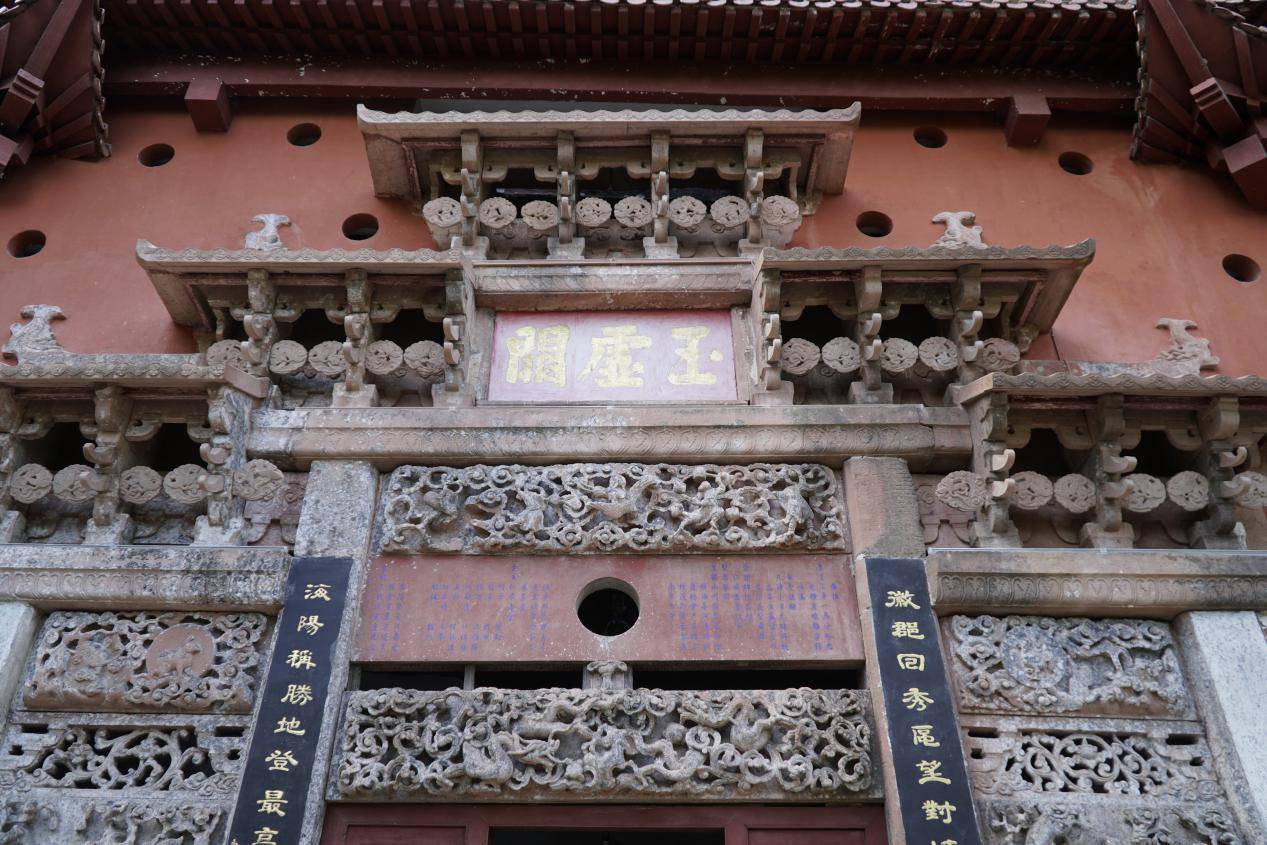
In 1978 the Taisu Palace on Mount Qiyun was restored and reopened. From 1980 on, three pavilions—Lingfeng, Haitian Yiwang, and Wangxian—were newly built on the old sites of the Dongyang, Boyang, and Meixuan cloisters, and the Yuxu Palace, the Arhat Cave, and the Hall of Zhenwu (Taisu Palace) were restored. Mount Qiyun now has thirty-three palaces, temples, shrines, and halls.
2. Quanzhen Taoism on Mount Qiyun
The earliest Taoist priest on Mount Qiyun was Gong Qixia in the Qianyuan era of the Tang. Later generations named the cave where he lived “Qizhen Cliff,” meaning the Cliff of the Perfected Qixia, in his memory.
Only when the Southern Song Taoist priest Yu Daoyuan built the Shrine of the Perfected Warrior, Protector of the Sage, did Taoism begin to flourish. But until the Jiajing era of the Ming, Taoism on Mount Qiyun followed “Quanzhen” as its tradition, belonging to a branch of the Quanzhen school of the Wudang Mountains; its palace buildings and Taoist rules and institutions all imitated those of the Wudang Mountains in Hubei, which is why the ancients called it the “Little Wudang of Jiangnan.”
After the Jiajing era, because the “Celestial Master” of the Zhengyi school of Mount Longhu held offering rituals and sacrifices here, the Zhengyi school established itself on Mount Qiyun and gradually gained dominance. The original Quanzhen followers, adapting to circumstances, naturally submitted to or converted to the Zhengyi school, forming a pattern in which the two schools coexisted with the Zhengyi school leading. To this day places such as the Yuxu Palace still keep to the Quanzhen school, and the Baiyue Mountain Lodge also enshrines the Seven Perfected of Quanzhen.
3. Zhengyi Taoism on Mount Qiyun
Taoism on Mount Qiyun is mainly of the Zhengyi school. It honors Laozi as its founding ancestor, takes the Tao Te Ching as its basis, and enshrines the Perfected Warrior, Supreme Emperor of the Dark Heaven. This reflects the rising status of and flourishing faith in Zhenwu in the Northern and Southern Song. In the Baoqing era of the Southern Song (1225–1227), a practitioner named Yu Daoyuan, styled Tianguzi, traveled to Shimen Cliff on Mount Qiyun, cleared the grass, and built a hut to live in. With the support of local lay devotees who loved the Tao, he founded the Shrine of the Perfected Warrior, Protector of the Sage, and made a statue of Zhenwu to enshrine there—folk legend says the statue was molded by a hundred birds carrying mud in their beaks. From then on incense flourished and Taoist priests increased day by day, laying the foundation of Taoism on Mount Qiyun.
In the Ming, because the emperors of the dynasty revered, honored, and supported Taoism, Taoist activity on Mount Qiyun flourished more and more. In the eleventh year of the Jiajing era (1532), Zhang Yanpian, the forty-eighth “Celestial Master” of the Zhengyi school, heir of the Han line, led a group to Mount Qiyun to pray for a son for the emperor and drew a favorable lot; afterward a son was born. The Jiajing Emperor was overjoyed and issued a decree building the Taisu Palace by imperial order on the old site of the Zhenwu Shrine and establishing a Mansion of the Perfected. He personally wrote the three characters for “Mount Qiyun” and composed the “Record of the Imperial Stele”: “In the Renchen year (1532), on the memorial of Zhang Yanpian, Perfected Heir to the Zhengyi Teaching, We ordered the Taoists to go to Mount Qiyun to hold an offering ritual praying for an heir, and it was indeed answered. We have therefore appointed officials to burn incense and cultivate there, and granted the building of the Xuantian Taisu Palace at Qiyun Cliff…” This made Mount Qiyun an imperially endowed Taoist holy site, worshiping Zhenwu together with the Wudang Mountains in Hubei. Afterward the forty-ninth “Celestial Master,” Zhang Yongxu, and the fiftieth, Zhang Guoxiang, were successively commanded to visit Mount Qiyun again to hold offering rituals and sacrifices and proclaim the secret texts, and Mount Qiyun's fame grew still greater, making it a famous ritual center of the Zhengyi school in Jiangnan.
4. The Strong Popular Character of Zhengyi Taoism
The Zhengyi school is relatively loosely organized and its precepts are not very strict. Its priests may have families, wives, and children, and they do not abstain from wine and meat on non-fasting days; they are commonly called “hearth-dwelling Taoists” or “lay Taoists.” The Taoists of Mount Qiyun are the same: they not only have wives and children, but their wives and children even live with them in the Taoist cloisters. Ordinarily they work at production and are no different from ordinary people. Only when a patron comes to request a service, or on Taoist festivals, do they take off their everyday clothes, put on Taoist robes, and perform the traditional liturgy. This resembles the local craftsmen; rather than studying and cultivating the Tao, it is more a means of making a living.
So many of the Taoist cloisters on the mountain are no different from ordinary homes. Apart from the features common to all Taoist temples and monasteries—carved beams and painted rafters, a pleasingly varied arrangement, and a seamless blend with the natural peaks and cliffs—in form and function they are typical dwellings, and mostly not separated from the mountain's houses, gradually developing into one huge complex of buildings. The Taoist cloisters are concentrated mainly on “Yuehua Street” on the mountain.
It is named “Yuehua” (Moonlight) because its buildings are cleverly laid out like a crescent moon. Walking along the street, you see temples and shops side by side, incense smoke and cooking smoke intertwined—a complete picture of life in which Taoism and ordinary people blend naturally. It is interesting that some use the phrase “the First Taoist Village of China” to describe the Taoist way of life on Mount Qiyun; besides conveying its rich cultural content, it also conveys its popular and rustic character, which is very vivid and apt.
5. A Vast Complex of Taoist Buildings and Sites of Taoist Activity
According to the Gazetteer of Mount Qiyun, with the changes of the times, Taoist buildings were built on Mount Qiyun in every age since the mountain was opened, and many Taoist sites appeared; at the height of the late Ming there were more than a hundred.
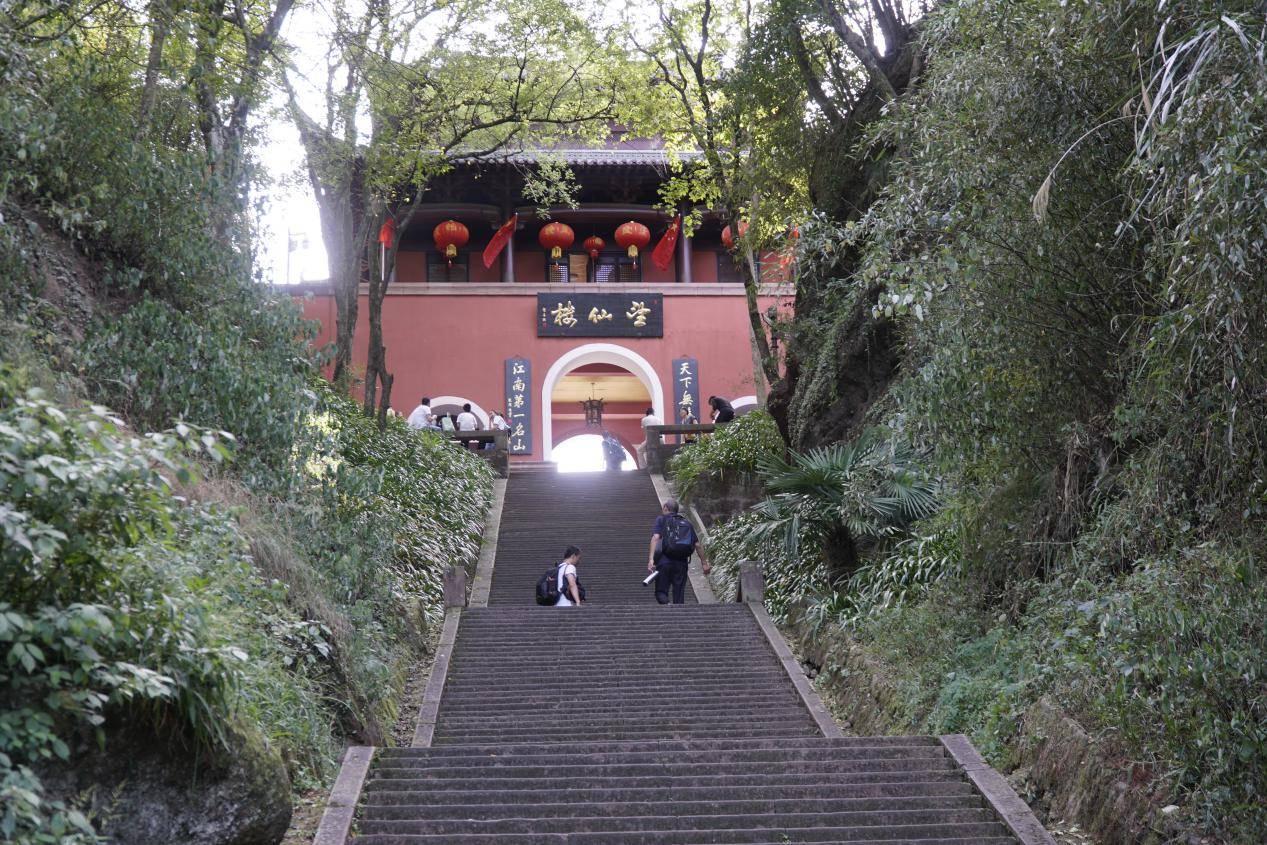
At the height of Taoism, Mount Qiyun had 108 Taoist buildings large and small—palaces, temples, halls, cloisters, lodges, towers, pavilions, altars, terraces, and kiosks.
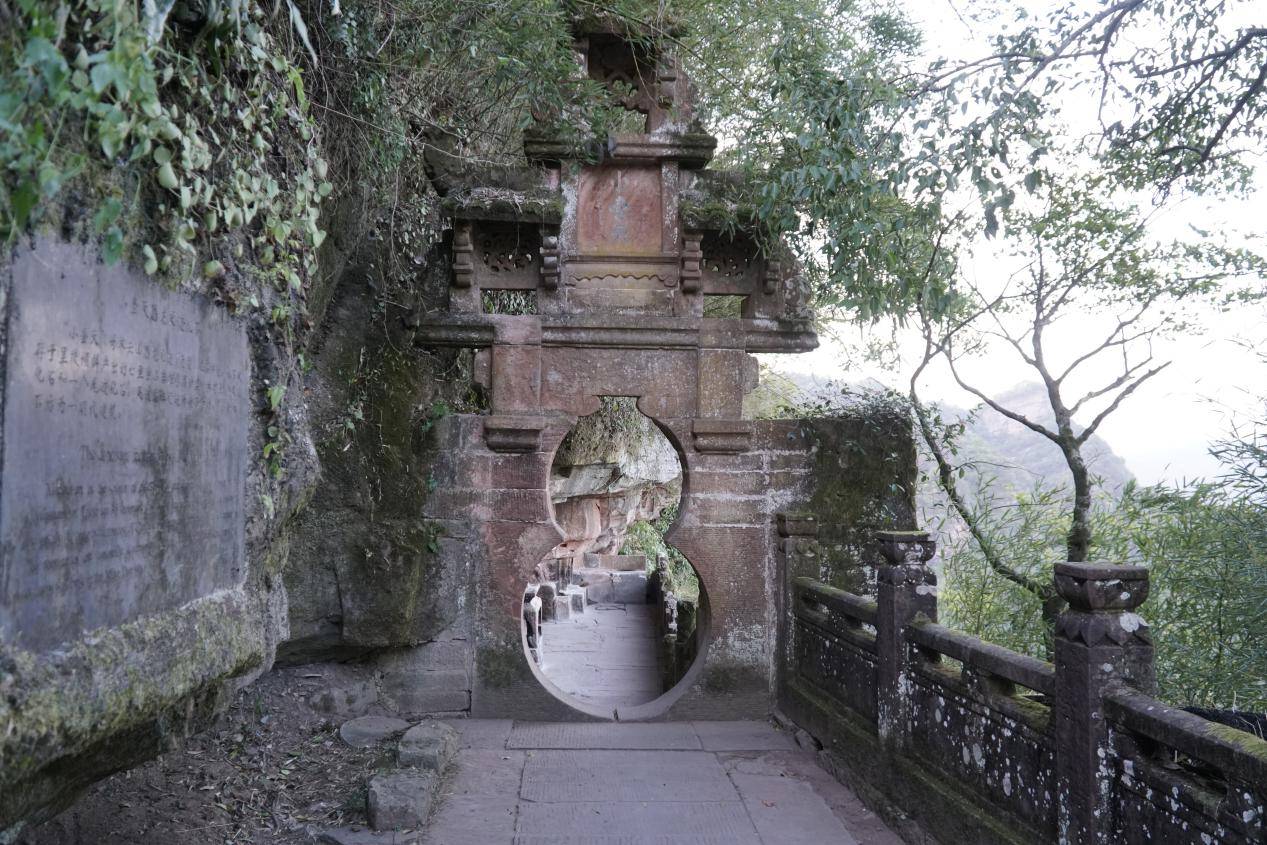
Those built over the ages include the Taisu Palace, the Sanyuan Palace (Palace of the Three Primes), the Yuxu Palace, the Palace of Pure Joy, the Tianyi Zhenqing Palace, the Zhishi Renwei Palace, the Yinan Palace, the Palace of the Buddha of Infinite Life, the Yingyuan Palace, the Langling Cloister, the Pure Joy Taoist Cloister, the Daode Cloister, the Zhonghe Taoist Cloister, the Huangting Taoist Cloister, the Gongri Cloister, the Dongyang Taoist Cloister, the Dongming Taiwei Cloister, the Langmei Cloister, the Huayang Taoist Cloister, the Xiyang Taoist Cloister, the Tianshu Cloister, the Shiqiao Cloister, and the Miduo Cloister, as well as the Hall of the Three Pure Ones, the Canyang Hall, the Xingsheng Hall, the Pavilion of the Dipper Mother, the Wenchang Pavilion and Shrine of the Blessed Land, the Shrine of the Earth God, the Shansheng Shrine, the Hall of Merit, the Bixiao Hermitage, and the Dongyue Temple, along with the “eighteen pavilions along nine li.” Through natural disasters and human calamities, most of these temples, cloisters, pavilions, shrines, and halls have been destroyed. Today only the Dongyang, Boyang, and Meixuan Taoist cloisters remain.
6. Blending Confucianism into Taoism
As for Confucian ideas such as the cardinal guides and constant virtues, they find especially strong expression in the Taoism of Mount Qiyun. The first line of the “lineage genealogy” of Mount Qiyun Taoism is “Keep the Tao, make benevolence and virtue shine,” asserting that Confucianism and Taoism are not two. Loyalty Cliff and the Loyalty Archway on the mountain likewise celebrate Confucian stories of loyalty and righteousness.
7. A Rich Cultural Heritage
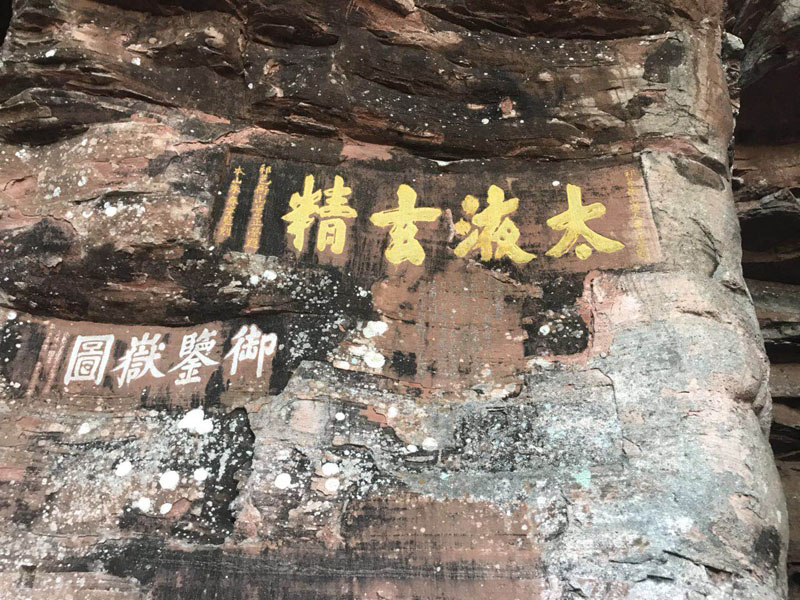
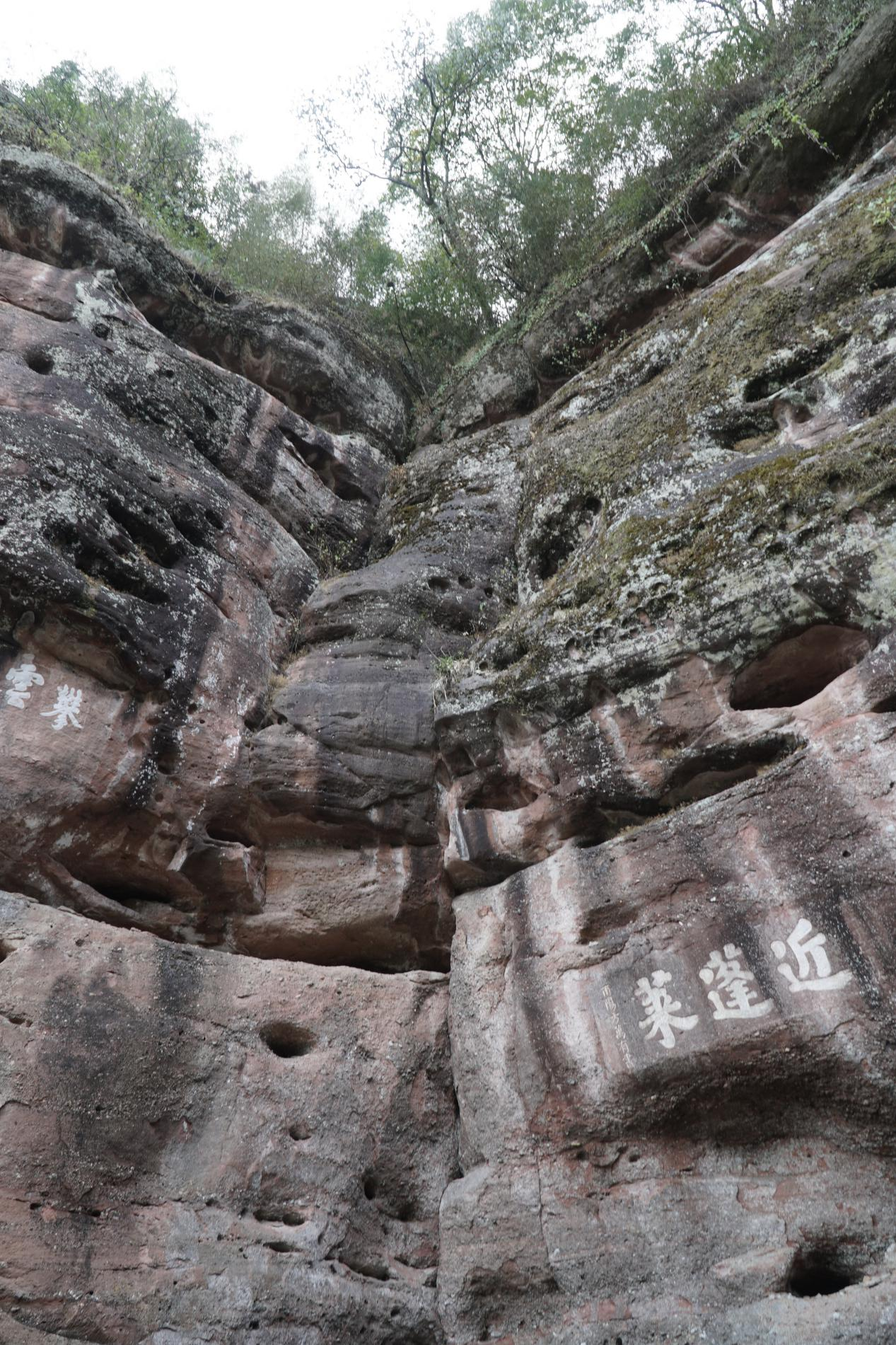
Mount Qiyun's Taoist paintings, cliff inscriptions, and stele inscriptions are extremely numerous; almost every peak bears an inscription and every cave a carved text, spanning the Tang and Song to modern times, with inscriptions by famous figures of every age such as Zhu Xi, Tang Yin, and Xu Xiake. Among them, the stone carving of the character for “longevity” written by Zhu Xi himself is a must-see.
As the foremost imperial Taoist ritual site in Jiangnan, its main hall is the Hall of Zhenwu, and there are other Taoist relics such as the Cave Mansion of the Perfected Immortals, the Cave of the Eight Immortals, the Wenchang Cave, the Hunyuan Cave, the place where Zhang Sanfeng cultivated, and the remains of a jar burial. Tradition holds that Zhang Sanfeng once cultivated in the Hunyuan Cave (according to the Gazetteer of Mount Qiyun), and that after ascending as a feathered immortal in the forty-second year of the Jiajing era of the Ming (1563), he was sealed in the cave in a jar burial; the present Hunyuan Cave is the site of his burial.
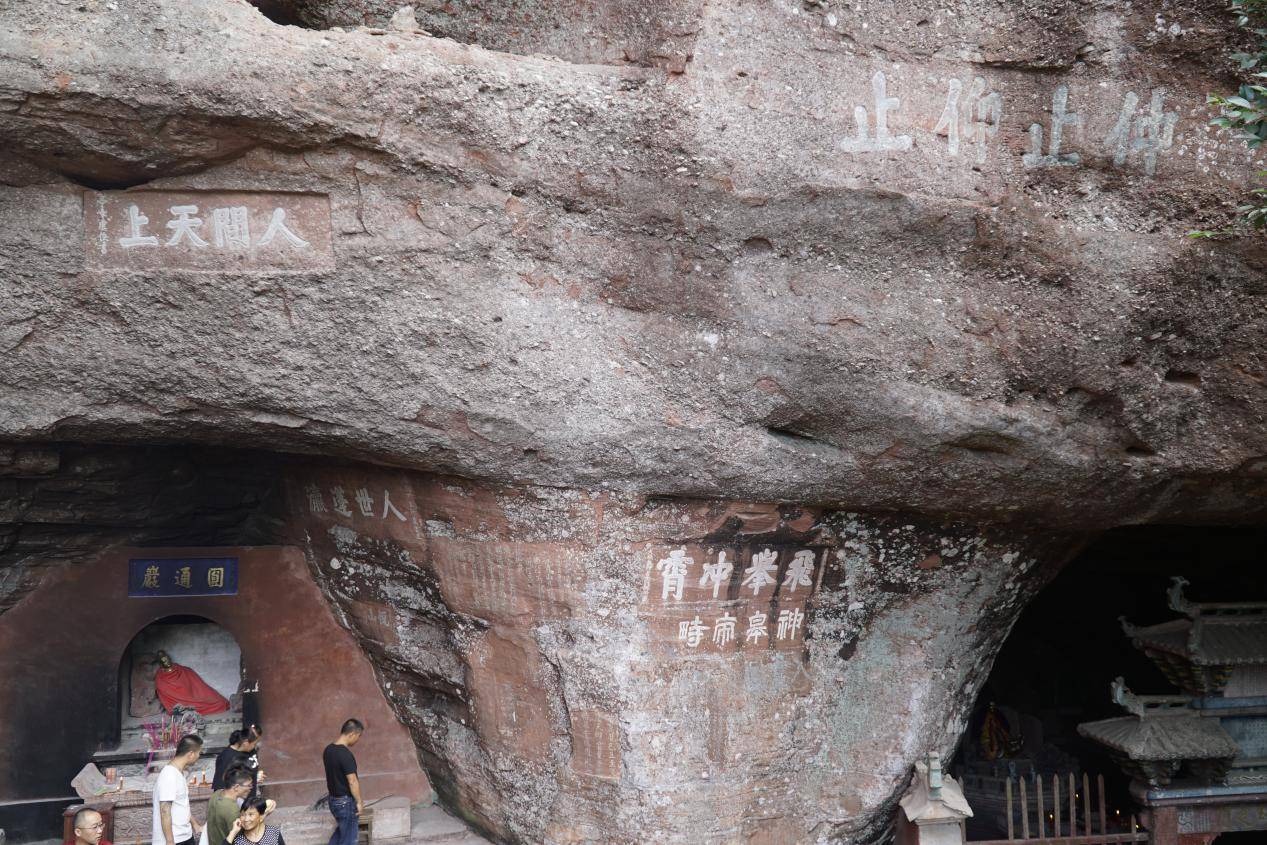
A survey in 1983 found 537 steles and inscriptions on Mount Qiyun. Of these, 305 are cliff inscriptions: the earliest are 13 from the Daguan era of the Northern Song and the Shaoxi era of the Southern Song, located near Stone Bridge Cliff; the most numerous are 283 from the Ming, found at the Cave Mansion of the Perfected Immortals, the First Heavenly Gate, Zixiao Cliff, Kuoya Cliff, Stone Bridge Cliff, and elsewhere; 6 are from the Qing, around the Cave Mansion of the Perfected Immortals and Loushanglou; and 3 from the Republican period. There are 232 stele inscriptions, carved in bluestone or red sandstone. The earliest is one from the ninth year of the Xining era of the Northern Song at the ruins of the Shimen Monastery; 169 are from the Ming, 29 from the Qing, 9 from the Republic, and 24 of unknown date.
8. Extraordinary Natural Scenery
Mount Qiyun is famed for being secluded, beautiful, wondrous, and perilous; its main scenery is concentrated between the First Heavenly Gate and the Taisu Palace by way of the Arhat Cave. Mount Qiyun has a Danxia landform: its peaks, cliffs, caves, and rocks are red as cinnabar and brilliant as rosy clouds. Characterized by this Danxia landform, it has wondrous Danxia sights such as Incense Burner Peak (shaped like an incense burner), the Wangxian Pavilion (overlooking the whole panorama), and the Little Gourd Heaven (a gourd-shaped grotto), skillfully blending geological wonders with myths and legends.
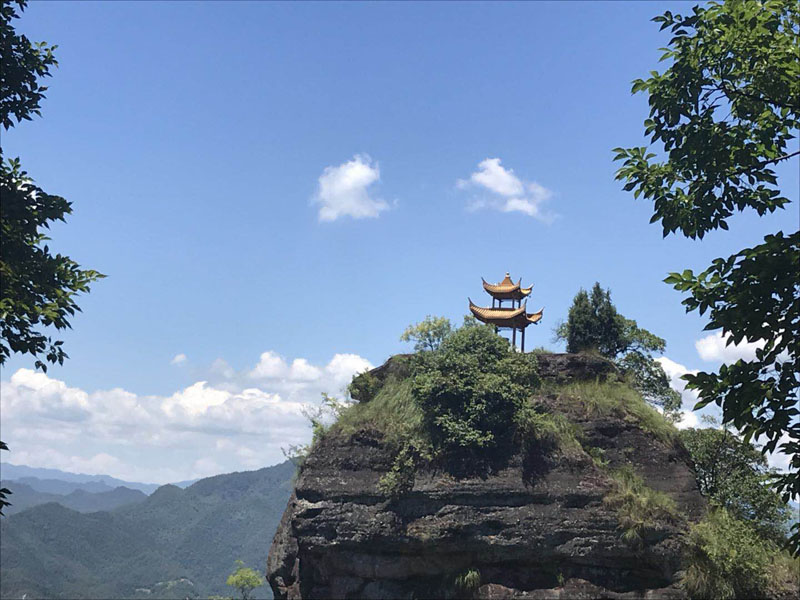
Mount Qiyun's Danxia landform, interspersed with secluded caves, winding streams, green pools, and clear springs, forms one natural wonder after another, its scenery strange, beautiful, and moving, with all kinds of wondrous peaks, strange rocks, and secluded caves, as well as many lakes, pools, springs, and waterfalls. Among them, Incense Burner Peak, shaped like an incense burner, Stone Bridge Cliff, surpassing the work of heaven, the Cave of the Immortals, secluded and mysterious, Yunyan Lake, fresh and tranquil, and the Pearl Curtain Spring, scattering gold and jade, are the most enchanting—well deserving the fine name “Little Wudang of Jiangnan.”
9. Rich Taoist Folk Customs
Pilgrimage Associations
The pilgrimage season on Mount Qiyun begins on the first day of the seventh month of the lunar calendar and ends on the first day of the tenth.
Besides the annual pilgrimages to the mountain, Mount Qiyun also holds a Guanyin festival at the Guanyin Cave of Loushanglou on the nineteenth day of the ninth lunar month, with abundant incense.
Every year on the fifteenth day of the first lunar month, the town of Yanqian at the foot of the mountain holds a night dragon-lantern festival, with songs and dances before the Taisu Palace to thank the gods.
The Heavenly Street Above the Clouds
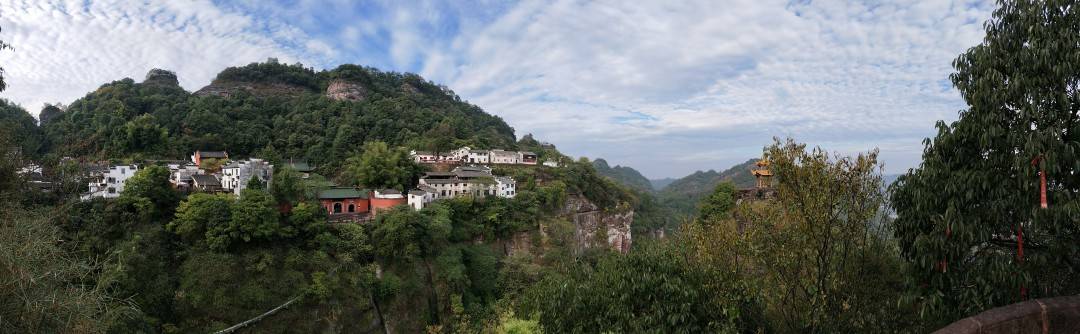
On a cliff at an altitude of 585 meters stands an ancient Hui-style village, an old street where Taoist architecture and residential architecture blend, hailed as “the First Taoist Village of China.” The Heavenly Street Above the Clouds (Yuehua Heavenly Street) is built hard against sheer cliffs and wrapped in a sea of clouds all year round. Walking through it is like entering a fairyland: at dawn you can watch the sunrise and at night gaze at the stars, as if in a realm of immortals, so visitors come in crowds.
Taoist Prayers for Blessings
Ancient temples such as the Taisu Palace and the Yuxu Palace carry a thousand years of incense. Drawing oracle lots, paying homage to the Tai Sui (the Year Star deity), and touching the “longevity” rock have become must-dos for pilgrims praying for blessings.