
Chiyang Daoren, Eastern Taoism
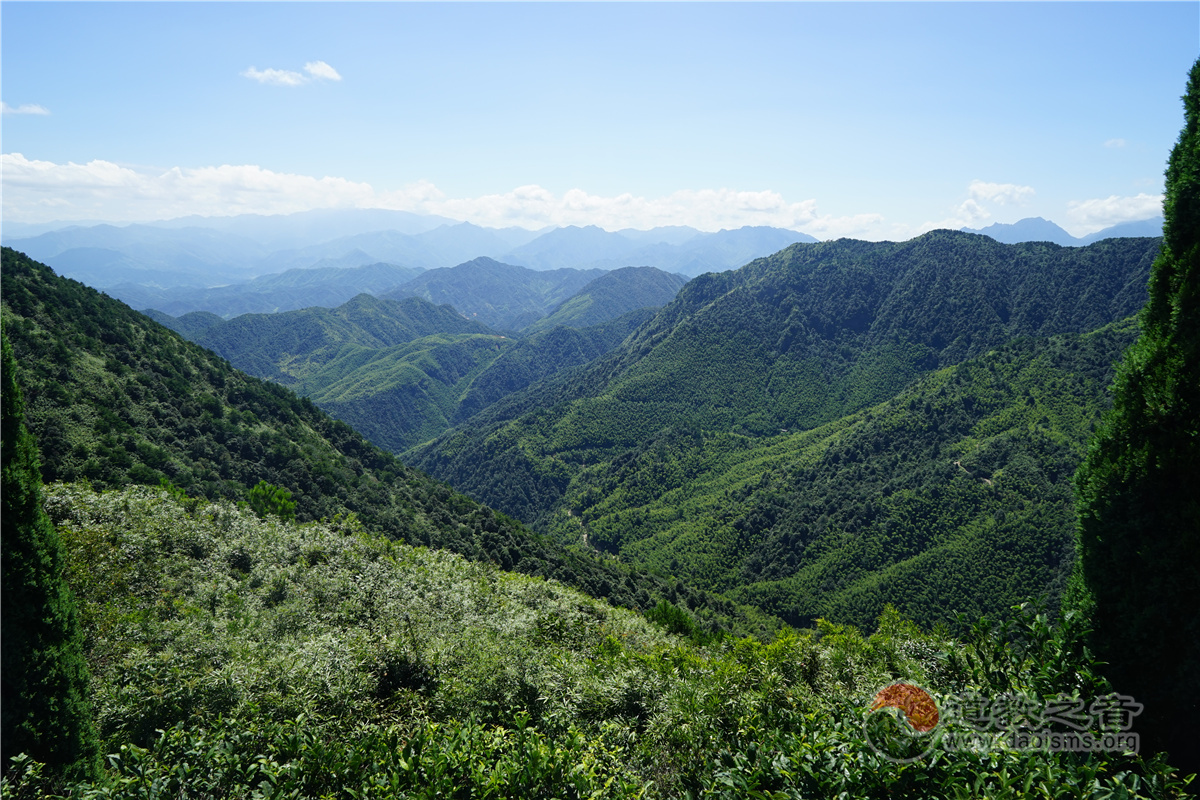
Mount Gexian lies in the center of Yanshan County, Shangrao, Jiangxi Province, and is a spur of the Wuyi Mountains.
According to records, the Three Kingdoms-era Taoist priest Ge Xuan refined elixirs and taught here, so later generations called the mountain Mount Gexian (Mountain of Immortal Ge), and it became a Taoist holy site famous in the three provinces of Gan (Jiangxi), Min (Fujian), and Zhe (Zhejiang).
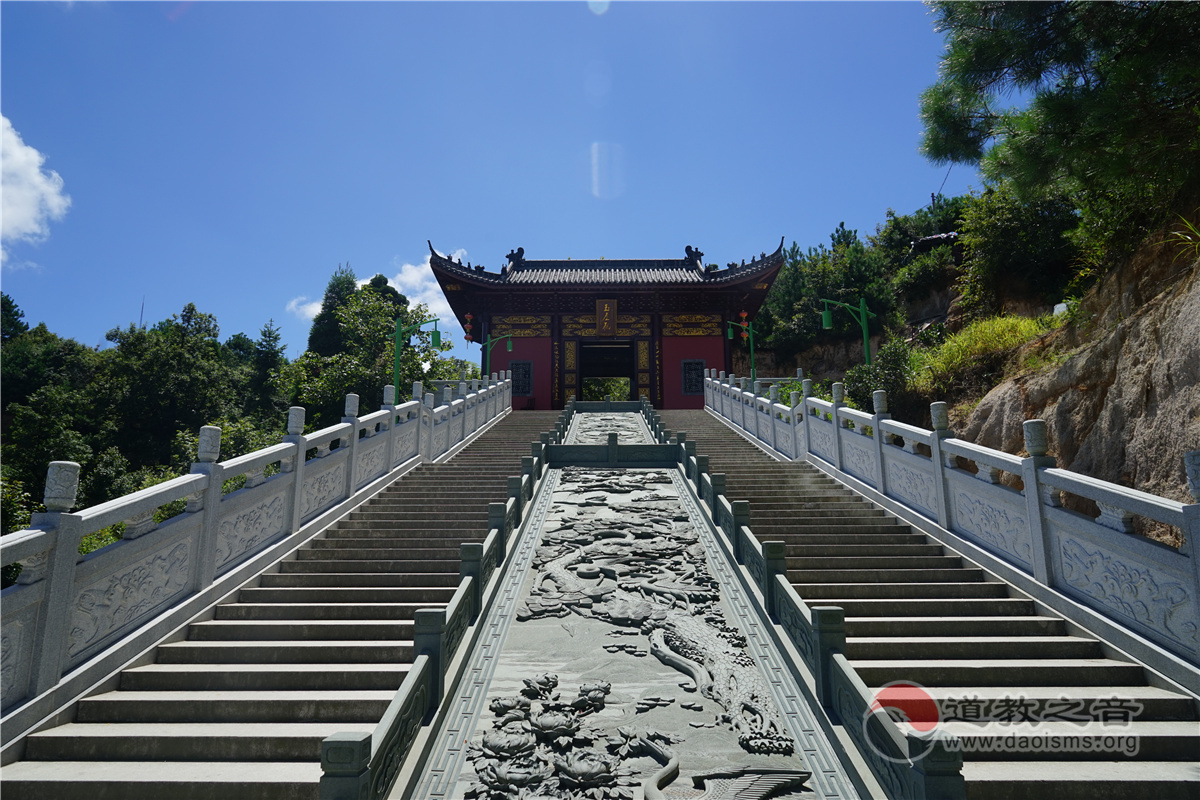
The Tongzhi-era Qing Gazetteer of Yanshan County records: during the Xiantong era of the Tang (860–873), the Zonghua Temple was built where Ge Xuan had refined elixirs; in the second year of the Zhiping era of the Song (1065) it was given the name Yuxu Temple. In the seventh year of the Yuanyou era of the Song (1092) it was renamed the Great Hall of Immortal Ge. It was repaired many times afterward. During the Jiaqing era of the Qing (1796–1820) it was destroyed by fire and later restored. In the seventeenth year of the Republic (1928) it burned again and was rebuilt the following year. In 1984 the People's Government of Jiangxi Province designated the Shrine of Immortal Ge and the Ciji Monastery as provincial-level key temples.
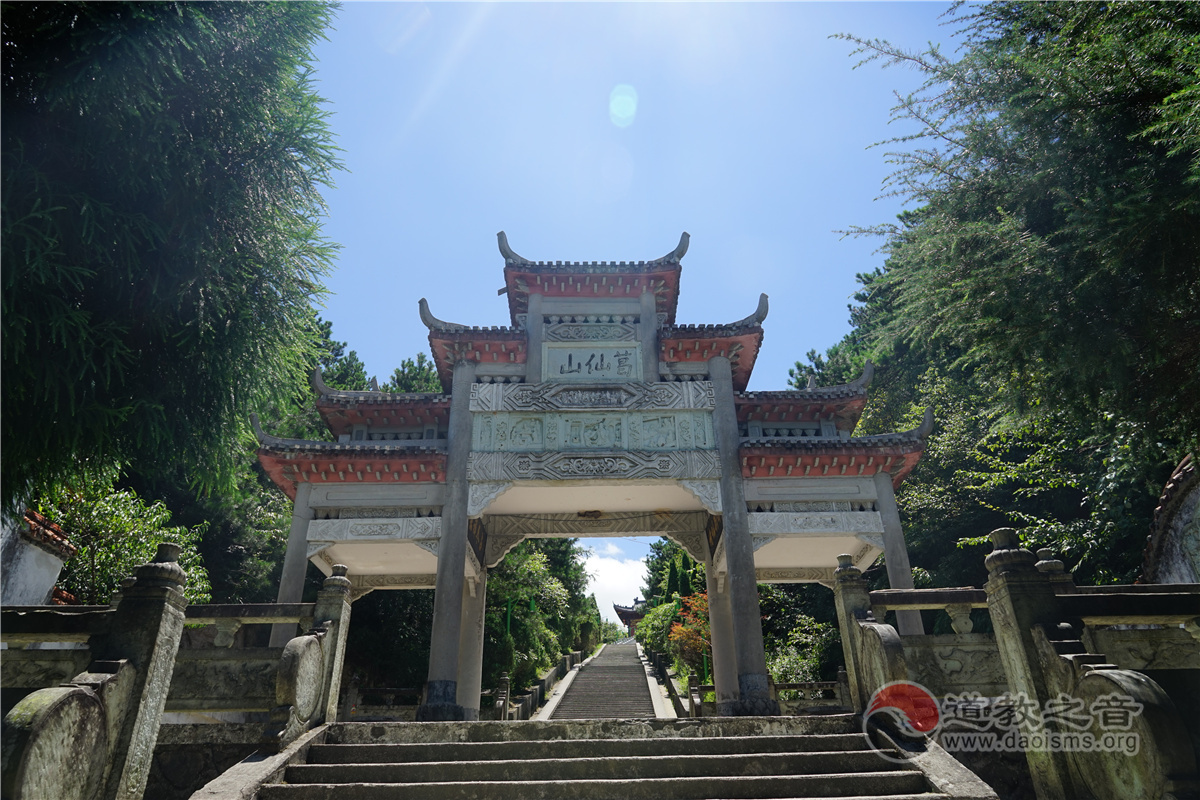
1. The Origin of Mount Gexian
The earliest record of the name Mount Gexian is the Tang poet Bai Juyi's “Miscellaneous Poems on the Scenery of Mount Gexian,” preserved in the old lithographed Gazetteer of Mount Gexian (a fragmentary copy): “From the Three Heavens I gaze to the horizon; below the mountain lies Yang Village.” This proves that the name Mount Gexian already existed in the Tang. Bai Juyi wrote this poem roughly between the tenth and thirteenth years of the Yuanhe era of the Tang (815–818), when he had been demoted to Marshal of Jiangzhou (present-day Jiujiang, Jiangxi). The marshal's post was a sinecure with essentially no power. Precisely because of this, Bai Juyi had time to travel among mountains and rivers, visiting Mount Lu, Mount Gexian, and other places. The earliest record of when the Shrine of Immortal Ge was built comes from the Wanli-era Book of Yanshan: “The Shrine of Immortal Ge is on Mount Gexian, seventy li southwest of Yanshan County… In the seventh year of the Yuanyou era of the Song (1092), local people built a shrine to worship him. During the Zhizheng era of the Yuan (1341–1368), the Taiji Temple was added, with a statue of the Immortal Elder made in its center.”
2. Perfected Chongying, Ge Xuan
Ge Xuan (from the seventh year of the Yanxi era of the Eastern Han, 164, to the seventh year of the Chiwu era of Eastern Wu in the Three Kingdoms, 244), courtesy name Xiaoxian, came from Langya (present-day Linyi, Shandong) and later moved to Danyang (present-day Jurong County / Jiangning, Jiangsu).
Ge Xuan was the patriarch of the Lingbao (Numinous Treasure) school of Taoism and is revered as one of the Four Great Celestial Masters, as famous as Zhang Daoling, Xu Xun, and Sa Shoujian. People honored him as “Ge the Immortal Duke,” “Immortal Elder Ge,” and “Immortal Duke of the Left of the Supreme Ultimate.” A famous eminent Taoist of the Three Kingdoms, he was enfeoffed in the Northern Song as “Perfected Chongying” and in the Southern Song as “True Lord Chongying Fuyou.”
Ge Xuan lost his parents early, and at little over ten resolved to study the Tao. He withdrew to famous mountains, visited extraordinary people, and took as his teacher Zuo Ci, a master of the Taoist arts (the same Zuo Ci who appears in the Romance of the Three Kingdoms). From him he received immortal scriptures such as the Grand Clarity Scripture of the Elixir, the Scripture of the Nine-Cauldron Elixir, the Scripture of the Gold-Liquid Elixir, and the Wondrous Scripture of the True One of the Three Primes, along with secret methods of refining qi to preserve the body and of curing illness and exorcising ghosts. In the first year of the Guanghe era (178), Ge Xuan went to Mount Tiantai to study the Tao, meditating deeply and practicing austerely. According to the Brief Record of Lingbao and the Comprehensive Mirror of Perfected Immortals Who Embodied the Tao Through the Ages, in the second year of the Guanghe era (179), Lord Lao the Most High (Taishang Laojun) commanded three Perfected to descend and give him thirty-six scrolls of immortal scriptures, including the Lingbao Scriptures, the Wondrous Scripture of Zhengyi Exhortations and Precepts, Dongyuan, and Datong, as well as true formulas such as the Shangqing Fasting Rites and the Fasting Rites of the Three and Seven Grades. Ge Xuan loved roaming mountains and rivers and cultivated the Tao at Mount Kuocang, the Southern Peak, Mount Luofu, Mount Gexian, and elsewhere.
In the seventh year of the Jian'an era of the Eastern Han (202), Ge Xuan went to Mount Gezao in Jiangxi, cultivating the Tao there and staying for forty-two years. He refined the nine-times-transmuted Golden Elixir, took many disciples, gathered herbs and made pills, set up stalls to give free consultations, and treated the sick for the good of the people, pioneering medical and pharmaceutical activity in Qingjiang. Mount Gezao later became the ancestral court of the Lingbao school, and Ge Xuan was revered as its patriarch.
The entry on Ge Xuan in the Biographies of Divine Immortals (Shenxian Zhuan) describes him as a practitioner of the arts who studied under Zuo Ci, excelled at healing, and was skilled in talismans and wondrous arts—using talismans to command ghosts, capturing and exorcising demons, and finally attaining liberation from the corpse. Legend says he could turn talismans into qilin feathers, make stubborn stones walk, and have swallows, sparrows, and insects dance gracefully at his command.
His disciple Zheng Yin obtained his methods, and Zheng Yin later passed them on to Ge Hong, forming the line of transmission “Zuo Ci → Ge Xuan → Zheng Yin → Ge Hong.” Ge Xuan compiled the Lingbao Scriptures and Proclamations, studied the true scriptures of Shangqing, Lingbao, and other Taoist traditions in depth, and instructed his disciples to pass on the registers generation after generation.
In the chapter “Golden Elixir” of the Baopuzi (Inner Chapters), Ge Hong calls Ge Xuan “my great-uncle, the Immortal Duke,” which shows his important place in the transmission of Taoist alchemy.
According to the Biographies of Divine Immortals and other records, on the thirteenth day of the eighth month of the seventh year of the Chiwu era of Wu in the Three Kingdoms (244), Ge Xuan, neatly dressed in robe and cap, entered his room, lay down, and stopped breathing, his complexion unchanged. His disciples burned incense and kept watch over him for three days and three nights. At midnight a great wind suddenly arose with a sound like thunder; the next day the neighbors all said there had been no wind—only inside this house had there been wind. Ge Xuan had departed, becoming an immortal, and was confirmed in the rank of Inner Minister of the Heavenly Mechanism of the Left Palace of the Supreme Ultimate, and Taoism honors him as “True Lord Changdao Chongying Fuyou.”
Ge Xuan was the great-uncle of Ge Hong, the famous alchemist and physician-pharmacologist of the Eastern Jin, and a key link in the transmission of the Tao and its methods. Revered as “Immortal Elder Ge,” he is worshiped with temples and statues in many places, and Mount Gezao in Jiangxi is the holy site of his cultivation.
In local legends of the Jiangnan region, Ge Xuan is portrayed as an immortal who refined the elixir, became an immortal, and ascended in broad daylight, and many places claim to be where he refined elixirs and ascended. The ancient Lingbao scriptures' portrayal of Ge Xuan raised his image from the cult of a local immortal to a divinity of universal, cosmic stature.
3. Ge Xuan and Yanshan
Ge Xuan's cultivation in Yanshan is recorded in the prefectural and county gazetteers of every age. For example, the Book of Yanshan of the forty-sixth year of the Wanli era of the Ming (1618) records: “Seventy li south (of the county seat) is Mount Gexian, thirty-six [li] high and twenty li [around], built up by the Han immortal Ge Xuan. There are an immortal's altar, an incense burner, and a water basin, all of cast iron. There is an immortal's well, and there is a dragon pool; there are the Mounting Stone, the Dismounting Stone, and the Stone for Resting the Mind; there is the Sword-Testing Stone, with finely written characters; there is the Ascension Terrace, a hanging peak rising into the void; and there are tracks of cranes and hoofprints of deer.” “Yanshan is a small county, yet the Tao gathers here in greatness, opening three gates: there are the four Confucians Zhu, Lü, and the two Lus; there are the three Chan masters Dayi, Zhifu, and Yunzhen; and tracing back further, there is Ge Xiaoxian. The four Confucians arose in the Song, the three Chan masters lived in the Tang, and Immortal Ge began in the Han. The eminent founders of the three traditions all gathered in Yanshan; the learning of Yanshan unites the three traditions, and one knows what to follow.”
4. The Great Hall of Immortal Ge
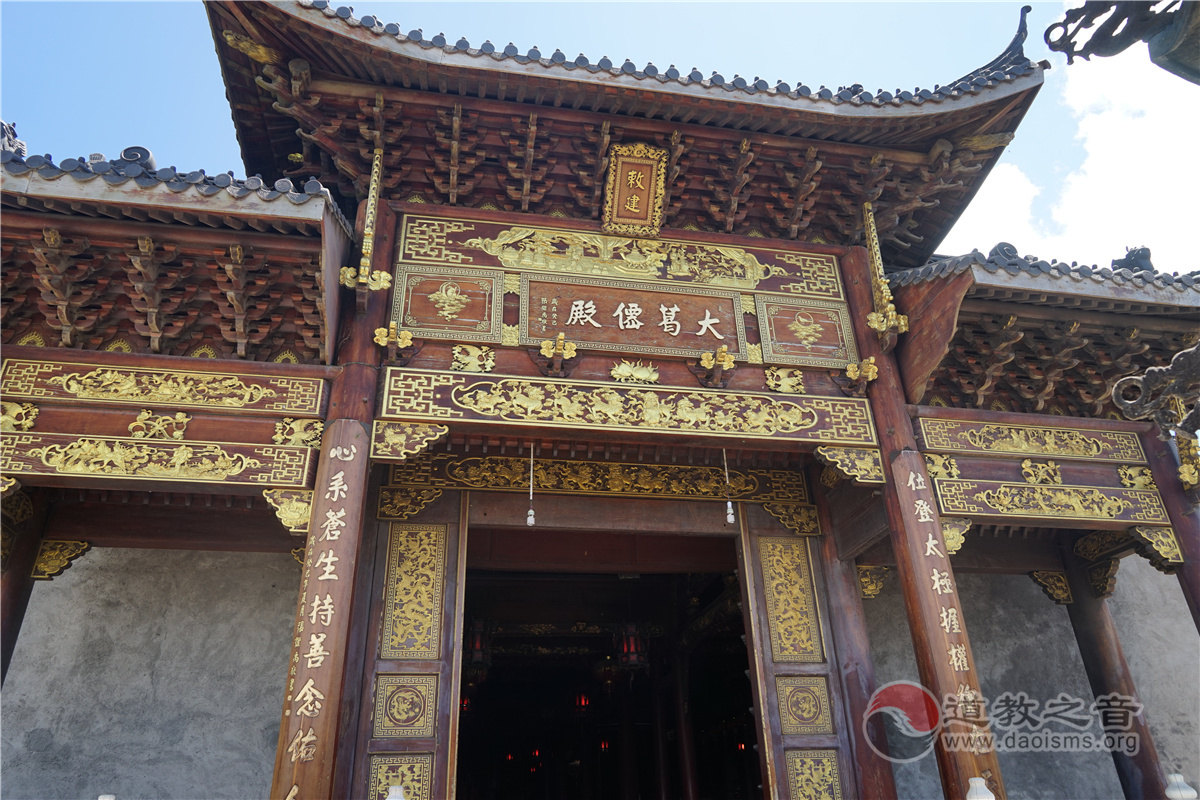
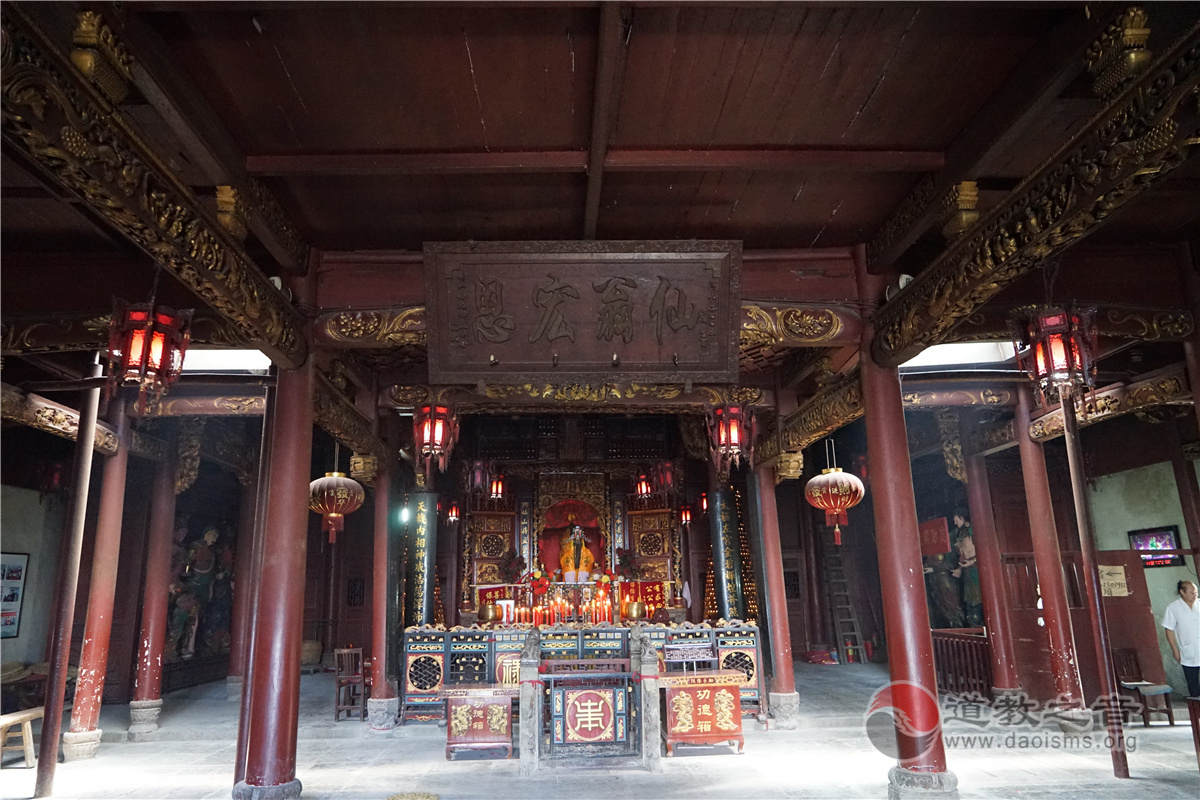
The Great Hall of Immortal Ge, commonly called the Shrine of Immortal Ge, stands on Incense Burner Peak, the highest peak of Mount Gexian. The hall is 29.2 meters long and 17 meters wide, with an area of 496 square meters. Inside is an altar with a traveling statue and a seated statue of Ge Xuan and six horizontal plaques. Beneath the altar is an ancient well said to have been built by Ge Xuan. To the right outside the hall door are the Hall of the Three Officials and the Hall of Wang Lingguan; a hundred steps lead on to the Hall of the Jade Emperor, the Tower of the Earth Mother, the Ciji Monastery, and the Dragon Pool. In the Dragon Pool a rock juts into the water like a tongue; this is where Ge Xuan washed herbs and refined elixirs. Beside the monastery is an immortal's well from which monks, Taoists, and pilgrims can draw water.
About 2.5 kilometers northwest of the Shrine of Immortal Ge, on a hillside, is the Mother's Hall, dedicated to Ge Xuan's mother; about 2 kilometers southeast, on another hillside, is the Father's Hall, dedicated to Ge Xuan's father. On the hilltop to the left of the shrine, stone pinnacles stand in clusters, and a huge boulder looks as if cloven in two by a sword; it is carved “Sword-Testing Stone” and is said to be where Ge Xuan tested his sword. Among the hills there are also relics such as the Mounting Stone, the Dismounting Stone, the Rock for Resting the Mind, the Immortal's Footprint, the Ascension Terrace, and the Immortal Spring for Washing the Eyes.
5. Practicing the Tao, Establishing Virtue, Helping the World, and Benefiting People
Incense has burned strong on Mount Gexian since the Song and Yuan. Believers from the three provinces of Fujian, Zhejiang, and Anhui and from Jiangxi itself come to pay homage to Immortal Elder Ge—several thousand on busy days and several hundred on quiet ones. Each year Mount Gexian “opens the mountain gate” on the first day of the sixth lunar month and “closes the mountain gate” on the first day of the tenth. During this period pilgrims from all directions flow in an endless stream, especially on the twentieth day of the eighth month, the birthday of Immortal Elder Ge, when those who climb the mountain to offer incense often exceed ten thousand.
Mount Gexian's Taoist music, with its long history and deep roots, is an important part of traditional Taoist culture and of great significance for carrying forward China's national musical culture. The Taoist philosophy and doctrine on which Mount Gexian's Taoist music rests promote the core values of Taoist culture.
While promoting Taoist culture, Mount Gexian actively carries out public welfare work. The Mount Gexian Lingbao Foundation of Shangrao mobilizes social forces to pass on love and help needy students realize their dream of going to university. Since 2012, the Mount Gexian Compassion and Merit Society has run a scholarship program for university students, building a bridge of charity. In addition, in recent years Mount Gexian has taken part in disaster relief, poverty relief, aid to the disabled, care for the elderly, road building, and bridge construction, continually improving its service to society.
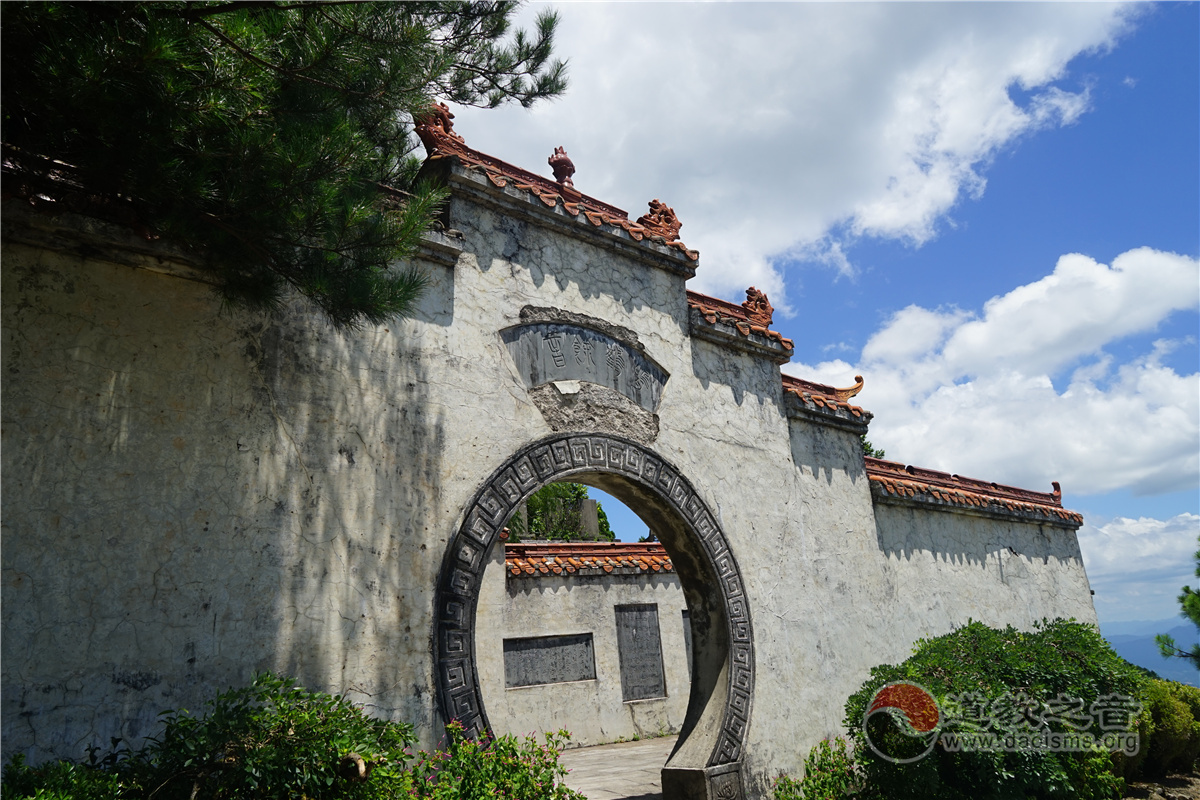
There are three Mount Gexians in China. The first is this one. The second is Mount Gexian in Chibi, Hubei, named because Ge Hong of the Jin dynasty cultivated the Tao there, at last ascending as a feathered immortal. The Kangxi-era Qing Gazetteer of Puqi County records: “The place where Immortal Ge of the Jin ascended as a feathered immortal is Mount Gexian, ten li south of Yahuan.” The third is Mount Gexian in Pengzhou, Sichuan Province, originally called Mount Baishi. At the end of the Eastern Han, the practitioner Ge Yonggui cultivated the Tao on Mount Baishi and later ascended as a feathered immortal, so the local people renamed it Mount Gexian.