
Chiyang Daoren, Eastern Taoism
Mount Longhu (Dragon and Tiger Mountain) is a famous mountain of Taoism, located 20 kilometers southwest of Yingtan, Jiangxi Province; its highest point, Tianmen Mountain, rises 1,300 meters.

The Origin of the Mountain's Name
Legend says that in the middle of the Eastern Han, Zhang Daoling came with his disciples to Mount Longhu to refine the “Divine Elixir of the Nine Heavens.” Legend says that after three years the elixir was complete, and an azure dragon and a white tiger circled the elixir cauldron. The Gazetteer of Mount Longhu records: “The mountain was originally named Mount Yunjin. The first Celestial Master refined the Divine Elixir of the Nine Heavens here; when the elixir was complete, a dragon and a tiger appeared, and so the mountain was named for them.”
Mount Longhu still has relics such as the Elixir-Refining Cliff and the Cauldron-Washing Pool, and books of ritual arts such as Commanding the Five Peaks, Summoning the Myriad Spirits by Proclamation, and the Secret Text of the Divine Tiger were once found in the Bilu Cave. Zhang Daoling spent more than thirty years in all at Mount Longhu, refining elixirs and founding his Way, writing Taoist books, taking many disciples, and treating people's illnesses with talisman water, among many other activities; those who came from all directions to learn from him numbered more than a thousand.
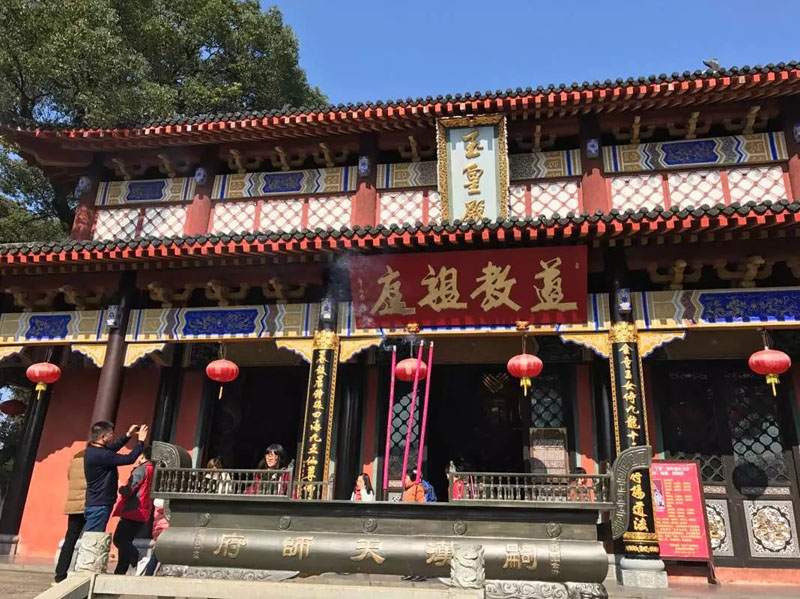
Mount Longhu and the Rise and Decline of the Zhengyi School
Beginning with Zhang Sheng, the fourth Celestial Master, at the end of the Han, the successive Celestial Masters of the Zhengyi school (Orthodox Unity) all lived here, passing down the Taoist succession by heredity for sixty-three generations and more than 1,900 years. They were repeatedly honored and enfeoffed by the ruling dynasties, at their height holding the first official rank, the highest a subject could attain, and became one of the two great hereditary families of Chinese cultural history—“the Zhangs of the South and the Kongs (Confucius's descendants) of the North.” When Taoism flourished, the Mount Longhu area had ten great Taoist palaces, eighty-one Taoist temples, fifty Taoist cloisters, and ten Taoist hermitages—a glimpse of its prosperity.
While Zhang Sheng, the fourth Celestial Master, was at Mount Longhu, he restored the Mysterious Altar of the Founding Celestial Master and the site of his elixir stove, and every year on the days of the Three Primes he mounted the altar to confer registers. In this period the Zhengyi school of Mount Longhu was living in seclusion deep in the mountains, devoted to cultivation and to enriching and reforming its doctrine; it had no wide influence in society and, in particular, had not won the faith and recognition of the upper classes. At that time, within Taoism there were the “Northern Way of the Celestial Masters” led by Kou Qianzhi and the “Southern Way of the Celestial Masters” established by Ge Hong, Lu Xiujing, and others, as well as the Maoshan Shangqing school founded by Lady Wei Huacun, forming a three-way balance among Mount Longhu, Mount Gezao, and Mount Mao, known together as the “Three Mountains.”
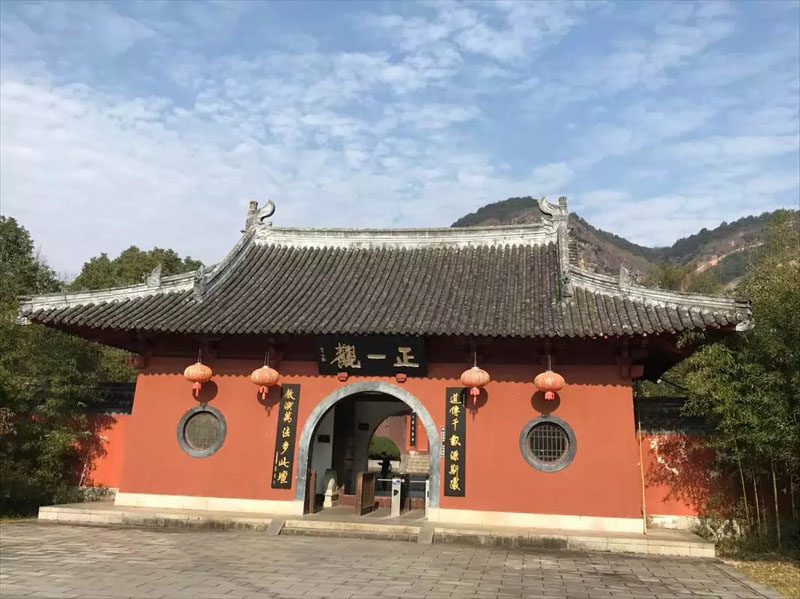
After a long period of refining and reforming its doctrine, Zhengyi Taoism completed its historic transformation from a popular religion into an official one, and its influence began to show from the Tang dynasty on.
The Tang emperors esteemed Taoism, claiming that their Li clan descended from Laozi, the founding patriarch of Taoism, and established Taoism's position within the imperial house. Against this background, the Zhengyi school of Mount Longhu received the support of imperial power. In the seventh year of the Tianbao era (748), Emperor Xuanzong of Tang personally received Zhang Gao, the fifteenth Celestial Master, ordered him to set up an altar in the capital to confer registers, granted him a golden seal, exempted the Celestial Master's family from all taxes, and established a special “Office for the Conferral of Registers” in the capital. Emperor Xuanzong also personally enfeoffed Celestial Master Zhang as “Grand Preceptor” and wrote the “Encomium to the Founding Celestial Master.” Under Emperor Suzong, an edict sent incense and offerings for an offering ritual on Mount Longhu. Emperor Wuzong received Zhang Chen, the twentieth Celestial Master, “commanding that he need not bow on meeting officials,” granted gold and silk to build halls on the mountain, and wrote in his own hand the name “Zhenxian Temple.” In 860 the Celestial Master was again ordered to hold a great Golden Register offering ritual, and in 865 the Founding Celestial Master was enfeoffed as “Great Dharma Master of the Three Heavens, Supporter of the Teaching and Assistant of the Mystery.” Through the vigorous support of successive Tang rulers, the Zhengyi school of Mount Longhu developed rapidly and its social influence grew day by day.
After the Northern and Southern Song, the Zhengyi school of Mount Longhu developed further, and the Celestial Master's status rose substantially. The emperors not only ordered the Celestial Master to lead the Taoism of the Three Mountains but also consulted him on how to govern the state. In the fifth year of the Dazhong Xiangfu era of Emperor Zhenzong of Song (1012), Zhenzong renamed the Zhenxian Temple on Mount Longhu the Shangqing Temple, from which the town of Shangqing at Mount Longhu takes its name. In the eighth year of the Dazhong Xiangfu era (1015), Zhenzong enfeoffed Zhang Zhengsui, the twenty-fourth Celestial Master, as Master Zhenjing, setting the precedent of emperors granting titles to the reigning Celestial Master. In addition, Emperor Zhenzong set up an Office for the Conferral of Registers in the capital for Celestial Master Zhang and granted funds from the treasury to expand the Shangqing Temple on Mount Longhu.
By the end of the Northern Song, society was beset by crises. Emperor Huizong of Song believed that Taoism had the power to help the world and save the state and repeatedly summoned the Celestial Master Zhang Jixian, asking him not only for the arts of longevity and immortality but also about current affairs. Emperor Huizong enfeoffed Zhang Jixian as Master Xujing and in 1105 had a mansion built for him. This also set the precedent of the government building a mansion for the Celestial Master.
In the Southern Song, Zhang Keda, the thirty-fifth Celestial Master, was also highly valued by the emperor. In the third year of the Jiaxi era of Emperor Lizong (1239), Zhang Keda was granted the title Master Guanmiao and put in charge of the talismans and registers of the Three Mountains, concurrently overseeing the religious affairs of the imperial Taoist temples and monasteries, and presiding over the Longxiang Palace. This was a landmark event: from then on, the Taoism of all three mountains—Mount Longhu, Mount Gezao, and Mount Mao—came under the Celestial Master's charge. Celestial Master Zhang became the leader of the Zhengyi school by imperial patent, and the Mansion of the Celestial Masters became the center of Taoist activity in Jiangnan.
From the Yuan to the Ming, the Zhengyi school continued to develop. At the end of the Song, Emperor Shizu of Yuan sent his envoy Wang Yiqing to Mount Longhu to seek secretly from Zhang Keda, the thirty-fifth Celestial Master, a talismanic mandate. After Shizu founded the Yuan dynasty, he received Zhang Zongyan, the thirty-sixth Celestial Master, ordered him to lead Taoism in Jiangnan, and granted him a silver seal as before. When Emperor Wuzong took the throne, he summoned Zhang Yucai, the thirty-eighth Celestial Master, to court, “specially granting him the title Grand Master of the Palace with Golden Seal and Purple Ribbon, enfeoffing him as Duke of Liu, and bestowing a golden seal.” The Yuan rulers' support for the Way of the Celestial Masters was passed down almost from generation to generation; virtually every emperor conferred titles on the line of Celestial Masters. Throughout the Yuan, Zhengyi Taoism held a prominent position, recognized and venerated by imperial power, further consolidating its leading position within Taoism.
Before Zhu Yuanzhang, Emperor Taizu of Ming, proclaimed himself emperor, he sent envoys to Zhang Zhengchang, the forty-second Celestial Master, asking him to issue a document from heaven and bestow the talismanic mandate “Heaven's mandate has its destined recipient,” to create an atmosphere of opinion that the ruler's power was granted by the gods. In the first year of the Hongwu era (1368), Zhu Yuanzhang conferred on Zhang Zhengchang the title Perfected Heir to the Zhengyi Teaching, with permanent charge of Taoist affairs throughout the realm, granted him a silver seal and a rank equivalent to the second grade, and set up assistant officials—called the Assistant of the Teaching and the Keeper of Documents—as a fixed institution. Whenever the Celestial Master traveled, he used post horses, carriages, and boats, with the highest treatment. Zhu Yuanzhang also granted silver to rebuild the Celestial Masters' mansion and wrote encomiums for the successive Celestial Masters. In the first month of the second year of the Zhengtong era (1437), Emperor Yingzong of Ming gave a banquet for Zhang Maocheng, the forty-fifth Celestial Master, and specially invited the Duke Yansheng, the descendant of the Sage Confucius, to the same banquet, granting each python robes and red shoes, further establishing the pattern of the two great families, “the Zhangs of the South and the Kongs of the North.” The title conferred on Zhang Yuanji, the forty-sixth Celestial Master, in the third year of the Chenghua era (1467) ran to twenty-five characters, and the marriages of the forty-seventh through fiftieth Celestial Masters were presided over by the emperor, with daughters of the imperial clan given in marriage to Celestial Masters.
From the early Qing to the Yongzheng era, the court's favor toward Zhengyi Taoism did not diminish. Zhang Yingjing, the fifty-second Celestial Master, was enfeoffed by imperial decree as Perfected Heir to the Zhengyi Teaching, in charge of Taoist affairs throughout the realm. In the ninth year of the Yongzheng era, the court also granted 100,000 taels of silver from the treasury for a major renovation of the temples and halls of Mount Longhu and the purchase of fertile fields to support the Taoists.
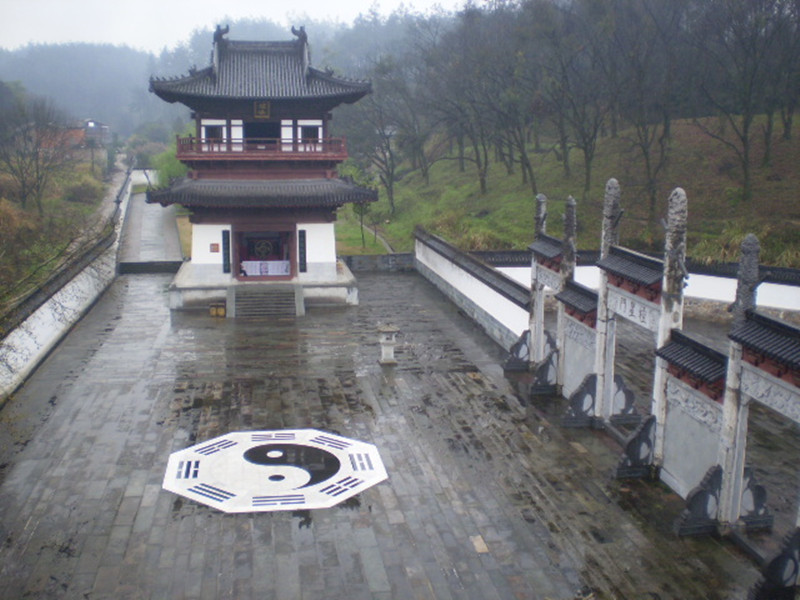
After that, down to the Republican period, the Zhengyi school gradually declined. From the reign of the Daoguang Emperor of the Qing on, the system of the Celestial Master's audiences at the capital was abolished.
The Mansion of the Celestial Masters on Mount Longhu
The Mansion of the Celestial Masters on Mount Longhu was the residence and place of worship of the Celestial Masters from the fourth on. Originally called the “Zhenxian Temple,” it was built at the foot of Mount Longhu. The mansion was originally the private residence granted by Emperor Huizong of Song, Zhao Ji, to Zhang Jixian, the thirtieth Celestial Master. It was first built in the fourth year of the Chongning era (1105) at Guanmenkou in Shangqing town, and in the sixth year of the Yanyou era of the Yuan (1319) it was moved by Zhang Sicheng, the thirty-ninth Celestial Master, to its present site, Changqing Ward in Shangqing, in the west of present-day Shangqing town.
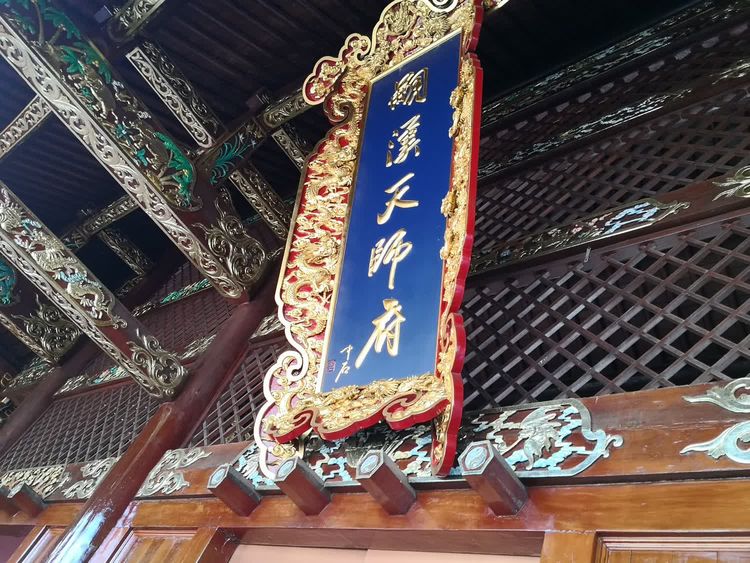
In the first year of the Hongwu era of Emperor Taizu of Ming (1368), 15 yi (360 taels) of silver were granted to rebuild it on its present site in the center of Shangqing town. It was later rebuilt more than ten times; the surviving timber buildings all date from the Qianlong, Jiaqing, and Tongzhi eras of the Qing.
The whole mansion consists of the main gate, the great hall, the rear hall, the private residence, the study, the garden, the Ancestral Altar of the Myriad Methods, and more. In layout and style it preserves the distinctive Zhengyi feature of gods and humans dwelling together, and it is an artistic treasure of Chinese private gardens and Taoist architecture.
West of the “Private Residence Gate” of the Mansion of the Celestial Masters stands the Ancestral Altar of the Myriad Methods, first built in the fifth year of the Jiajing era of the Ming (1526), where the successive Celestial Masters worshiped the gods and performed rites by imperial command. The “Ancestral Altar of the Myriad Methods” is an important symbol of the ancestral court of the Zhengyi school.
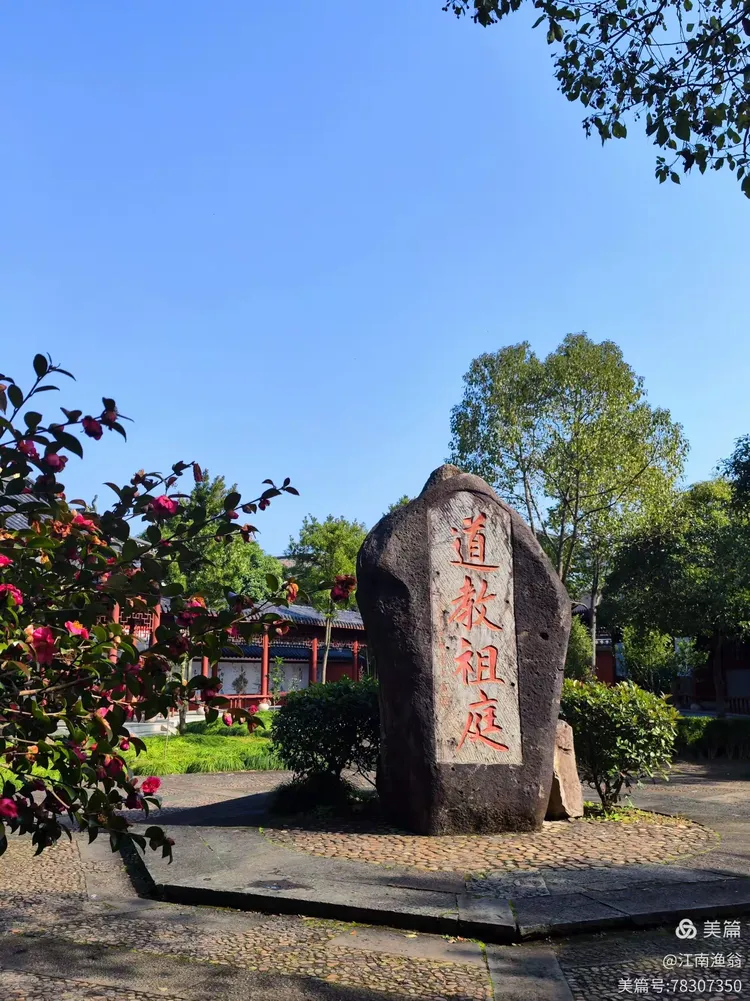
The Complete Questions and Answers on the Essential Meaning of Taoism records: “Taoism originally had four great ancestral altars: the Celestial Master branch of Mount Longhu had the Zhengyi Mysterious Altar; the branch of the Three Mao True Lords of Mount Mao had the Shangqing Dharma Altar; the branch of Immortal Elder Ge of Mount Gezao had the Lingbao Mysterious Altar; and the branch of Xu Jingyang of the Western Hills had the Jingming Dharma Altar. Later, because the three mountains transmitted little, in the Yuan dynasty the Celestial Master was ordered to take charge of Taoist affairs in Jiangnan, so the talismans and registers of the Three Mountains were all brought under the Mansion of the Celestial Masters on Mount Longhu, and the Zhengyi Mysterious Altar was renamed the ‘Ancestral Altar of the Myriad Methods,’ as it remains to this day.” Thus the “Ancestral Altar of the Myriad Methods” is the common ancestral altar of the Zhengyi school of Taoism.