
Chiyang Daoren, Eastern Taoism
The Shangqing Palace on Mount Longhu (Dragon and Tiger Mountain) in Jiangxi, also called the Zhenxian Temple and in full the Great Shangqing Palace, lies in the Mount Longhu scenic area of Yingtan, Jiangxi. It is the emblematic temple of the Zhengyi (Orthodox Unity) school of Chinese Taoism and has been hailed as “the Foremost Palace of Chinese Taoism,” “the Metropolis of Immortals and Spirits,” “the Foremost Taoist Temple South of the Yangtze,” and “the Head of the Temples South of the Yangtze.”
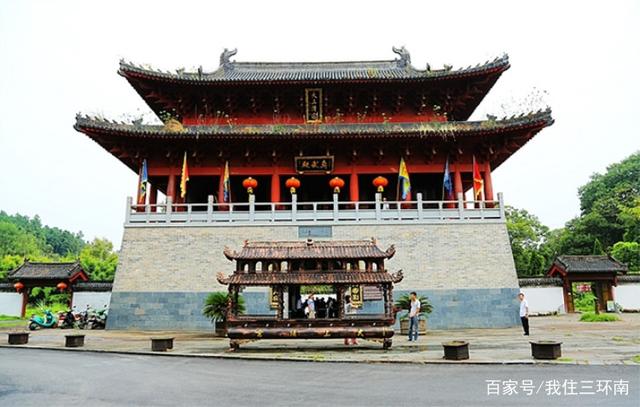
This is not only the holy place where the Celestial Masters of successive generations taught the Tao and carried out the conferral of registers; it is also the site of the prototype of the “Hall of Subdued Demons” where, in Water Margin, one of the Four Great Classical Novels of China, Grand Marshal Hong mistakenly released the 108 heroes.
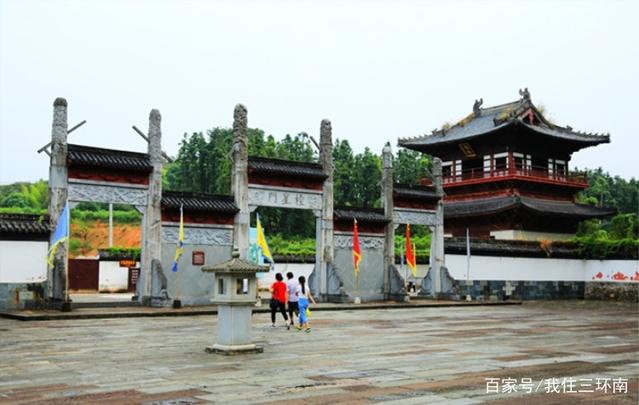
1. The Shangqing Palace: Birthplace of Taoism
The title “the Foremost Palace of Chinese Taoism” comes from its important place in the history of Chinese Taoism and its grand scale; it has witnessed a thousand-year saga in the development of Taoism.
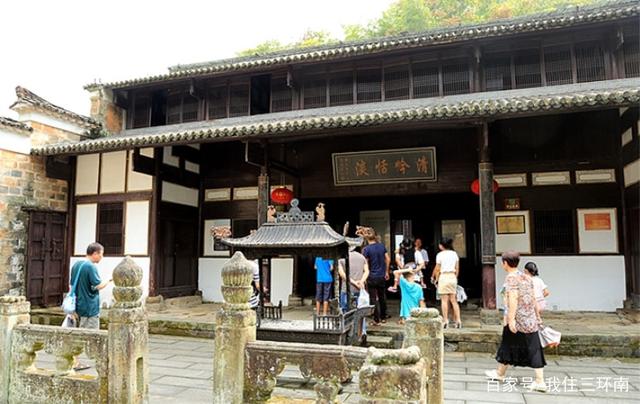
The Shangqing Palace was first built in the Eastern Han dynasty, originally as the thatched hut of the Celestial Master Zhang Daoling. It was expanded through five dynasties—the Tang, Song, Yuan, Ming, and Qing—and at its height had two palaces, 12 halls, and 24 separate courtyards, the largest of any temple south of the Yangtze. In 1930 most of it was destroyed by fire. After rebuilding in 2000, its core structures were restored, including the Gate of the Blessed Land, the Dismounting Pavilion, the Lingxing Gate, the Dongyin Courtyard, and the Hall of Subdued Demons.
2. The Exalted Place of the Shangqing Palace in Taoist History
1. Ancestral court of Taoism: It is the ancestral court of Zhengyi Taoism and the central temple where the Celestial Masters of successive generations expounded the teaching, preached the Dharma, transmitted the Tao, conferred registers, and held major offering rituals.
2. Built by imperial order: From the Tang dynasty on, emperors of successive dynasties repeatedly granted silver for its expansion, and there was large-scale construction in each of the Song, Yuan, Ming, and Qing dynasties.
3. Grand in scale: At its height it had ten great Taoist palaces, eighty-one Taoist temples, and thirty-six Taoist courtyards, with several thousand people studying the Tao in the palace.
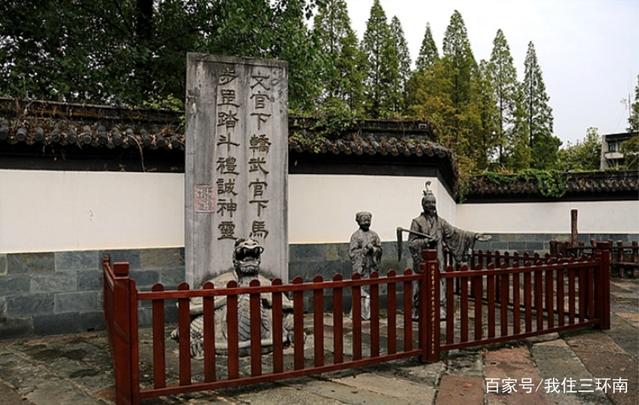
4. Exalted in status: An archway inscribed “Civil officials alight from their sedan chairs, military officials dismount from their horses” stands before the palace.
3. Titles Well Deserved
1. The Foremost Taoist Temple South of the Yangtze: because its scale was unrivaled in the region south of the Yangtze.
2. The Foremost Palace of Chinese Taoism: at its height, the scale of its Taoist buildings and its number of disciples studying the Tao were the greatest in the whole country.
3. The Head of the Temples South of the Yangtze: in the Tang and Song dynasties, when Taoism was honored as the state religion, the Shangqing Palace alone stood at the head of the temples south of the Yangtze.
4. The “Forbidden City” of the Taoist world: in 2014 archaeologists excavated a site of 300,000 square meters, which has been called “the Forbidden City of the Taoist world.”
4. Archaeological Discoveries Confirm the Shangqing Palace as a True Holy Place of Taoism
1. A vast site: with a total area of 300,000 square meters, equal to 42 standard soccer fields, it is the largest and highest-ranking site of an imperial Taoist temple complex yet found in China.
It was named one of the Top Ten New Archaeological Discoveries in China for 2017.
In October 2019 it was designated a Major Historical and Cultural Site Protected at the National Level.
2. More than 10,000 artifacts unearthed: these include bluish-white porcelain of the Song dynasty, egg-white-glazed porcelain of the Yuan dynasty bearing the “Shufu” mark, blue-and-white porcelain of the Ming dynasty, and components reserved for imperial use such as eave tiles with five-clawed dragon patterns—very precious and rare.
3. A unique architectural design: the joined layout in the shape of the character gong (an I-shape) is a typical feature of Ming official architecture. The buildings along the central axis rise level by level from south to north, symbolizing ascent to heaven and becoming an immortal. The S-shaped “Dragon Street” takes the form of the dividing line between yin and yang in the Taoist diagram of the Supreme Ultimate (Taiji), and notably, statues of the Four Duty Officers and the Six Ding and Six Jia divine generals are set into its walls.
4. Eave tiles with five-clawed dragons: the imperial-rank five-clawed dragon pattern found among the artifacts shows that the Great Shangqing Palace enjoyed special imperial favor.
5. A feng shui treasure site where nine dragons gather: nine mountains encircle the Shangqing Palace—Mount Tianmen, Mount Tai, Mount Wujian, Lion Mountain, Chongtian Peak, Mount Yingtian, Mount Xihua, Tortoise Mountain, and Mount Shengjing.
5. Honored by Emperors Through the Dynasties
Eastern Han: Originally the thatched hut of the Celestial Master Zhang Daoling.
Late Han: Zhang Sheng, the fourth Celestial Master, built the “Altar for Transmitting Registers.”
Tang dynasty: In the Huichang era (841–846), Emperor Wuzong of the Tang granted silver to build a Taoist temple and bestowed the name plaque “Zhenxian Temple.”
Northern Song: In the Dazhong Xiangfu era (1008–1016), Emperor Zhenzong of the Song ordered it renamed the “Shangqing Temple”; in the fourth year of Chongning (1105), Emperor Huizong of the Song ordered it rebuilt; in the third year of Zhenghe (1113), it was raised to the “Shangqing Zhengyi Palace.”
Southern Song: In the second year of Duanping (1235), the emperor paid for a large-scale expansion.
Yuan dynasty: Emperor Wuzong ordered it renamed the “Great Shangqing Zhengyi Palace of Ten Thousand Longevities.”
Qing dynasty: The Kangxi emperor wrote a name plaque in his own hand. The plaque reading “Great Shangqing Palace” in the center of the tower of the Zhenwu Hall above the Gate of the Blessed Land was written and bestowed by the Kangxi emperor.
6. Main Surviving Sights of the Shangqing Palace
1. The Gate of the Blessed Land: its name plaque was written by the Kangxi emperor, and the couplet beside the gate reads: “How could this blessed land admit ordinary visitors? The source of the immortals is not for worldly eyes to glimpse.”
2. The Dismounting Pavilion: a building with a double-eaved hip-and-gable roof supported by 28 pillars, corresponding to the Twenty-Eight Lunar Mansions in the sky. The floor of the pavilion bears a diagram of the Nine Palaces and Eight Trigrams, and a stele in front of the pavilion is inscribed “Civil officials alight from their sedan chairs, military officials dismount from their horses.”
3. The Lingxing Gate: an original structure from the Yuan-dynasty building of the Shangqing Palace, made of white marble with six pillars and five ridges, and one of the most precious relics left from the whole palace.
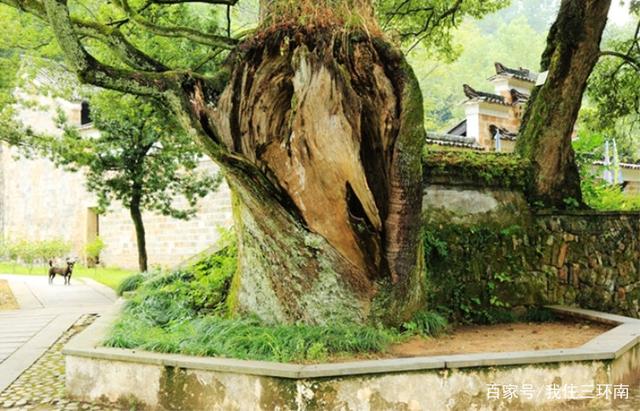
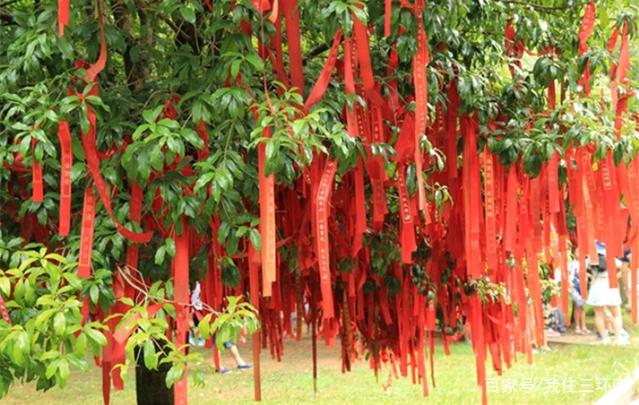
4. The Dongyin Courtyard: at its entrance stand two ancient trees; it is the only Ming-Qing building that escaped the great fire. In front of the gate is an ancient camphor tree more than 1,800 years old. Though its trunk is hollow, its branches are still lush and leafy—truly astonishing.
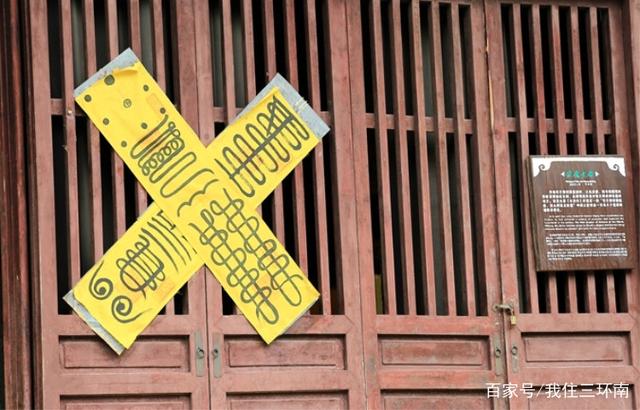
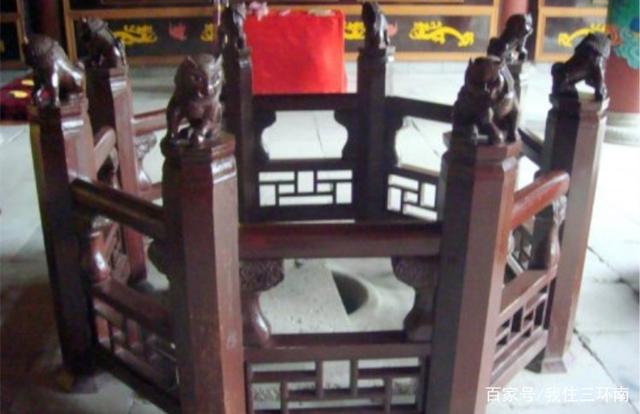
5. The Hall of Subdued Demons: The crossed seals on the doors of the Hall of Subdued Demons were drawn with talismans, stamped, and pasted on by the Celestial Masters of successive generations in person. It is the setting of the opening story of Water Margin, “Grand Marshal Hong Mistakenly Releases the Demons,” and the Well for Suppressing Demons is still inside the hall.
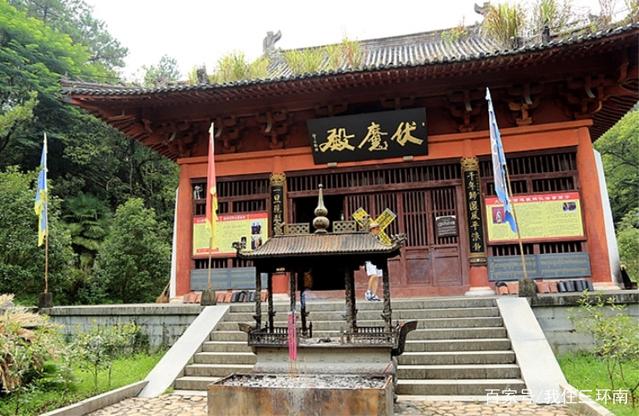
6. The Well for Suppressing Demons: In the Hall of Subdued Demons there is a stone stele, and behind it is the Well for Suppressing Demons; its cover too bears the seals of the Celestial Masters of successive generations. The Shangqing Palace became even more famous through the first chapter of Water Margin, “Celestial Master Zhang Prays to Avert the Plague; Grand Marshal Hong Mistakenly Releases the Demons.” The Well for Suppressing Demons in the Hall of Subdued Demons in the story is located in the Great Shangqing Palace. Legend has it that here Grand Marshal Hong released the thirty-six Heavenly Ladle (Tiangang) stars and the seventy-two Earthly Fiend (Disha) stars, giving rise to the stories of the one hundred and eight demon lords, and so the Great Shangqing Palace is also called “the birthplace of the 108 heroes of Water Margin.”
As the ancestral court of the Zhengyi school of Chinese Taoism, the Great Shangqing Palace fully deserves the title “the Foremost Taoist Temple South of the Yangtze.” It is not only a holy place of Taoist culture but also an important site for the study of ancient Chinese architecture and religious archaeology, where one can appreciate the historical charm of “the Forbidden City of the Taoist world.”