
Chiyang Daoren, Eastern Taoism
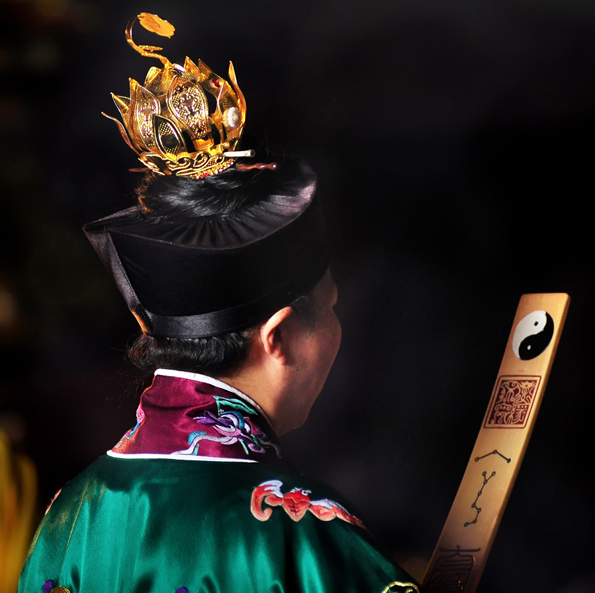
For yellow-capped Taoist priests, all who travel to visit do so in order to seek masters and inquire into the Tao. Seeking a master calls for sincerity, for without sincerity one cannot move a master; inquiring into the Tao calls for virtue, for without virtue one cannot accord with the Tao. Therefore, when we first arrive at a public monastery, lodging as a wandering Taoist (guadan), we should give weight to proper appearance and norms. If we act with care, the mind will be clear and one’s nature attained, and everyone will find their proper place.
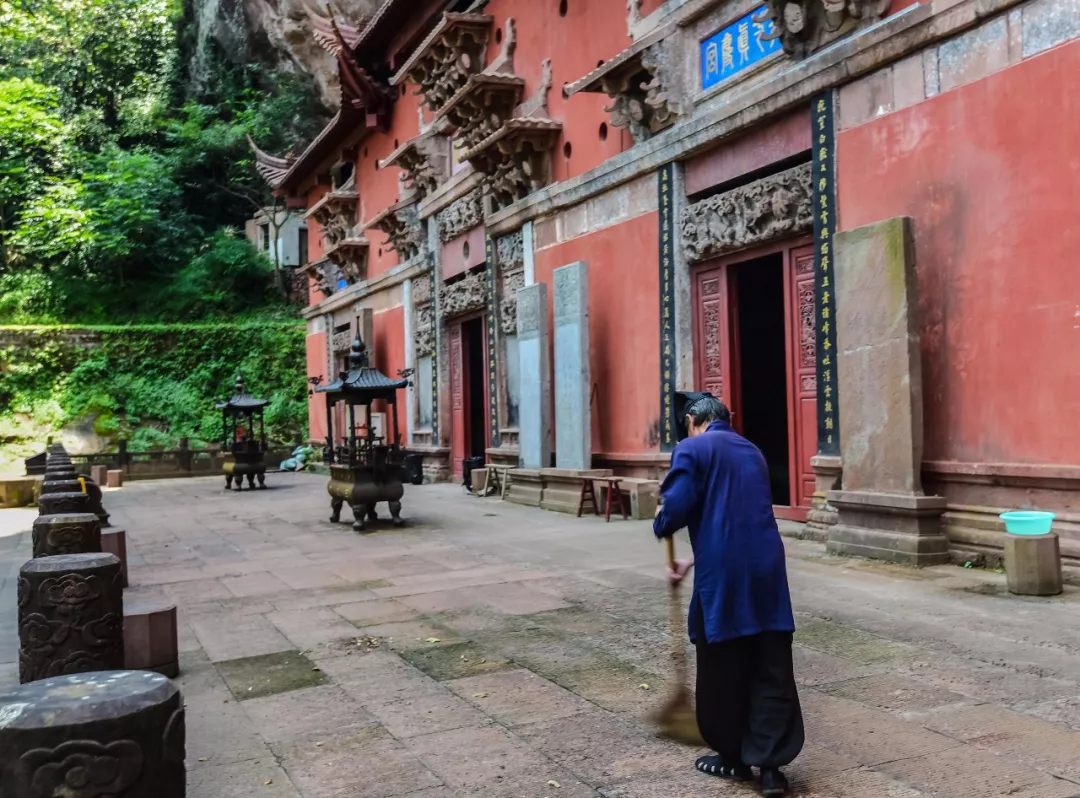
When traveling to seek masters and inquire into the Tao and lodging at a public monastery, one must first have seven things in order—clothing, hair, crown, cap, robe, socks, and shoes—all of which concern outward appearance and dress. They are explained one by one below:
1. Clothing: When a Taoist priest lodges at a public monastery, all the garments worn on the upper body, large or small, from the innermost to the outermost, must be round-collared Taoist garments. Lay-style collared underclothes may not be worn; otherwise one will be regarded as a fake Taoist, “raw inside and cooked outside, passing off fish eyes as pearls,” and not only will one be refused lodging, one will be driven out.
2. Hair: A visiting Taoist priest must have a full head of hair coiled into a topknot; half-grown hair or hair cut in a ring is not permitted.
3. Crown: A Taoist priest traveling to visit must wear a “yellow crown.” Generally one wears the “crescent-moon crown” (shaped like a silver ingot); those who have received the precepts or served as masters may wear the “Five Peaks crown” (a wooden crown carved with the figures of the Five Peaks).
4. Cap: Most visiting Taoist priests wear the “Hunyuan cap,” also called the “Lun cap,” the first of the nine caps. First, it lets the hair show so that a crown can be worn; second, it carries the meaning of the one qi of primordial chaos. Elderly Taoist priests who are bald or have thinning hair may also wear the “Nanhua cap.”
5. Robe: Also called the deluo, generally blue with a black satin collar, known as the “three-level hemmed Taoist robe”: the two sleeves are level with the hem of the robe, and during worship the feet do not show. The sleeve openings are 2 chi 4 cun wide. One may also lodge wearing a long gown, with sleeve openings 1 chi 8 cun wide, and at the very least 1 chi 4 cun.
6. Socks: Tall white socks. White symbolizes one’s original face, untainted by a speck of dust; they are also called “water socks and crane shins,” with the same meaning.
7. Shoes: Taoist companions who travel to visit generally take care to wear “double-faced shoes,” with leather heels and toes, black uppers, and white soles; yellow-capped Taoist companions call these “cloud shoes and crane feet,” with that very meaning. Alternatively, one may wear “ten-directions round-mouthed black shoes” or straw sandals woven of rattan.
When fellow practitioners meet for the first time and do not know each other’s names, they generally address each other as “old practitioner”; in the questions and answers below, the visitor is called the “lodging guest” for short. On meeting an elder, one should be humble and careful and call oneself “disciple”; above all avoid arrogance, and answer every question. Every public monastery that takes in lodgers has two main halls, the “Ten Directions” hall and the “Clouds and Waters” hall. Those who arrive on odd-numbered days are sent to rest in the Clouds and Waters hall, and those who arrive on even-numbered days to the Ten Directions hall.
When lodging at a public monastery, one should generally be ready for three sets of questions: first, questions about one’s dharma family (the home temple where one left home) and the record of three generations (oneself, one’s master, and one’s master’s master); second, questions about the scriptures (the morning and evening liturgy); third, questions about the mealtime offering and closing (the scriptures and incantations recited before meals). These three must be memorized thoroughly.
The process of lodging is described below:
On first arriving at a public monastery to lodge, place your pack (called the “robe bundle” within the religion) on the steps of the “reception room” beside the main hall. Then straighten your crown and fasten your cap, put your clothes and cap in order, go to the door of the reception room, and call: “May the honored receiver show compassion.” The receiver, already dressed and waiting inside, answers: “Compassion.”
The receiver welcomes you with clasped hands and invites you into the room. The lodging guest says, “Three bows to the honored receiver,” and the receiver at once returns the courtesy, saying “One bow,” and then “Please be seated,” and you sit down.
The receiver then asks: “From which famous mountain and which temple has the old practitioner come?” Bowing slightly, you answer: “Your disciple has come here for the first time from such-and-such temple on such-and-such mountain.”
Question: “The old practitioner’s immortal surname?” Answer: “Your disciple’s lay surname is Li.”
Question: “Your honored lineage?” Answer: “My humble lineage is Longmen.”
Question: “Your honored upper and lower?” (upper refers to the lineage character, lower to the personal name) Bowing slightly, answer: “Your disciple is of the twenty-first generation, and my lineage name is Yipu.”
Question: “Old practitioner, your ordaining master’s immortal surname, and his honored upper and lower?” Bowing slightly, answer: “My ordaining master’s surname is Zhang; upper Qing, lower De.”
Question: “Your master’s master’s immortal surname, and his honored upper and lower?” Answer as above.
Question: “Have you received the precepts? Which famous mountains, temples, and public monasteries have you been to, and what offices have you held?” Answer: “Your disciple has not been long out of home and has been to few places,” or, “I held such-and-such minor office at such-and-such public monastery, and sought the precepts at such-and-such public monastery in such-and-such year.” If one has not received the precepts, made visits, or held any office, one must answer truthfully.
The receiver says to the guest: “By the order of this monastery, every fellow practitioner newly arriving to lodge must recite the morning and evening liturgy. Would you be so kind as to recite it, if you know it well?” Here one must be humble. Answer: “Your disciple has been rushing along the road and fears the scriptures may have grown a little rusty. If I dianji (dianji meaning forget), please, honored receiver, show compassion and prompt me often” (asking for prompting to beg indulgence: more prompting, less reciting). When reciting the scriptures, begin wherever the receiver prompts and recite from there; if not prompted, recite straight on until the scriptures are finished.
The receiver says: “By the order of this monastery, please also recite the ‘Mealtime Offering and Closing’” (the scriptures and incantations recited when making offerings before the two daily meals, morning and noon).
When the Mealtime Offering and Closing has been recited, the receiver immediately takes a wooden tablet, writes on it the record of three generations and “one new lodger,” and gives it to the lodging guest, who carries this tablet to the door of the guest hall and calls: “May the honored guest prefect show compassion.” The guest prefect answers, “Compassion,” takes the tablet, and invites him into the hall.
The lodging guest then says, “Three bows to the honored guest prefect,” and the guest prefect returns the bow, saying “One bow,” and then “Please be seated.” The questions and answers in the guest hall that follow are basically the same as in the reception room and are not repeated here, until all the questions are finished.
The guest prefect leads the lodging guest to the secretary’s office and calls: “May the honored secretary show compassion; please send one new lodger.” If it is one’s second or third time lodging, it is called a “returning lodger.”
The secretary leads the lodging guest to the main hall and calls: “May the honored hall master show compassion; one new lodger.” The hall master answers, “Compassion.” The secretary says, “Three bows to the honored hall master,” and the hall master returns the bow, saying “One bow”; then three bows to the honored deputy hall master, and three bows to the assembly of old practitioners. The secretary calls that the bows are finished, and the hall master says, “Three bows in return to the honored secretary,” whereupon the secretary goes back.
After the hall master has settled the lodging guest in his place, he invites him to sit and tells him: “Old practitioner so-and-so, you have just arrived here and must know the rules and order of this monastery: going up to the hall three times a day and to the refectory twice; no talking at night in bed and no speaking during meals; making no noise coming and going, and staying calm and quiet in daily life; asking for leave to go into town and joining the community for manual work; being careful in your conduct and not raising your voice in conversation,” and so on. When the hall master has finished his instructions, each goes to rest.
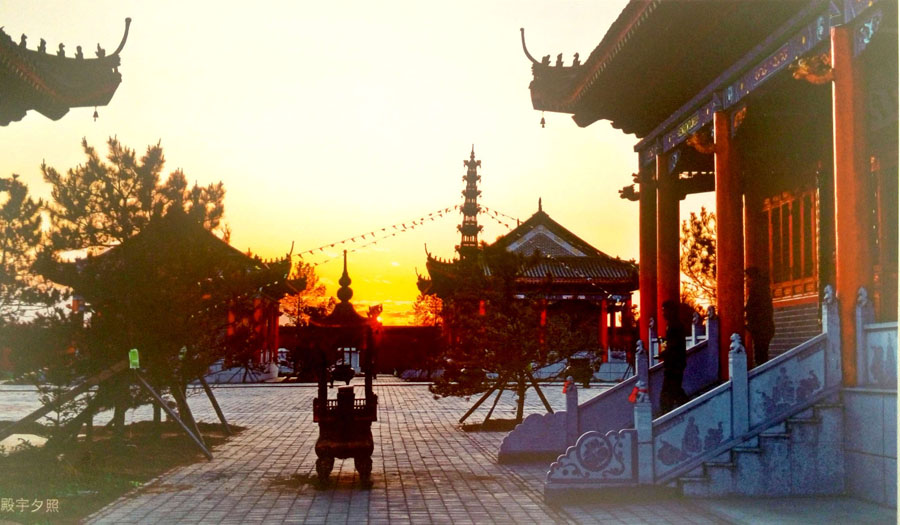 The communities of public monasteries and of Taoist temples and monasteries go up to the hall to recite scriptures three times a day, morning, noon, and evening; some go up twice a day, morning and evening. Going up to the hall is signaled by the bell and board, hence the name “bell-and-board monastery,” or by the drum. The usual order is: at the first round of the drum, the hall keeper offers incense and the liturgists prepare; at the second, the community pays homage; at the third, recitation begins.
When going up to the hall, as soon as the first round of the drum sounds, the liturgists immediately bathe, wash, and rinse their mouths, put their robes and crowns strictly in order (one may not mount the altar in lay-style collared underclothes or dirty shoes), and gather in the main hall, settling the spirit and calming themselves. On entering the hall, members of the community may not pay homage at the “central position” (the central position is the principal place where the head of the temple pays homage and offers incense). Each faces the altar and bows once with clasped hands, takes their place in the ranks, faces the sacred images, and stands with hands clasped, watching the hall keeper offer incense. At the second round of the drum, the whole community bows three times toward the altar together. The liturgist strikes the third round of the drum, the altar is opened, and recitation begins. Before recitation, there must be no conversation, noise, or commotion; one must be solemn and calm, sincere and reverent, never casual. Then one kneels and recites aloud. During recitation, the following norms must be observed:
1. When opening and unrolling the scriptures, do not touch the text with your hand or lick your finger to turn the pages; use the scripture marker to turn them, and do not point at the words with the tip of the marker (the tip being the sword-point end).
2. Listen quietly with hands clasped. As though facing the sacred ones, let the eyes not wander and the ears not listen elsewhere; concentrate the spirit and let no thought stray.
3. During recitation, do not cough or spit at will, or go in and out, disturbing the altar of recitation.
4. Do not whisper to one another, shake your feet or wave your hands, or doze off.
5. During recitation, do not go to the toilet at will. If you absolutely must go, take off your robe and crown, and afterward wash your hands and face; otherwise you may not mount the altar again.
6. On the altar of recitation, do not break wind at will, lest the foul air assail the altar and offend the community. The above six “ritual taboos” must be carefully observed and never lightly violated.
When the community has finished reciting, all bow three times toward the altar together; then the two ranks of the community face the central aisle, stand in two rows facing each other, clasp their hands together, bow, and withdraw.
Why is the recitation of the Taoist liturgy described here so strict? Because it is not only one of the daily lessons in norms of conduct but also a way of cultivation that joins inner work with outer practice. If one persists and keeps it up over a long time, it not only benefits one’s health, warding off illness and prolonging life, but also brings boundless, naturally inconceivable joy in the cultivation of the spirit.
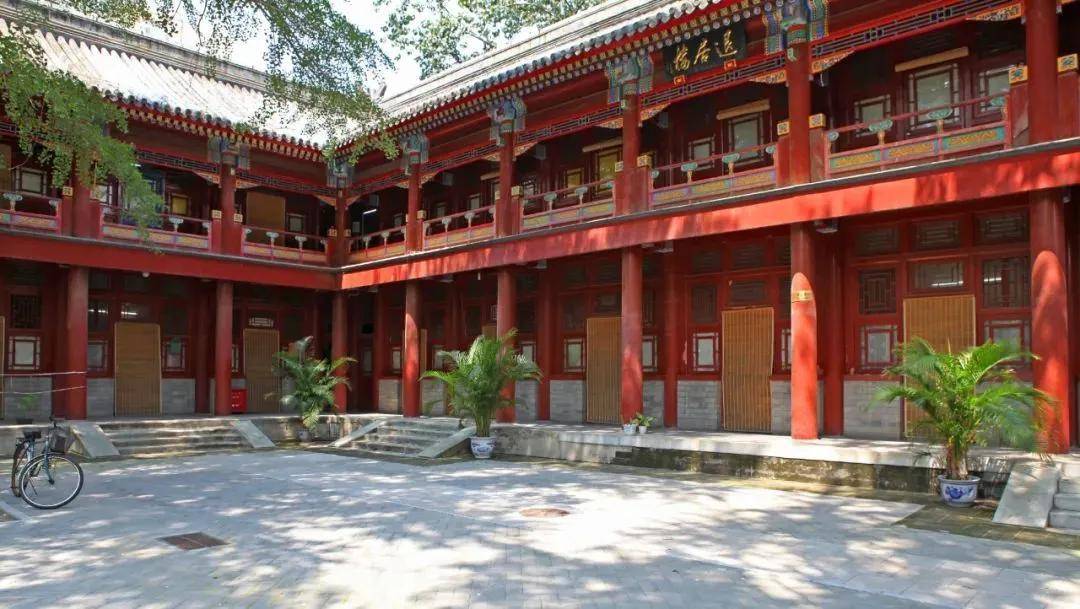 The order for offering incense and offerings before the gods in a ritual service is basically the same at beginning and end as the ceremony of going up to the hall to recite scriptures. It is still signaled by the drum, and the community bathes, dresses in robes and crowns, and waits. At the first round of the drum, the lamps are lit and the offerings presented; at the second, incense is offered and burned in pinches; at the third, after the rites of homage, recitation begins, and the community kneels to recite after. The order of leaving and entering the hall is as before.
The etiquette of offering incense and offerings described here is not the same as the everyday offering of incense sticks and food; it refers to solemn ritual services on festival days, when fine incense and offerings are presented—for example, on the birthdays of the patriarchs, at ritual services of the Three Primes and the Five La days, at the altar of offering rites for the Jade Emperor Scripture, or on the first and fifteenth days of the month at the new moon and full moon. Public monasteries and temples all prepare fine incense and offerings, memorials, petitions, candles, and so on for these celebrations.
At the first round of the drum, the lamps are lit and the offerings presented. There are many kinds of offerings. At ritual services it is customary to present before the gods ten kinds of offerings—incense, flowers, lamps, water, fruit, tea, pastries, treasures, pearls, and food—bright and beautiful, to make an imposing display. Offerings are further divided into three grades. The highest grade generally consists of five altars, each with five items, five times five, twenty-five plates; some even present nine altars, but this is very rare. The middle grade consists of three altars, three times five, fifteen items. The lowest grade is an ordinary single altar, generally of vegetables, rice, steamed buns, water, fruit, tea, and pastries. At some public monasteries and temples, on every festival and ritual service, the abbot and the prior fast and bathe beforehand, put their robes and crowns in order, and with devout hearts strive to mount the altar in person to present the offerings. When presenting them, the abbot or prior must raise the offerings with both hands above the forehead and kneel before the gods, while the attendants or the hall keeper stand to the left and right to receive the offerings and place them on the altar. When the offerings have been presented, the head of the temple goes on to burn incense in pinches.
At the second round of the drum, incense is offered. There are two distinct forms of incense rite: burning incense sticks and burning incense in pinches. Burning incense sticks is the duty of the hall keeper; burning incense in pinches is the duty of the head of the temple. For burning, three kinds of incense are commonly used: stick incense, compound incense, and Tibetan incense. When about to burn incense, first, one must not sniff it; second, one must not light it at the lamp. The Golden Code says, “Incense lit at the lamp is not accepted by the gods.” One must first light a leftover stick from the lamp flame and use that. Holding the incense in the right hand, raise it above the ear, and with the left hand, facing the censer, plant it. Generally three sticks are offered at the principal position; they should be level with one another and no more than about an inch apart, planted properly in one go and upright, leaning neither left nor right, forward nor back. After the principal position, offer incense at the left position and then at the right; for the other positions on either side, the ordinary rite of one stick or three sticks is the same.
When the hall keeper has finished offering incense, the abbot, as head of the temple, goes on to burn incense in pinches. The incense for this is of five kinds—sandalwood, cloud incense, agarwood, purple dalbergia, and kyara—called the “five precious incenses.” Of the five, kyara is no longer available and is rarely seen. Cloud incense and dalbergia come as powder or lumps; agarwood and sandalwood can be split into strips and broken into pieces, each no more than about an inch long and no more than three fen across. Each time incense is offered in pinches, three pieces of each kind are used. These five incenses are reserved for grand ritual services and festivals. Once lit, their fragrance spreads in all directions and can dispel all that is improper and impure. The abbot or prior mounts the altar to offer incense in pinches, holding the tablet in the right hand and pinching the incense with the left. The three pieces are placed in the censer one after another in three turns, offered either standing upright or lying east to west. While the three pieces burn, one silently recites the “Incense Blessing Incantation” three times, then steps back and bows three times in homage. Next comes presenting the memorial (with the rite of the ten directions), reading the memorial, and burning the petition; then the abbot or the high priest reads the “Dedication of Merit,” praying for longevity, the peace of the country, and the well-being of the people. After that the scriptures are recited, and when recitation is finished, the two ranks of the community bow three times toward the altar together, turn to face each other, bow with clasped hands, and withdraw from the altar.
5. Going to the Refectory
In the past, besides going up to the hall three times a day to recite scriptures, the community of a public monastery also went to the refectory twice a day, morning and noon, to present food offerings and recite the offering texts. Before presenting offerings and taking the meal, at the signal of three strokes of the wooden clapper by the head cook in the kitchen, the community immediately put on their crowns and fastened their sashes, put their robes and caps in order, and gathered in front of the refectory courtyard, lining up in two ranks, left and right, standing face to face, with the liturgist leading the ranks with the chime. Then the refectory master brought the food offerings from the kitchen and offered incense and food in the refectory. After the food was taken out (that is, the food for the orphaned souls), the refectory master struck the chime three times, the head cook answered the chime and struck the clapper, and then the liturgist sounded the chime and led the ranks into the refectory, where they stood in two rows, left and right, each in their place, with hands clasped. The liturgist began the “Offering Incantation,” and the whole community chanted along with him. When the offering had been chanted, the liturgist transformed the food (the incantation used for transforming food is called transforming food for the orphaned souls; at public monasteries, on the first and fifteenth days of every month, the liturgists and the community go before the altar of the orphaned souls to scatter food and recite scriptures for their deliverance, which is called pardoning the orphaned souls). The community took only a few mouthfuls of the meal and stopped, and then chanted the “Closing Incantation.” After the refectory master had removed the offerings and left the refectory, the liturgist called out, “Everyone, please eat,” and the community sat down to the meal proper. While eating, one must be solemn and calm; there must be no talking, noise, or commotion, and no clattering of chopsticks and bowls. Two servers walk the refectory, each with a bucket, serving vegetables and rice; how much one wants is signaled by drawing circles with one’s chopsticks, and speaking is strictly avoided. When the community has finished eating, each bows toward the altar with clasped hands and withdraws.