Chiyang Daoren, Eastern Taoism
Plum Blossom Numerology (Meihua Yishu) is one of the ancient Chinese methods of prediction (divination). The names “Trigram Image-Numbers” and “Plum Blossom Mind-Changes” used today are both alternative names for Plum Blossom Numerology. Tradition holds that it was created by Shao Yong, the Song-dynasty scholar of the Changes. It is a book of prediction (divination) based on the numerology of the study of the Changes and combined with the “study of images” of the Changes. From the images of the things being predicted (divined), it foretells whether the outcome of a matter will be fortunate or calamitous, so as to seek good fortune and avoid misfortune.
1. The Origins and Development of Plum Blossom Numerology
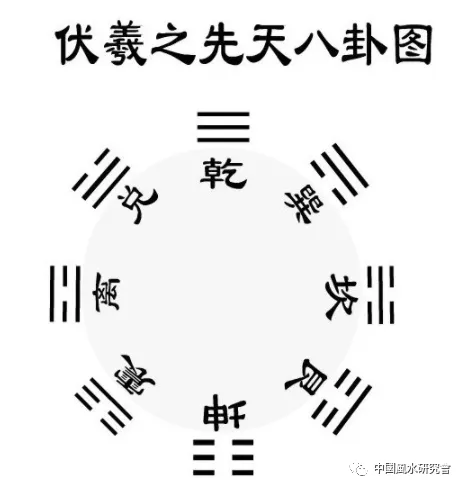
Tradition holds that Plum Blossom Numerology was written by Shao Yong, the Song-dynasty scholar of the Changes. It is a book of divination based on the numerology of the study of the Changes and combined with its “study of images.” It is said that every hexagram Shao Yong cast hit the mark, again and again without fail. Following the numbers of the Prior Heaven Eight Trigrams—Qian (Heaven) one, Dui (Lake) two, Li (Fire) three, Zhen (Thunder) four, Xun (Wind) five, Kan (Water) six, Gen (Mountain) seven, and Kun (Earth) eight—one can cast a hexagram at any time and place, and there are many ways of obtaining a hexagram.
Plum Blossom Numerology can take any perceived sign in the natural world or human society—sound, direction, time, movement and stillness, geography, weather, persons, colors, animals and plants—as a means of predicting how things will develop. In this way one can see the first signs of things and achieve the effect of “know yourself and know your opponent, and you will win a hundred battles out of a hundred.”
As for the origin of Plum Blossom Numerology, it is said to be a secret method handed down in an unbroken line through the Hemp-Robed Taoist (Mayi Daoren), Chen Xiyi (Chen Tuan), and others, which later became the mind-based numerology of the Changes regularly used by Master Shao Kangjie (Shao Yong) of the Northern Song. After Master Shao handed it down, the study of the Changes gained great practical value in the field of divination, and it was only after Shao Kangjie that it was renamed Plum Blossom Numerology.
As for the origin of the name, it is said that one day, when Master Shao Kangjie went into a plum garden to admire the blossoms, he happened to see two sparrows quarreling on a branch, and then saw the two birds suddenly fight over the branch and fall to the ground. Seeing this, Master Shao applied his mind-based numerology of the Changes. He held that one does not divine when nothing moves, and does not divine without a reason; now, seeing two sparrows fight over a branch and fall to the ground for no reason—how strange! Sensing that something was afoot, he divined and judged: “Tomorrow a girl from next door will come to break off plum blossoms; the gardener, not knowing who she is, will chase her; the girl will fall from the plum tree in fright and injure her thigh.” Afterward this indeed came true.
Later scholars, considering this case special—since it could foretell something unrelated to the question of the hexagram, which no other method could do—named this way of judging “Plum Blossom Numerology.”
Plum Blossom Numerology is rooted in the I Ching. What is meant by “Changes”? First, change: a chaotic phenomenon in which a tiny change can affect the development of things (the butterfly effect). All things in the universe are changeable and impermanent, changing from moment to moment, and so are human affairs. Second, simplicity: one yin and one yang encompass the principles of ten thousand things. Where there is heaven there is earth, where there are men there are women, where there is up there is down, where there is front there is back—all opposites that complete each other, a unity of opposites. Third, the unchanging: although the things of the world are intricate and ever-changing, there is one thing that never changes, and that is law. Heaven and earth move in their courses, the four seasons rotate, cold and heat alternate, winter is cold and summer hot, the moon wanes when full, the sun declines after noon, and things turn into their opposites when they reach an extreme—this is law.
The development of all things involves fixed numbers and variable numbers. Fixed numbers follow laws that can be traced, while variable numbers follow no law. Fixed numbers contain variables, and variables contain fixed numbers, but whether fixed or variable, the overall picture does not change. From ancient times to today, most students of the Changes have failed to distinguish fixed numbers from variables and have confused the two concepts. With “fixed numbers” (laws), one can predict the path of a thing's development from its regularities; “variable numbers” (lawlessness) cannot be predicted accurately, because they are changeable and involve too many variable factors.
Although all things are intricate and ever-changing, there are also eternal, unchanging laws. Since there is a lawful side to things, one can work out their path and trend of development by combining certain known factors with the principles of the Changes.
2. Basic Knowledge of Plum Blossom Numerology
Plum Blossom Numerology uses the prior heaven numbers: Qian (Heaven) one, Dui (Lake) two, Li (Fire) three, Zhen (Thunder) four, Xun (Wind) five, Kan (Water) six, Gen (Mountain) seven, and Kun (Earth) eight.
1. The Basic Meanings of the Eight Trigrams
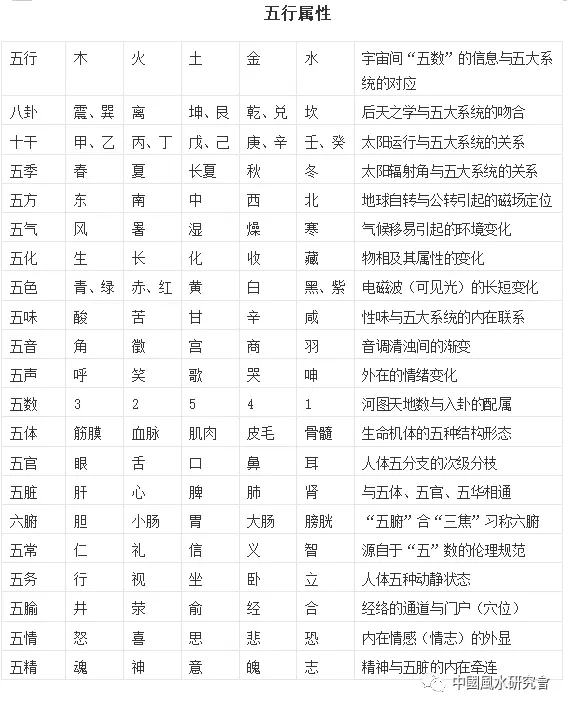
Qian: Heaven. Its element is Metal. It represents heaven, and also metal or things of a metallic nature.
Dui: Lake. Its element is Metal. It represents marshes and watery things, and also metal or things of a metallic nature.
Li: Fire. Its element is Fire. It represents fire, or things of a fiery nature.
Zhen: Thunder. Its element is Wood. It represents thunder, and also trees or things of a wooden nature—large wood.
Xun: Wind. Its element is Wood. It represents wind, and also grass, vines, or things of a wooden nature—small wood.
Kan: Water. Its element is Water. It represents water, or things of a watery or flowing nature.
Gen: Mountain. Its element is Earth. It represents mountains, and also things of an earthy nature.
Kun: Earth. Its element is Earth. It represents the ground and the great earth, and also things of an earthy nature.
2. Generation and Control Among the Five Phases
Metal generates Water, Water generates Wood, Wood generates Fire, Fire generates Earth, and Earth generates Metal.
Metal controls Wood, Wood controls Earth, Earth controls Water, Water controls Fire, and Fire controls Metal.
3. The Five Phases of the Eight Palaces
Qian and Dui belong to Metal; Kun and Gen belong to Earth; Zhen and Xun belong to Wood; Kan belongs to Water; Li belongs to Fire.
4. When the Qi of the Eight Trigrams Is Strong
Zhen and Xun (Wood) are strong in spring; Li (Fire) is strong in summer; Qian and Dui (Metal) are strong in autumn; Kan (Water) is strong in winter; Kun and Gen are strong in the four months of Chen, Xu, Chou, and Wei.
5. When the Qi of the Eight Trigrams Is Weak
Kun and Gen are weak in spring; Qian and Dui are weak in summer; Zhen and Xun are weak in autumn; Li is weak in winter; Kan is weak in the four months of Chen, Xu, Chou, and Wei.
6. The Directions and Five Phases of the Ten Heavenly Stems
Jia and Yi: east, Wood. Bing and Ding: south, Fire. Wu and Ji: center, Earth. Geng and Xin: west, Metal. Ren and Gui: north, Water.
7. The Five Phases and Zodiac Animals of the Twelve Earthly Branches
Zi is Water, the Rat; Chou is Earth, the Ox; Yin is Wood, the Tiger; Mao is Wood, the Rabbit; Chen is Earth, the Dragon; Si is Fire, the Snake; Wu is Fire, the Horse; Wei is Earth, the Goat; Shen is Metal, the Monkey; You is Metal, the Rooster; Xu is Earth, the Dog; Hai is Water, the Pig.
8. The Figures of the Eight Trigrams
Qian: three unbroken lines; Kun: six broken pieces. Zhen: a bowl facing up; Gen: a bowl turned over. Li: empty in the middle; Kan: full in the middle. Dui: broken at the top; Xun: broken at the bottom.
9. The Principle of the Eight Trigrams
The secrets within the Changes reach to the ends of heaven and earth; the workings of creation are revealed before they unfold.
Within them are spirits who govern fortune and misfortune; let those who come later never pass them on lightly.
10. The Images of Things in the Eight Trigrams
Each thing has always had a body of its own, and each body holds a heaven and earth of its own.
If you can know that all things are complete within yourself, you will be willing to set the Three Powers on a root of their own.
Heaven divides creation within the One; humanity sets its plans in motion within the heart.
The immortals, too, speak in two ways; the Tao is not handed down in vain—it rests only with the person.
11. The Attributes of the Five Phases
3. Methods of Casting a Hexagram in Plum Blossom Numerology
1. Casting a Hexagram from the Numbers of the Year, Month, Day, and Hour
Take the sum of the numbers of the year, month, and day in the lunar calendar, divide by eight, and use the remainder as the trigram number to find the upper trigram. Take the sum of the numbers of the year, month, day, and hour, divide by eight, and use the remainder as the trigram number to find the lower trigram. Then take the sum of the numbers of the year, month, day, and hour, divide by six, and use the remainder as the moving line.
Example: a hexagram cast in the Si hour on the eleventh day of the fourth month of the Renshen year in the lunar calendar. The Shen year is 9, and the Si hour is 6.
The upper trigram: (year + month + day) ÷ 8, take the remainder. That is, (9 + 4 + 11) ÷ 8; here there is no remainder.
The lower trigram: (year + month + day + hour) ÷ 8, take the remainder. That is, (9 + 4 + 11 + 6) ÷ 8; the remainder is 7, which is the Gen trigram.
The moving line: (year + month + day + hour) ÷ 6, take the remainder. That is, (9 + 4 + 11 + 6) divided by 6; here there is no remainder.
The hexagram is thus: the upper trigram is Kun, the lower trigram is Gen, and the moving line is the top line.
2. Casting a Hexagram from Numbers
This is a simple method of casting a hexagram with a very high rate of accuracy. When someone asks for a reading on some matter, you can have the person say any two numbers: the first number gives the upper trigram and the second the lower trigram, and the sum of the two numbers divided by six gives the moving line as the remainder. Or you can freely use any other way of obtaining two numbers, such as the page numbers of a book you open, a calendar, and so on.
3. The Later Heaven Method of Casting by Observation
The later heaven method of casting by observation “takes the number of the thing according to the eight trigram categories as the upper trigram, and the Later Heaven Eight Trigrams direction as the lower trigram”: the image taken from the object or person gives the upper trigram, and the trigram of its direction in the Later Heaven arrangement gives the lower trigram. Add the numbers of the upper and lower trigrams to the number of the hour, divide by six, and take the remainder as the moving line.
4. Casting a Hexagram from Sounds
Whenever you hear a sound, count the number of sounds to form the upper trigram, and add the number of the time to form the hexagram. The cries of animals, knocking on a door, or the sound of other people talking can all be used to cast a hexagram. If there is a pause in the sounds you hear, the number of sounds before the pause can be taken as the upper trigram and the number after the pause as the lower trigram; add the numbers of the upper and lower trigrams to the number of the double hour to find the moving line.
5. Casting a Hexagram from the Number of Strokes or Characters
When there are few characters, count the strokes; when there are many, you can use the number of characters to cast the hexagram. When casting from the number of strokes of the character being divined, if the structure of the character divides evenly into top and bottom, split the strokes equally: half for the upper trigram and half for the lower trigram. If the number of characters in a line cannot be divided evenly, the smaller half (one character fewer) gives the upper trigram, following the idea that “heaven is light and clear,” and the larger half (one character more) gives the lower trigram, following the idea that “earth is heavy and turbid.”
6. Casting a Hexagram from Zhang, Chi, and Cun
For an object measured in zhang and chi, the number of zhang gives the upper trigram and the number of chi the lower trigram; the combined number of zhang and chi gives the moving line (the cun are not counted). For an object measured in chi and cun, the number of chi gives the upper trigram and the number of cun the lower trigram; add the combined number of chi and cun to the number of the hour to find the moving line, and do not count fractions.
7. Casting a Hexagram by Adding Numbers
If hexagrams are cast by year, month, day, and hour, then within one double hour there is only one particular hexagram. If several people come to ask within the same double hour, one cannot judge all their matters by the same hexagram; nor, if several people come together to ask about the same matter, can one discuss it with the same hexagram. To solve this problem, one can add the number of strokes in the inquirer's surname and then cast the hexagram.
8. Casting a Hexagram from the Number of Objects
Whenever you see objects that can be counted, take them to form the upper trigram and pair them with the number of the hour to form the lower trigram; then add the trigram numbers and the hour number together, divide the total by six, and take the moving line.
9. Casting a Hexagram for Others
There are various ways of divining for others. One may cast a hexagram by listening to the sound of their speech, by observing their person, by taking something from their body, by taking something from their belongings, from the color of their clothes or some external object they encounter, from the year, month, day, and hour, or from their written statement of purpose.
When listening to their speech, if it is a single sentence, divide it by the number of characters to cast the hexagram. If they speak two sentences, use the first as the upper trigram and the second as the lower trigram. If they say much, use only the first sentence heard, or the last sentence heard, and do not use the rest.
Observing their person means, for example, that an old man is Qian and a young girl is Dui, and so on.
Taking something from their body means, for example, that a movement of the head is Qian, a movement of the feet is Zhen, a movement of the eyes is Li, and so on.
Taking something from their belongings means, for example, that if a person happens to hold something in the hand, things such as gold, jade, and round objects are Qian, and things such as earthenware tiles and square objects are Kun, and so on.
From the color of their clothes means, for example, that a person in green clothes is Zhen and a person in red clothes is Li, and so on.
From some external object they encounter means, for example, that if water is seen when the hexagram is cast, it is the Kan trigram, and if fire is seen, it is the Li trigram, and so on.
From the year, month, day, and hour means casting the hexagram from the year, month, day, and hour at which the question is asked.
From their written statement of purpose means that when a person comes for a reading and writes down the purpose, the hexagram is cast from the characters written.
10. Casting a Hexagram for Oneself
Whenever you wish to divine for yourself, you can cast a hexagram from the year, month, day, and hour, from a sound you hear, or from an external object you encounter at the time.
11. Casting a Hexagram from Animals
If you see an animal, take that animal as the upper trigram and the direction from which it comes as the lower trigram; add the trigram number of the animal to the trigram number of the direction, and add the number of the time to find the moving line. Use this hexagram to judge the matter of the animal as a whole, as in the later heaven readings of an ox lowing or a rooster crowing. Also, for oxen, horses, dogs, pigs, and the like, when they are newly born, divine from the year, month, day, and hour of birth. Or cast the hexagram from the time the animal was bought.
12. Divining About Still Objects
For still objects, such as rivers, mountains, and rocks, one may not cast a hexagram. As for houses, trees, and the like, one may cast a hexagram from the time a house was first built or a tree first planted. As for implements, one may divine from the time they were made, as with pillows, chairs, and the like. For the rest, one does not divine without a reason. For example, in “Observing the Plum Blossoms,” the divination was made upon seeing sparrows fight over a branch and fall to the ground; in “The Peony,” it was made because someone asked; and in “The Luxuriant Tree,” it was made after a branch withered and fell of itself.
4. Methods of Interpreting a Hexagram
1. General Formula for Interpreting a Hexagram (Original Text of Plum Blossom Numerology)
In general, in the method of divination, once the hexagram is formed, first look at the line statements of the Zhouyi to judge good and ill fortune. For example, for the first line of Qian (Heaven), “Nine at the beginning: Hidden dragon; do not act.” This means nothing should be undertaken, and one should stay hidden, and so on. For “Nine in the second place: Dragon appearing in the field; it is beneficial to see the great man.” This means it is favorable to call upon a person of high standing, and so on. The rest follow the same pattern.
Next, look at the Ti and Yong of the hexagram to discuss the generation and control of the Five Phases. Ti and Yong are a matter of stillness and movement: Ti is the host, and Yong is the response of the matter. When Yong generates Ti, or they are of the same element and in harmony, it is auspicious; when Ti generates Yong, or Yong controls Ti, it is inauspicious.
2. Ti, Yong, the Changed Hexagram, and Interpretation
Before interpreting a hexagram, you must first learn to set out the “nuclear hexagram” and the “changed hexagram”; only then can you judge the whole course of a matter from beginning to end!
The “nuclear hexagram”: taking the original hexagram as the basis, lines 2, 3, and 4 form the lower trigram and lines 3, 4, and 5 form the upper trigram. Put together, they give the nuclear hexagram. The nuclear hexagram represents the intermediate process of a thing's development and the intermediate result of its change. In prediction, the nuclear hexagram is sometimes used to predict the process of development and change in order to make the reading finer and more detailed.
The “changed hexagram” is obtained from the original hexagram when a certain line moves and changes; that is, the changed hexagram comes from the movement of the original hexagram. The “changed hexagram” represents the final result of a thing's development and change—the final result and outcome that the inquirer wishes to know. In prediction, the final good or ill outcome of a matter is decided by the “changed hexagram.” Therefore, the prediction ultimately rests on the result of the “changed hexagram.”
Sometimes, in laying out the chart, one also sees the inverse hexagram and the reversed hexagram. The inverse hexagram is the one in which the yin and yang of the original hexagram are completely switched, that is, the hexagram obtained by changing every yin line to yang and every yang line to yin. The reversed hexagram is the original hexagram turned upside down. They usually look at the development and change of a thing from the opposite side, and they are generally little used in prediction.
3. Methods of Setting the Timing of Fulfillment with the Prior Heaven and Later Heaven Eight Trigrams
The method of setting the timing of fulfillment with the prior heaven arrangement differs from the method with the later heaven arrangement.
When a hexagram is cast by the prior heaven method, the timing of fulfillment is often determined by the trigram's qi. If it is the Qian trigram, since Qian belongs to Metal, the timing should be set on a Geng day, a Xin day, or a day belonging to Metal among the Five Phases (such as a Shen day or a You day). Or the timing of Qian should be set on a Xu day or a Hai day, because Qian is northwest among the directions of the eight trigrams, and Xu and Hai are also in the northwest. Or the timing of Dui should be set on a You day in the You hour. Again, the timing of Zhen and Xun should be set on a Jia day, a Yi day, or a day belonging to Wood among the Five Phases (such as a Yin day or a Mao day). Or the timing of the Zhen trigram should be set on a Mao day in the Mao hour, the timing of the Xun trigram on a Chen day in the Chen hour, and so on.
When a hexagram is cast by the later heaven method, the timing of fulfillment is mostly determined by adding the trigram number to the hour number, and also by the posture of the inquirer at the time—walking, lying, sitting, or standing—or by whether the inquirer's mood is slow or hurried. The method of setting the timing by adding the trigram number to the hour number applies to the near term rather than the distant future, so there is no need to judge it as a distant date. There are many complex situations in which the timing must be judged by combining the prior heaven and later heaven trigram numbers, and one must not cling to a single approach.
4. The General Line of Analysis in Interpreting a Hexagram
Analysis of the hexagram name + direct reading of the hexagram image + generation and control of the Five Phases between Ti and Yong + analysis of the nuclear hexagram + analysis and judgment of the categories of images in the main and changed hexagrams = an accurate predictive conclusion.
(1) Analysis of the hexagram name: each of the sixty-four hexagrams has its own name, the result of verification in practice by the sages of successive ages; every character is profound and precise. For details, please refer to the complete text of the Zhouyi on the names, hexagram statements, and line statements.
(2) Direct reading of the hexagram image: Plum Blossom prediction is in fact prediction by analyzing the categories of images of the eight trigrams. Every hexagram cast has its categories of images. Our aim is to work out the changes in things that the hexagram image points to. For example, if in divining about an illness one obtains the hexagram Earth over Fire, Mingyi (Darkening of the Light): Kun is the stomach, and Li is fire and inflammation. One can judge: gastritis, with internal heat. (What if one obtains Fire over Earth, Jin (Advance)? Then one can judge: “Stomach fire rising, discomfort in the esophagus; gastritis.” Because the fire is on top, the esophagus is also uncomfortable.) From this it can be seen that a direct reading of the hexagram image also requires a specific analysis of what the inner and outer trigrams each point to.
(3) Generation and control of the Five Phases between Ti and Yong: Plum Blossom prediction pays close attention to distinguishing generation and control between Ti and Yong. Basically, “generating Ti and being of the same element are auspicious; controlling Ti and draining Ti are unfavorable,” as described above.
(4) Analysis of the nuclear hexagram: the nuclear hexagram does not distinguish Ti and Yong; it shows only the internal causes and hidden circumstances of a thing's change.
(5) Analysis and judgment of the categories of images of the eight trigrams: categories of images are not only for predicting the purpose of an inquirer's visit and divining matters by images. The categories of images of the trigrams can also be used to predict the final outcome of an undertaking. It was said above that “when Ti controls Yong or Yong generates Ti, it is auspicious; when Yong controls Ti or Ti generates Yong, it is inauspicious.” In fact, this statement applies only to most hexagrams and cannot be taken as a conclusion for all of them. One must also make judgments from each of the categories of images of the eight trigrams.
5. Interpretation by Category
1. Divining the Weather
In divining the weather, do not distinguish Ti and Yong; look at all the hexagrams as a whole and work out the Five Phases in detail. Much Li means clear skies; much Kan means rain; Kun means overcast gloom; Qian means clear brightness. Much Zhen brings thunder in spring and summer; much Xun brings strong winds in all four seasons; much Gen means that long rain will surely clear; much Dui means overcast skies even without rain. In a summer reading with much Li and no Kan, there will be scorching drought. In a winter reading with much Kan and no Li, there will be swirling rain and snow.
“Look at all the hexagrams as a whole” refers to the nuclear and changed hexagrams.
2. Divining Human Affairs
In divining human affairs, look closely at Ti and Yong. The Ti trigram is the host and the Yong trigram the guest. Yong controlling Ti is unfavorable; Ti controlling Yong is auspicious. Yong generating Ti brings the joy of gain; Ti generating Yong brings the trouble of loss. When Ti and Yong are of the same element, plans are auspicious and favorable. Look further at the nuclear and changed hexagrams to judge good and ill fortune, and examine again their flourishing and decline to understand what is fortunate and unfortunate.
In divining human affairs, the good or ill fortune is decided by the general chapter on Ti and Yong as a whole. If there is a trigram generating Ti, look in the earlier chapter on the eight trigrams at what good fortune the trigram generating Ti brings; and look at what misfortune a trigram controlling Ti brings, in the earlier chapter on trigrams controlling Ti. If there is no generation or control, judge only by the original hexagram.
3. Divining the Household
In divining the household, Ti is the host and Yong the household. If Ti controls Yong, the household will enjoy much good fortune; if Yong controls Ti, the household will suffer much misfortune. If Ti generates Yong, there will be much loss and expense, or one should guard against theft. If there is a trigram generating Ti, judge by the earlier chapter on divining human affairs.
4. Divining a House
In divining a house, Ti is the host and Yong the house. If Ti controls Yong, living there is auspicious; if Yong controls Ti, living there is inauspicious. If Ti generates Yong, it portends a decline in wealth; if Yong generates Ti, the family will flourish. If Ti and Yong are of the same element, there will naturally be peace and stability.
5. Divining Marriage
In divining marriage, Ti is the host and Yong the marriage. If Yong generates Ti, the marriage will easily come about, or one will gain through the marriage; if Ti generates Yong, the marriage will be hard to arrange, or one will lose through it. If Ti controls Yong, it can come about but late; if Yong controls Ti, it cannot come about, and if it does, it will do harm. If Ti and Yong are of the same element, the marriage will be auspicious.
In divining marriage, Ti is the family asking, and Yong the family being married into. If the Ti trigram is strong, this family's standing is superior; if the Yong trigram is strong, the other family is wealthy. If Yong generates Ti, the marriage will turn out well; or if Ti and Yong are of the same element, the two sides will come together, and it is without doubt a good match.
6. Divining Childbirth
In divining childbirth, Ti is the mother and Yong the child. Both Ti and Yong should be strong, not weak; they should generate each other, not control each other. Ti controlling Yong is unfavorable for the child; Yong controlling Ti is unfavorable for the mother. If Ti controls Yong and the Yong trigram is weak, the child will hardly come through whole; if Yong controls Ti and the Ti trigram is weak, the mother will be hard to save. Yong generating Ti favors the mother; Ti generating Yong favors the child. If Ti and Yong are of the same element, the birth will be smooth and quick. If you wish to tell whether it is a boy or a girl, when the yin and yang trigrams and lines generate each other, examine whether the number of people to the left and right of the inquirer is odd or even to confirm it. If you wish to determine the day, decide it with reference to the qi and number of the Yong trigram. The “qi and number of the trigram” means seeing which trigram is Yong and ranking it according to the seasonal order of the eight trigrams.
7. Divining Food and Drink
In divining food and drink, Ti is the host and Yong the food and drink. If Yong generates Ti, the food and drink will surely be plentiful; if Ti generates Yong, food and drink will be hard to come by. If Ti controls Yong, the meal will meet with obstacles; if Yong controls Ti, there will surely be no meal. If Ti and Yong are of the same element, food and drink will be abundant. Also, if there is Kan in the hexagram, there will be wine; if there is Dui, there will be food. With neither Kan nor Dui, there will be neither. If Dui or Kan generates Ti, there will be wine and meat enough to be drunk and full. If you wish to know what will be eaten, infer it from the categories of food and drink. If you wish to know who will be at the table, infer it from the categories of people in the nuclear hexagram.
The categories of food, drink, and people are the categories of the ten thousand things under the eight trigrams described earlier.
8. Divining Plans and Requests
In divining plans and requests, Ti is the host and Yong the matter planned. If Ti controls Yong, the plan can succeed, but late. If Yong controls Ti, the request will not succeed, and the plan will even do harm. If Yong generates Ti, it will succeed without planning; if Ti generates Yong, there will be much planning and little success. If Ti and Yong are of the same element, the plan will go as you wish.
9. Divining Fame and Office
In divining fame and office, Ti is the host and Yong the fame. If Ti controls Yong, fame can be achieved, but late. If Yong controls Ti, fame cannot be achieved. If Ti generates Yong, fame will not be attained, or there will be loss because of fame. If Yong generates Ti, fame will easily be achieved, or there will be gain because of fame. If Ti and Yong are of the same element, rank and fame will be as you wish. If you wish to know the day fame will be achieved, examine the qi of the trigram generating Ti in detail. If you wish to know the place of your post, decide it by the direction of the changed hexagram. If there is no trigram controlling Ti, fame will easily be attained; simply look at the seasonal order of the Ti trigram to set the date. If you divine while in office, it is most to be feared to see a trigram controlling Ti; if the hexagram has one, you will meet with calamity in office—at the lightest, a reprimand from superiors; at the worst, dismissal from office and retirement. For the date, look at the qi of the trigram controlling Ti and judge it within the seasonal order of the eight trigrams.
10. Divining Wealth
In divining wealth, Ti is the host and Yong the wealth. If Ti controls Yong, there will be wealth; if Yong controls Ti, there will be none. If Ti generates Yong, there is the worry of losing money; if Yong generates Ti, there is the joy of gain. If Ti and Yong are of the same element, profit will come quickly and pleasingly. If you wish to know the day wealth will be obtained, determine it by the qi of the trigram generating Ti. If you wish to know the day of losing money, determine it by the qi of the trigram controlling Ti.
Also, if the hexagram contains a trigram that Ti controls, or a trigram generating Ti, there will be wealth, and the qi of that trigram gives the day wealth will be seen. If the hexagram contains a trigram controlling Ti, or a trigram that Ti generates, money will be lost, and the qi of that trigram gives the day of the loss.
11. Divining Trade
In divining trade, Ti is the host and Yong the wealth. If Ti controls Yong, there will be wealth; if Yong controls Ti, the deal will not go through. If Ti generates Yong, it will be hard to conclude, or there will be loss through the trade. If Yong generates Ti, it will be concluded at once, and it will surely bring wealth. If Ti and Yong are of the same element, it will easily be concluded.
12. Divining a Journey
In divining a journey, Ti is the host and Yong the response to the journey. If Ti controls Yong, one may go, and wherever one arrives things will mostly go as one wishes. If Yong controls Ti, going out will bring calamity. If Ti generates Yong, the journey will bring loss and expense; if Yong generates Ti, there will be unexpected wealth. If Ti and Yong are of the same element, the journey will be smooth and quick.
Also, for any journey, Ti should be strong, and all the trigrams should generate Ti. If the Ti side has much Qian and Zhen, it portends movement; much Kun and Gen, no movement. Xun favors travel by boat, and Li favors travel by land. Kan warns of loss, and Dui portends disputes.
13. Divining a Traveler's Return
In divining a traveler, Ti is the host and Yong the traveler. If Ti controls Yong, the traveler will return late; if Yong controls Ti, the traveler will not return. If Ti generates Yong, the traveler has not yet returned; if Yong generates Ti, the traveler will return at once. If Ti and Yong are of the same element, the day of return is not far off.
Also, use the Yong trigram to see how the traveler is faring away from home. If it meets generation, things go smoothly away from home; if it is weak and controlled, there is disaster away from home. Much Zhen means restlessness; much Gen means obstacles. Kan means danger and hardship; Dui portends disputes.
14. Divining a Visit
In divining a visit, Ti is the host and Yong the person to be seen. If Ti controls Yong, you will see them; if Yong controls Ti, you will not. If Ti generates Yong, it will be hard to see them, and seeing them will bring no benefit; if Yong generates Ti, you will see them and gain from it. If Ti and Yong are of the same element, you will meet happily.
15. Divining Lost Items
In divining lost items, Ti is the host and Yong the lost item. If Ti controls Yong, it can be found, but late; if Yong controls Ti, it cannot be found. If Ti generates Yong, the item will be hard to see; if Yong generates Ti, it will be easy to find. If Ti and Yong are of the same element, the item is not lost.
16. Divining Illness
In divining illness, Ti is the patient and Yong the illness. The Ti trigram should be strong, not weak; Ti should meet generation, not control. Yong should generate Ti, not control it. If Ti controls Yong, the illness will easily be cured; if Ti generates Yong, it will be hard to heal. If Ti controls Yong, there will be joy even without medicine; if Yong controls Ti, even medicine will be of no avail. If Ti is controlled but strong, there is still hope. If Ti is controlled and weak as well, there is certainly no day of survival. If you wish to know whether there is rescue in the midst of misfortune, it lies in the trigram generating Ti. If Ti generates Yong, the illness will drag on and be hard to cure; if Yong generates Ti, it will heal at once. If Ti and Yong are of the same element, the illness will easily be cured. If you seek the day of recovery, decide it by the main trigram. If you wish to know the time of danger, determine it by the trigram controlling Ti. As for medicine, look at the trigram generating Ti. If Li generates Ti, warming medicines are suitable; if Kan generates Ti, cooling medicines are suitable; Gen calls for warming tonics, and Qian and Dui for cooling medicines.
17. Divining Lawsuits
In divining lawsuits, Ti is the host and Yong the opposing party and the response of the lawsuit. The Ti trigram should be strong and the Yong trigram weak. Ti should be generated by Yong, not generate Yong. Yong should generate Ti, not control it. Therefore, if Ti controls Yong, you will defeat the other party; if Yong controls Ti, the other party will defeat you. If Ti generates Yong, it is not that you are in the wrong, but there may be loss through the court; if Yong generates Ti, not only will you be in the right, but you may gain through the lawsuit. If Ti and Yong are of the same element, it is most auspicious for a lawsuit: not only will there be the strength of support, but there will surely be a settlement.
18. Divining Graves
In divining graves, Ti is the host and Yong the grave. If Ti controls Yong, burial there is auspicious; if Yong controls Ti, burial there is inauspicious. If Ti generates Yong, burial there portends declining fortune; if Yong generates Ti, burial there portends prosperity and blessings for descendants. If Ti and Yong are of the same element, it is an auspicious site, most suitable for burial, and burial there brings good fortune and prosperity.
The above are the formulas of Ti and Yong, setting out eighteen chapters of sample readings to show later students the rules. Yet the affairs of life are many—how could there be only eighteen kinds of readings! But these eighteen readings are the most essential of the great matters, and diviners may infer the rest by analogy.