
Qimen Cangji
The Yellow Emperor's Classic of the Hidden Talisman (Yinfu Jing) says: “In the eight trigrams and the sexagenary cycle, divine workings and hidden spirits are concealed.” This line precisely captures the core essence of Qimen Dunjia, a Chinese numerological art handed down for thousands of years. Qimen Dunjia is not the mysterious secret art of rumor, but a systematic model of deduction that takes time and space as its axes and yin-yang and the Five Phases as its underlying logic.
In recent years, with the revival of traditional Taoist culture, the number of people learning Qimen Dunjia has grown sharply. But most, lacking systematic guidance, fall into mystified misconceptions—this is extremely common—and after years of effort they still cannot build a complete ability to deduce. Drawing on experience received from my teachers and combining it with the core teachings of the traditional texts, this article systematically sets out the steps for learning Qimen Dunjia, the core basic knowledge and principles that must be mastered, and the misconceptions common among learners, offering enthusiasts a clear and practical path of progress.
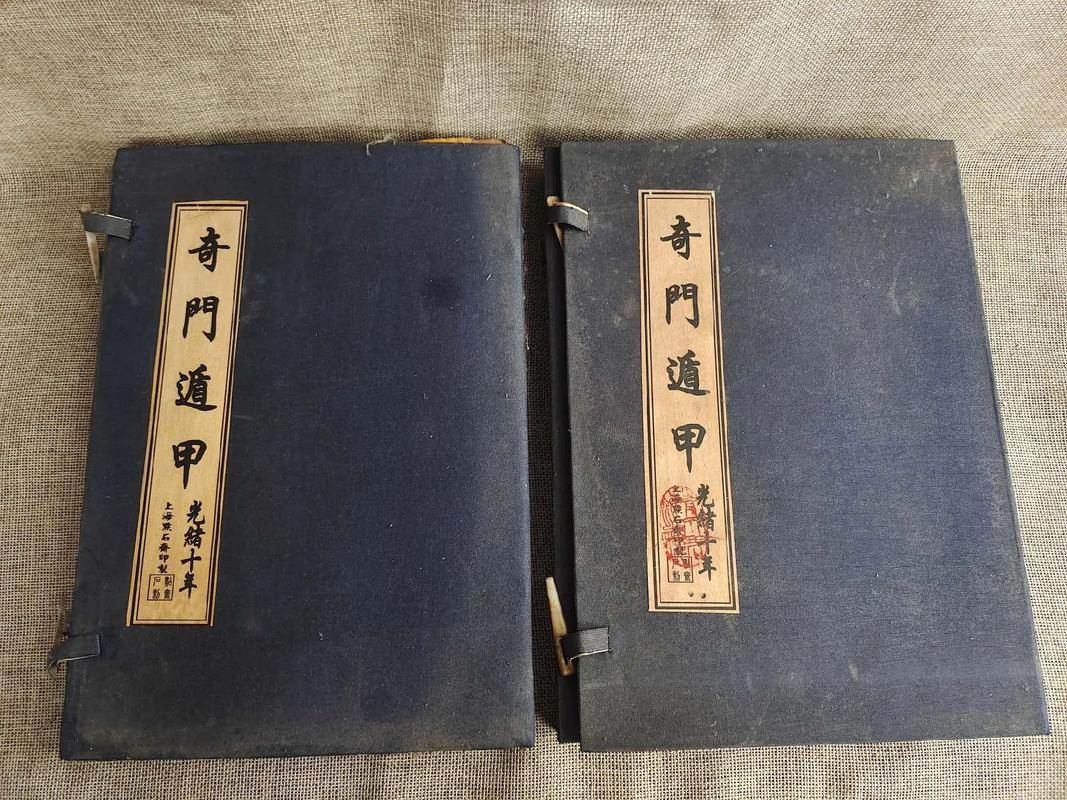
1. The Steps for Learning Qimen Dunjia
Qimen Dunjia can by no means be learned overnight. The ancient texts divide its study into four stages—“laying the foundation, understanding the method, mastering its use, and communicating with the divine”—which in a modern learning system can be broken down into five progressive core steps. Each step has clear goals for ability and standards for assessment, so that learners avoid putting the cart before the horse by “seeking to judge matters before the foundation is firm.”
Stage One: Building a Foundation in the General Numerological Arts
This stage is the common foundation of all the traditional numerological arts. The “Commentary on the Appended Phrases, Part One” of the Zhouyi (I Ching) says: “One yin and one yang: this is called the Tao.” All the logic of deduction in Qimen Dunjia is built on this most basic philosophical axiom. The core goal of this stage is not to memorize facts but to build a way of thinking based on “the unity of opposites of yin and yang and the cycle of generation and control of the Five Phases.” The specific content includes:
Understanding systematically the core meaning of yin-yang theory and mastering the basic laws of opposition, mutual rooting, waxing and waning, and transformation.
Studying the theory of the Five Phases in depth and mastering the characteristics of the Five Phases, their relations of generation and control, and how their states of prosperity, strength, rest, imprisonment, and death change through the four seasons and twelve months.
Fully mastering the Five Phases attributes of the ten Heavenly Stems and their rules of generation, control, clash, and combination, and thoroughly grasping the practical use of the Table of Birth, Prosperity, Death, and Extinction of the Ten Heavenly Stems.
Becoming thoroughly familiar with the Five Phases attributes of the twelve Earthly Branches and mastering all their interactions: generation and control, clash, the six combinations, the three combinations, the three meetings, punishment, and harm.
Mastering the sixty-jiazi system (the sixty-day and sixty-year cycle), learning to convert the year, month, day, and hour into stems and branches, becoming proficient in deriving the month from the year and the hour from the day, and understanding the definition and rules for the void of the six Jia decades and the Travel Horse star.
Memorizing the order of the Twenty-Four Solar Terms and the precise time each one begins, and building an understanding of time and space in which “time is closely bound to the solar terms.”
A study period of at least one month is recommended for this stage. Learners should reach a level of fluency at which “when any stem-branch is named, one can immediately state its Five Phases attribute, its relations of generation and control, and its state of strength or weakness,” laying a firm foundation for learning the specialized knowledge of Qimen.
Stage Two: Building the Core System of Qimen
Having completed the general numerological foundation, one formally begins studying the specialized knowledge of Qimen Dunjia. The goal of this stage is to understand fully how Qimen Dunjia is structured and defined, and to be able to read the explanation of the original meaning of “Dunjia” in the Complete Secret Manual of Qimen Dunjia. The core content of this stage includes:
Mastering the directions, names, numbers, and Five Phases attributes of the Prior Heaven and Later Heaven Eight Trigrams, memorizing the nine-palace diagram corresponding to the Later Heaven arrangement, and knowing where the twelve Earthly Branches are placed in the nine palaces.
Understanding in depth the true meaning of the three words “Qi,” “Men,” and “Dunjia”; mastering the definitions of the Three Wonders—Yi, Bing, and Ding—and the Six Ceremonies—Wu, Ji, Geng, Xin, Ren, and Gui; and thoroughly grasping the rule of concealment by which “the six Jia hide beneath the Six Ceremonies,” that is, the logic by which Jiazi goes with the six Wu, Jiaxu with the six Ji, Jiashen with the six Geng, Jiawu with the six Xin, Jiachen with the six Ren, and Jiayin with the six Gui.
Mastering the arrangement of the yin and yang cycles (dun), understanding the rule that “in the yang cycle the Six Ceremonies run forward and the Three Wonders backward, and in the yin cycle the Six Ceremonies run backward and the Three Wonders forward,” knowing how the 1,080 charts of Qimen Dunjia in a year come about, and mastering the standard division of time in which one yuan is five days and each fifteen-day solar term is divided into upper, middle, and lower yuan.
Memorizing the table of yin and yang cycle charts for the Twenty-Four Solar Terms, knowing the dividing rule that the yang cycle is used after the winter solstice and the yin cycle after the summer solstice, mastering the core principle of fixing the chart by the chaibu (splitting and patching) method, and understanding how to handle the three special cases of “exact alignment, running ahead, and linking the qi.”
The ancients stressed: “If you do not understand the principles of the nine palaces, the situation will be confused; if you are not versed in the order of the Three Wonders, the directions will be in disorder.” This shows the importance of this stage. Only when learners can draw the Later Heaven nine-palace diagram on their own and mark the positions of all the Wonders, Ceremonies, and Earthly Branches have they achieved the goal of this stage.
Stage Three: The Four-Plate Structure and Setting Up a Chart
The core feature of Qimen Dunjia is a model of time and space in which four plates—heaven, earth, humanity, and spirit—are layered one upon another. The Gate of Wonders (Shenqi zhi Men) defines it as “a holographic mapping of four layers of time and space”:
The Earth Plate represents the advantages of the terrain and is permanently fixed; the Heaven Plate represents the timing of heaven and rotates with the hour.
The Eight Gates of the Human Plate represent the harmony of people and govern the fortune of human affairs; the Eight Deities of the Spirit Plate represent divine help and govern hidden energies.
The goal of this stage is to master fully the rules for arranging the four plates. The specific content includes:
Understanding the fixed nature of the Earth Plate and memorizing the basic positions of the Three Wonders and Six Ceremonies in the nine palaces of the Earth Plate.
Mastering the home palaces and rotation rules of the Nine Stars on the Heaven Plate, and understanding the core logic that “the Chief (Zhifu) moves with the hour stem.”
Mastering the home palaces and rotation rules of the Eight Gates on the Human Plate, and understanding the core logic that “the Envoy (Zhishi) moves with the hour palace.”
Mastering the rotation rules of the Eight Deities on the Spirit Plate, and becoming familiar with their order: the Chief, the Soaring Serpent, the Great Yin, the Six Harmonies, the White Tiger, the Dark Warrior (Xuanwu), the Nine Earths, and the Nine Heavens.
The training requirement for this stage is to set up at least one chart for the current time every day for three months straight, comparing it with events in real life to observe how the symbols of the chart correspond to them, and so build an initial connection between symbols and reality.
Stage Four: Image Meanings and the Rules of Chart Patterns
Once learners can read a complete Qimen chart fluently, they enter the core stage of interpreting its symbols. The ancients said: “The Nine Stars have their own natures, the Eight Gates their own good and ill fortune, the Three Wonders and Six Ceremonies their own changes, and the auspicious and inauspicious stars (shensha) their own concealment and manifestation.” The core goal of this stage is to grasp thoroughly the system of image meanings of all the symbols and to master the rules for judging auspicious and inauspicious chart patterns. The specific content includes:
Mastering systematically the categories of information of the ten Heavenly Stems in different palace positions, and understanding what good or ill fortune each stem indicates in different states of strength and weakness.
Mastering fully the Five Phases attributes of the Eight Gates and the standards for judging their strength and weakness, and memorizing the core information of each gate and its rules of response in stillness and in movement.
Mastering in depth the Five Phases attributes of the Nine Stars and the standards for judging their strength and weakness, and understanding what the Nine Stars indicate about human affairs in different palaces.
Mastering completely the categorical features of the Eight Deities, and knowing the hidden influences they represent.
Studying systematically the rules of common auspicious and inauspicious patterns, understanding the conditions under which auspicious patterns such as “the Azure Dragon Turns Its Head” and “the Flying Bird Falls into the Nest” are formed, and the standards for judging inauspicious patterns such as “the White Tiger Runs Wild” and “the Azure Dragon Escapes,” so as to avoid the mechanical reading of “judging good whenever an auspicious pattern appears and ill whenever an inauspicious one appears.”
In this stage, one must above all avoid memorizing image meanings by rote. Instead, derive the extended meanings of each symbol from its Five Phases attribute. For example, the stem Yi is yin Wood; its basic images are flowers, grasses, and vines, from which extend meanings such as bending, the arts, hands, and joints. Only by memorizing through this kind of logical derivation can one interpret image meanings flexibly rather than rigidly.
Stage Five: The Logic of Reading Charts and Application
This is the final stage, in which Qimen Dunjia turns from “theory” to “practice,” and it is also the stage of “using the Dun” most valued in the ancient texts. The ancients said: “Those who are good at using the Dun are not bound by patterns or fixed on directions; they observe the workings of the moment and respond to its changes.” The core goal of this stage is to build a standardized way of reading charts and to master methods for determining the timing of events and for seeking good fortune and avoiding misfortune. The specific content includes:
Mastering the general rules for reading a chart and establishing a standardized analytical procedure: “first look at the strength or weakness of the overall environment, then at the palace state of the Useful God, and finally at the relations of generation and control among the palaces.”
Studying systematically the rules for choosing the Useful God in different situations, and knowing which core Useful God corresponds to each category of question, such as career, wealth, relationships, health, and travel.
Mastering the methods for determining timing, so as to infer accurately when events will happen from the Useful God's strength or weakness, emptiness in the Void, and punishment or clash.
Mastering practical methods for seeking good fortune and avoiding misfortune: learning to choose auspicious days, auspicious hours, and auspicious directions, and being able to give specific advice on adjusting one's actions based on the chart.
The core path of improvement in this stage is extensive practice. Start with small matters around you—predicting the weather, how a trip will go, finding lost items, and so on—gradually building up experience in interpretation until you form your own stable style of reading charts.
2. The Core Principles of Qimen Dunjia
The body of knowledge of Qimen Dunjia may seem vast and complex, but the core principles that truly determine a learner's level number no more than a dozen or so. They are scattered through the great classic texts and are the “keys to entering the Way” stressed again and again by the sages of the past. Mastering these core principles keeps one from getting lost in a sea of fragmented knowledge.
Principle One: Strength and Weakness of the Five Phases Is the Core Yardstick
The “Great Plan” chapter of the Book of Documents (Shangshu) was the first to define the characteristics of the Five Phases, and every judgment of good and ill fortune in Qimen Dunjia rests at bottom on the basic logic that “the strong is auspicious and the weak inauspicious.” The main reason many learners read charts inaccurately is that they have not mastered the correct method of judging strength and weakness. A correct judgment must take two dimensions into account at once:
First, being in season: the relation of generation or control between a symbol's element and the current season and month. A symbol generated and supported by the month is strong; one controlled by the month is weak.
Second, being in place: the Five Phases attribute of the palace in which a symbol falls. If the palace generates and supports the symbol, it is in place; if the palace controls the symbol, it is out of place.
Only by combining both dimensions—“in season” and “in place”—can one reach an accurate conclusion about strength and weakness; relying on either one alone leads to errors of judgment.
Principle Two: The Correspondence Between the Prior Heaven and Later Heaven Eight Trigrams
Many learners pay attention only to the nine-palace arrangement of the Later Heaven Eight Trigrams and overlook the fundamental role of the Prior Heaven Eight Trigrams. The “Discussion of the Trigrams” in the Zhouyi records in detail the directions and images of the prior heaven trigrams. The later heaven arrangement is the applied form after the flow of time and space, while the prior heaven arrangement shows the essential nature of things. In Qimen Dunjia, a symbol in a palace should be read not only by the images of the later heaven trigrams but also by the essential meaning of the prior heaven trigrams. For example, the Li palace of the later heaven arrangement corresponds to the south and to Fire, while in the prior heaven arrangement that position is Qian, corresponding to the essential qualities of “brightness and civilization.” Only by combining the prior and later heaven meanings in interpretation can one arrive at richer and more accurate image meanings.
Principle Three: The Three Wonders Are Not Absolutely Auspicious
Yi, Bing, and Ding are called the Three Wonders. Many beginners mistakenly believe that the Three Wonders are auspicious in any palace they fall in; this is a typical misconception. The ancients pointed out: “When the Three Wonders are in place, they are auspicious; when they lose their power, they bring calamity.”
Yi is the Sun Wonder and governs gentleness and assistance. If it is strong in its palace, it represents help from benefactors; if it is controlled in its palace, it represents weakness, powerlessness, and procrastination.
Bing is the Moon Wonder and governs brightness and authority. When strong, it represents abundant vitality and opportunities appearing; when it has lost its power, it represents impatience, impulsiveness, and disputes.
Ding is the Star Wonder and governs wisdom and culture. When strong, it represents clear thinking and technical breakthroughs; when weak, it represents fantasies, idle dreams, and quarrels.
The good or ill fortune of the Three Wonders depends entirely on the state of the palace in which they fall; they are not absolutely auspicious.
Principle Four: The Void of the Six Jia Is Energy
The decade void (xunkong) is one of the most important rules in Qimen Dunjia. Many beginners simply equate the Void with “nonexistence” or “failure,” which is very one-sided. The ancients defined the Void as “qi that has not yet arrived, workings that have not yet appeared.” A palace in the Void represents energy that is currently latent, not entirely without effect. Its influence should be judged according to three cases:
If the palace of the Useful God is in the Void but is generated and supported by other palaces, this is “filling the void,” and the event will come about when the Void is left behind.
If the palace itself is prosperous and strong but in the Void, it means the matter is not yet on the agenda, and there is still room for development in the future.
If the palace itself is weak or dead and in the Void, it means the matter will come to nothing, with no result.
Only by reading the Void dynamically can one avoid absolute judgments in reading charts.
Principle Five: “The Earth Plate Is the Root, the Heaven Plate Is the Function”
The generation and control between the Heaven Plate and the Earth Plate is the core interaction in Qimen Dunjia, and many beginners reverse which is primary and which secondary. The correct logic is this:
The Earth Plate is the underlying environment, representing the inherent state of a matter; the Heaven Plate is the external dynamic factor, representing the matter's development and change. For example, when a stem of the Heaven Plate controls a stem of the Earth Plate, it means an external dynamic force is actively changing the inherent internal state; when a stem of the Earth Plate controls a stem of the Heaven Plate, it means the inherent internal environment is actively restricting the external dynamic factor.
The Gate of Wonders sums this up as “the Heaven Plate governs movement and the Earth Plate governs stillness; good and ill fortune arise as movement and stillness meet.” This is the core logic that must be followed in reading a chart.
Principle Six: Only a Single Useful God Gives an Accurate Reading
Many beginners take three or four Useful Gods at once to judge a single matter, with the result that the generation and control among the various Useful Gods conflict and no unified conclusion can be reached. The Qimen texts of every age stress again and again that “with a single Useful God, the thinking is clear.” In predicting any matter, first determine one most essential Useful God as the main object of analysis, and use other related symbols only as supporting references. For example, in predicting a job search, the core Useful Gods are the day stem, representing the inquirer, and the Open Gate, representing the position; the other symbols serve only to fill in details. One must not treat the year stem, month stem, and hour stem all as core Useful Gods at the same time, or one will only fall into logical confusion.
3. Common Mistakes in Learning Qimen Dunjia
In today's environment for learning Qimen Dunjia, a great deal of mistaken thinking and misleading content circulates widely. Many learners spend years without getting started, essentially because they have fallen into these traps. Drawing on the orthodox thought of the classic texts through the ages, we have summed up the most common mistakes in six categories and clarify them one by one.
Mistake One: Excessively Mystifying Qimen Dunjia
Many beginners come to Qimen Dunjia under the influence of films, TV, and online occult content, and mistakenly believe it is a mysterious magic that can “summon wind and rain and change one's destiny”; some even believe the absurd folk rumor that “learning Qimen brings the five afflictions and three lacks.” In fact, the ancients long ago gave an objective definition of Qimen Dunjia: “The art originates with Feng Hou; it is in fact a method left by the military strategists of old, used to assess situations and make decisions, and has nothing to do with the bizarre.” Qimen Dunjia is essentially an ancient model for decision-making in time and space, similar in logic to weather forecasting or data analysis: it foretells the trend of things by summing up the patterns of time and space, and there is no supernatural mysterious power in it. Being superstitious about the miraculous departs from the essence of Qimen Dunjia from the very start.
Mistake Two: Blindly Worshiping So-Called “Masters”
Many beginners eagerly watch online videos of so-called “masters” interpreting charts, and the more they watch, the more confused they become. Most of these public cases are “finished cases” that have been reworked: they show conclusions organized after the fact, not the original thinking behind the first analysis of the chart. Different masters have different rules for choosing the Useful God and different analytical logic; beginners, without the basic ability to tell them apart, mix the thinking of several different systems together, ending up with a confused and fragmented understanding and no idea where to start when they practice for real. The right approach is first to study the basic theory of the orthodox texts systematically and build one's own analytical framework, and only then to look at other people's cases.
Mistake Three: Memorizing Image Meanings by Rote
Many learners memorize the Complete Compendium of Qimen Dunjia Image Meanings on the market by heart, only to find in actual practice that, faced with the symbols in a chart, they have no idea which meaning to choose and cannot interpret flexibly at all. In fact, the image meanings of the symbols are not arbitrarily assigned; they all extend from the logic of their Five Phases attributes, the shapes of the characters, and words of the same sound or origin. For example, the stem Yi is yin Wood and corresponds to flowers, grasses, and vines, from which extend the meanings of bending, the arts, and hands; and because “yi” (the stem) sounds the same as “yi” (medicine), it also extends to mean a doctor. Deriving image meanings from the underlying logic is far more efficient than rote memorization, and only in this way can one interpret flexibly.
Mistake Four: Getting Lost in Secondhand Cases
Many learners love to read secondhand and thirdhand cases shared in online groups on the Changes, analyzing other people's charts after the fact and sounding perfectly logical; but when they meet a real inquirer, they cannot make a judgment at all. Most of these secondhand cases have passed through many hands, and their feedback is vague or even wrong, so learners cannot get accurate verification. The right way to practice is to start with immediate events around you—for example, setting up a chart to predict when today's parcel will arrive or when a friend will visit. The feedback from such events is immediate and accurate, and only by repeatedly practicing this kind of “immediate back-checking” can you truly develop a feel for interpretation and quickly improve your practical ability.
Mistake Five: Empty Theorizing Divorced from Reality
Quite a few learners never connect their study of Qimen Dunjia to real life, but instead delve into all kinds of impractical “unique secret formulas” and become absorbed in empty notions such as “palace-flying magic” and “invisible energies.” As a result, after many years of study they still cannot accurately judge even the simplest questions of wealth or travel. From its very birth, Qimen Dunjia has been a decision-making tool for solving real problems; the thought of The Art of War and the logic of Qimen Dunjia come from the same source, and all its theory must ultimately be grounded in practical guidance for action. Empty theorizing divorced from reality will only lead one's studies further and further astray, and one will never appreciate the true value of Qimen Dunjia as traditional wisdom for decision-making.
Conclusion
Laozi says in the Tao Te Ching: “Mystery upon mystery, the gate of all wonders.” The “wonder” of Qimen Dunjia has never been some mysterious occult power; it is that, with an extremely simple system of symbols, it condenses the laws of heaven, earth, time, and space into a small nine-palace chart, so that ordinary people too can use this model to see clearly how things develop. Learning Qimen Dunjia has never required any “extraordinary gift,” nor any pursuit of “secretly transmitted magic.” As long as you follow scientific, step-by-step stages, firmly master the core basic knowledge and principles, avoid the common misconceptions, and study and practice with a rational and pragmatic attitude, anyone can gradually master this traditional Chinese wisdom of decision-making handed down for thousands of years, and make it a practical tool in daily life to aid judgment and to seek good fortune and avoid misfortune.