
Zhengyuan Zhizhi
In the system of traditional Chinese numerology it is said that “Liuren is the ancestor of the numerological arts.” Together with Taiyi Shenshu and Qimen Dunjia, it is known as one of the “Three Arts of high antiquity,” a high-level form of divination handed down for a thousand years. When many beginners first encounter Da Liuren, they are often scared off by its complex system of stems and branches, its arrangement of divine generals, and its working out of lessons and transmissions; some even mistakenly think it is an occult art that depends entirely on talent and has no method to follow. This is not necessarily so.
With my teacher's approval, this installment starts from the core definition of Da Liuren and systematically sets out the foundations beginners must lay firmly, the core knowledge they must master, the stages of advanced study they must pass through, and the qualities required of the learner. It aims to be easy to understand, to build a practical learning path for beginners starting from zero, and I hope it will be of some help to enthusiasts of the Changes.
1. What Is Da Liuren?
Many people's understanding of Da Liuren stops at “a method of fortune-telling and divination,” which is a very one-sided misunderstanding. On the definition of Da Liuren, the ancients said: “Liuren is the board of the Mysterious Lady. It arose in the time of the Yellow Emperor. Its method places the Monthly General on the hour of divination, forming the Four Lessons and Three Transmissions, in order to decide good and ill fortune.” And the Great Liuren Divination (Liuren Dazhan), included in the Yongle Encyclopedia compiled officially in the Ming dynasty, states at its very beginning: “The method of Liuren is rooted in the River Chart and the Luo Writing and the numbers of the stems and branches. Heaven's one gives birth to Water, and Earth's six completes it; therefore it is called Liuren.”
The core logic here is easy to understand. The “ren” of Da Liuren is the stem among the ten Heavenly Stems that corresponds to Water. The “Appended Phrases” of the Zhouyi (I Ching) says, “Heaven's one gives birth to Water, and Earth's six completes it”: the generating number of Water is 1 and its completing number is 6, and together they are the source of the name “Liuren” (“six ren”). It is not a method of divination invented out of nothing, but a system of deduction built entirely on the traditional Chinese idea of the unity of heaven and humanity. The ancients believed that the flow of fortune between heaven and earth leaves traces at particular points in time; Da Liuren uses specific time coordinates to give concrete form to the yin-yang and Five Phases energies of heaven and earth in a model that can be worked out, and so simulates the laws by which things develop.
In the Essential Sayings on Liuren (Liuren Cuiyan), published in the Daoguang era of the Qing dynasty, the author Liu Chijiang gives the most accessible account of the nature of Da Liuren: “Liuren is not a doctrine of ghosts and spirits. It merely uses the principles of the stems and branches to work out the waxing and waning of yin and yang and to examine the generation and control of the Five Phases, and so, for matters yet to come, decides what to pursue and what to avoid.” This statement directly breaks down a misconception held by many beginners: Da Liuren is not feudal superstition, nor a supernatural power to “communicate with the gods.” It is essentially an “ancient big-data model of deduction” based on the logic of yin and yang and the Five Phases. Just as the ancients used the Twenty-Four Solar Terms to guide farming, it sums up the laws by which the fortunes of heaven and earth move, in order to judge the present state of things and their future trends.
Compared with other numerological systems, Da Liuren is distinguished by having the most complete system and the highest precision in divining specific events. Ji Dakui, the great Qing-dynasty master of the numerological arts, wrote in his preface to the Liuren Leiju: “Among the Three Arts, only Liuren is close to the people's needs. From the great affairs of the army and state down to the rice and salt of daily use, there is nothing it cannot divine and nothing in which it fails to be confirmed.” This is why, from the Song dynasty onward, the official Directorate of Astronomy of every dynasty made Da Liuren a required subject of divination. Its applications cover everything from state decisions to the daily lives of ordinary people, and it is one of the most practical systems in traditional numerology.
2. The Five Foundations of Learning Da Liuren
The biggest detour many beginners take in learning Da Liuren is to start straight away by memorizing the divine generals and reading case judgments; after several months they are still completely confused and cannot lay out a lesson or judge a matter on their own. Just as one must practice the basic strokes before calligraphy and learn addition, subtraction, multiplication, and division before mathematics, learning Da Liuren has five unavoidable foundations, and every Liuren text through the ages places this material at the very beginning.
So to learn Da Liuren, one must first lay these five foundations:
The first foundation is to thoroughly grasp the underlying logic of yin and yang and the Five Phases. This does not mean simply the formula “Wood generates Fire, Fire generates Earth,” but understanding how the Five Phases change in different states. The Complete Book of Liuren (Liuren Daquan) states clearly at the outset: “Yin-yang and the Five Phases are the guiding principles of Liuren. Not to understand the nature of the Five Phases is like a person without eyes, who stumbles with every step.” Beginners cannot merely memorize the generation and control of the Five Phases; they must also understand what “prosperous, strong, resting, imprisoned, and dead” mean. For example, in spring Wood is prosperous, Fire strong, Water resting, Metal imprisoned, and Earth dead; the same phase has a completely different state of energy in different seasons. One must also understand that among the Five Phases “there is control within generation and generation within control.” For example, Metal generates Water, but if the Metal is too cold, the Water freezes and loses its vitality instead. Such details are the core basis for judging lessons later on; without this foundation, all deduction is a castle in the air.
The second foundation is to master all the attributes of the ten Heavenly Stems and twelve Earthly Branches. For the ten Heavenly Stems, memorize each stem's phase, whether it is yin or yang, its corresponding organs, direction, and kinship relations. For example, Jia Wood corresponds to the east; it is yang Wood, representing a great tree, and in the body it corresponds to the liver and gallbladder. For the twelve Earthly Branches, know thoroughly each branch's phase, hidden stems, six combinations, six clashes, six harms, three combinations, and three meetings. The Heart Mirror of Da Liuren (Da Liuren Xinjing) has a formula: “If the branches and stems are not clear, the lessons and transmissions have no basis.” Many beginners often get the combinations and clashes of the branches wrong when laying out a lesson, so their judgments naturally stray completely from the facts. Here is a small method for beginners: instead of rote memorization, map the twelve Earthly Branches to the twelve double hours and the twelve Chinese zodiac animals, and memorize them in connection with scenes from daily life. For example, Zi corresponds to midnight and is Water, which makes the attributes of Zi easy to understand; in half a month you can remember them all firmly.
The third foundation is to be proficient in the sixty jiazi and the Na Yin (Sound Element) of the stems and branches. The sixty jiazi (the sixty-day and sixty-year cycle) is the core of the traditional Chinese calendar, and all the deductions of Da Liuren are built on recording days, months, and years by stems and branches. The Divine Mirror Scripture of Liuren Illuminating the Heart on Tracks and Limits (Liuren Guixian Zhaoxin Shenjian Jing) says: “The year of birth and the day stem are the masters of the matter divined; if one does not understand the sixty jiazi, host and guest cannot be distinguished.” Beginners need not be able to work out the stems and branches of several hundred years ago right away, but they should at least be able to calculate fluently the stem and branch of any day at present and know the Na Yin element of each jiazi pair—for example, Jiazi and Yichou are Metal in the Sea, Bingyin and Dingmao are Fire in the Furnace. The attributes of these Na Yin often provide the finishing touch in judging the nature of a matter.
The fourth foundation is to master the rules linking the Twenty-Four Solar Terms and the Monthly General. The Monthly General is the central pivot of Da Liuren. The Essential Sayings on Liuren states clearly: “The Monthly General is the sun. The sun's passing from one palace to the next is the guiding principle of Liuren; an error of a hair's breadth leads a thousand li astray.” This is where many beginners most easily go wrong, mistakenly thinking that the Monthly General changes on the first day of each month in the lunar calendar. In fact the correct rule is that the Monthly General changes only when the sun reaches a certain palace of the ecliptic. For example, after the solar term Rain Water the sun enters the Hai palace and the Monthly General is Hai; after the Spring Equinox the sun enters the Xu palace and the Monthly General is Xu. This rule has not changed since the Jingyou Liuren Shending Jing of the Song dynasty, and it is a step in laying out a lesson where no mistake can be allowed.
The fifth foundation is to understand the definition and logic of the Six Relations. The Six Relations are Parents, Officer-Ghost, Wife-Wealth, Offspring, and Siblings. Many people think the Six Relations are fixed, but in fact they are derived from the phase of the day stem: what generates me is Parents, what controls me is Officer-Ghost, what I generate is Offspring, what I control is Wife-Wealth, and what is the same as me is Siblings. Shao Yanhe, author of the Liuren Case Judgments (Liuren Duan'an), once said: “The generation and control of the Six Relations is the root of judging a lesson; for the good or ill fortune of a matter, first look at the state of the Six Relations.” For example, in divining about work, look at the state of Officer-Ghost; in divining about wealth, look at the state of Wife-Wealth. If you cannot even understand the Six Relations, you have no way to judge what a matter is really about.
There is no shortcut through these five foundations, and not one of the famous Liuren masters of history skipped this part to go straight to advanced material. Many people who have studied Da Liuren for three or five years still judge lessons inaccurately; looking back, they find that their foundations were never solid—they had confused many of the combinations and clashes of the branches—so naturally they ran into walls at every turn in their later study.
3. The Six Core Areas of Learning Da Liuren
Once the foundations are firm, the next step is to enter the core body of knowledge of Da Liuren. This material is the skeleton of the whole of Da Liuren and contains the core rules that no deduction of a lesson can avoid. The Complete Book of Liuren calls this material “the key to Liuren: without grasping its essentials, though one recites ten thousand words by heart, one will gain nothing in the end.” One must therefore master these six core areas of knowledge.
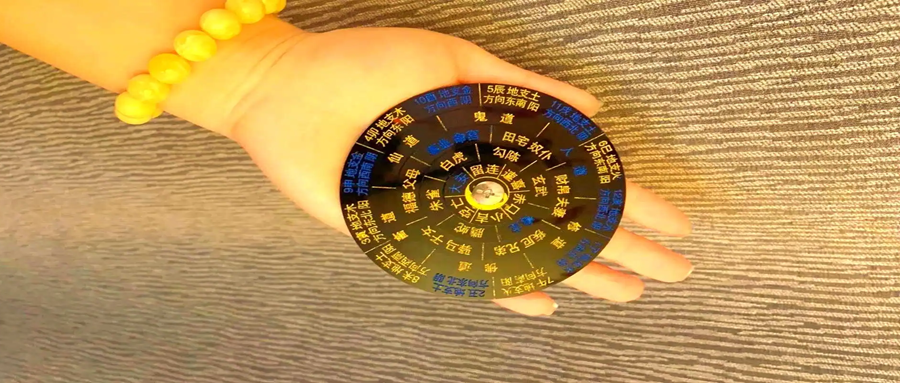
The first core area is the rule for laying out the chart by placing the Monthly General on the hour of divination. The most central logic for raising a lesson in Da Liuren is “placing the Monthly General on the hour”: put the Monthly General in the position of the double hour of the divination, and lay out the Heaven Plate of the twelve Earthly Branches clockwise. The first line of the Heart Mirror of Da Liuren is: “When the Monthly General is placed on the hour, the positions turn; from this the Heaven Plate is set in order.” The rule looks simple but has many details that need attention. For example, the time of divination must be the local true solar time, not Beijing time directly, because the double hours differ at different longitudes. If the double hour is wrong, the whole Heaven Plate is wrong, and all later deductions are meaningless.
The second core area is the method of arranging the Four Lessons. The Four Lessons are the basic structure of Da Liuren: two lessons from the day stem and two from the day branch, which is what the ancient texts mean by “the beginnings of controlling clashes arise in the Four Lessons.” Specifically, first find the Heaven Plate branch above the day stem's position on the Earth Plate; this is the first lesson. Then find the Heaven Plate branch above the Earth Plate position of the first lesson's branch; this is the second lesson. Next find the Heaven Plate branch above the day branch's position on the Earth Plate; this is the third lesson. Then find the Heaven Plate branch above the Earth Plate position of the third lesson's branch; this is the fourth lesson. Many beginners easily get lost when learning the Four Lessons, but in fact if you simply follow the steps and lay out a few dozen lessons, you will soon master it. The Four Lessons represent four dimensions of a matter: the day stem represents the inquirer, the day branch the matter asked about, the first and second lessons the state of the inquirer, and the third and fourth lessons the development of the matter.
The third core area is the rules for taking the Three Transmissions. The Three Transmissions are the core of Da Liuren, representing the beginning, middle, and end of a matter's development, and every Liuren text through the ages explains how to take them as core content. There are nine rules for taking the Three Transmissions. The most basic are “harmony makes the Leading lesson, and controlling clash makes the Re-examination lesson”: first see how many controls there are in the Four Lessons; if there is only one, take that control directly as the Initial Transmission; the Heaven Plate branch above the Earth Plate position of the Initial Transmission is the Middle Transmission, and the Heaven Plate branch above the Earth Plate position of the Middle Transmission is the Final Transmission. This is the most basic method, for the Leading lesson and the Re-examination lesson. The remaining seven methods—the Involved Harm lesson, the Distant Control lesson, the Mao Star lesson, the Separate Responsibility lesson, the Eight Specials lesson, the Hidden Moaning lesson, and the Reverse Moaning lesson—must each be understood in principle; you cannot merely memorize them by rote, but must understand the yin-yang logic behind each method in order to apply them flexibly.
The fourth core area is the system of images of the Twelve Heavenly Generals. The Twelve Heavenly Generals are what we commonly call the Azure Dragon, the Vermilion Bird, the Curved Array, the Soaring Serpent, the White Tiger, the Great Constancy, the Dark Warrior (Xuanwu), the Great Yin, the Heavenly Empress, the Noble Person, the Heavenly Void, and the Six Harmonies. The Liuren Zuanyi says: “The divine generals are the feathers of Liuren; without feathers or scales, one cannot soar.” Each Heavenly General has its own fixed attributes and the things it represents: the Azure Dragon represents wealth, profit, and celebration; the White Tiger represents misfortune, mourning, injury, and illness; the Dark Warrior represents thieves and fraud. Beginners should not merely memorize whether the divine generals are auspicious or inauspicious, but also understand how the images of each general extend. For example, the Vermilion Bird represents not only quarrels but also documents, examinations, and information; only then can one relate a lesson to specific matters when judging it.
The fifth core area is judging states of energy by the Twelve Stages of Life. The Twelve Stages of Life are Growth, Bathing, Cap and Belt, Official Post, Emperor's Prosperity, Decline, Sickness, Death, Tomb, Extinction, Embryo, and Nurturing, used to judge the strength of each Earthly Branch on the Heaven and Earth Plates. The Da Liuren Leiju states clearly: “The life and death of the Five Phases is like a person's lifespan: those in their place are strong, those out of place are weak.” For example, Wood at Hai is at Growth, so its energy is very strong; Wood at Shen is at Extinction, so its energy is very weak. Through the Twelve Stages of Life, one can clearly judge the strength of each stem and branch, and know which phase can generate or control others and which is so controlled that it has no strength at all.
The sixth core area is the rules for locating the category spirit. The category spirit is the symbol specific to the matter you are divining: for an examination, look at the Vermilion Bird and documents; for wealth, look at the Azure Dragon and Wife-Wealth; for a lawsuit, look at the Curved Array and Officer-Ghost. In almost every case in the Qing-dynasty Liuren Case Judgments, the category spirit is found first, and then its state of generation and control is examined. The mistake beginners most easily make is to look for symbols everywhere, not knowing which of the dozen or so symbols in a lesson to look at. In fact, once the category spirit is correctly identified, the core conflict of the whole lesson immediately becomes clear, and the judgment will not go astray.
These six core areas of knowledge are the trunk of the Da Liuren system. Once you have thoroughly absorbed them, you will be able to lay out a chart on your own and make basic judgments about simple events, and you will no longer find yourself with a lesson in hand and no idea where to begin.
4. The Five Stages of Advanced Study in Da Liuren
Having mastered the foundations and the core knowledge does not mean you can become an expert at judging lessons. Advanced study in Da Liuren is a gradual process. The great Liuren masters of every age went through five fixed stages, and no one can skip any of them to become an expert directly; this is the path everyone must take from beginner to master.
The first stage is to memorize thoroughly the basic chart patterns of the 720 lessons. All the combinations of charts in Da Liuren add up to 720 basic patterns, what we commonly call the “720 lessons.” The Da Liuren Shending Jing says: “Recite the 720 lessons fluently, and you will have a standard within your breast.” Beginners need not memorize all the judgments for every lesson, but they must be familiar with the basic features of each pattern—for example, the Leading lesson means things go smoothly, the Reverse Moaning lesson means things go back and forth, and the Hidden Moaning lesson means things drag on. With the features of these basic patterns engraved in your mind, you can see the overall keynote of a lesson at a glance once the chart is laid out, and you will not make judgments that are completely backward.
The second stage is to read the classic case judgments of the ancients closely. The Liuren case judgments handed down through the ages are the most valuable study material—for example, Shao Yanhe's Liuren Case Judgments of the Song dynasty, Chen Gongxian's Guide to Da Liuren (Da Liuren Zhinan) of the Ming dynasty, and the cases in the Qing-dynasty Essential Sayings on Liuren, all records of real divinations by famous masters of their time. The preface to the Guide to Da Liuren says: “Not to study the ancient cases is like walking a road without a guide; one will surely take a wrong turn.” When reading cases, do not look only at the result; follow the author's line of thought—how he found the category spirit, how he judged generation and control, and why he judged as he did. Once you have worked through several hundred classic cases, you will develop your own way of judging lessons and will not be led astray by the muddled new-school theories found online.
The third stage is to build up a feel through extensive practical testing. The ancients said: “A thousand days of studying Liuren are not as good as a hundred confirmed judgments.” However much theory you learn, without actual divination it will always be armchair strategy. Beginners can start practicing on small matters around them—divining whether it will rain today, when a parcel will arrive, or whether a friends' gathering will go smoothly. Record the outcome of every lesson you judge and check it afterward; gradually you will develop your own “feel,” and many rules, once used often, will come to you naturally without deliberate thought.
The fourth stage is to understand deeply the extended logic of “living category spirits.” After you have judged several hundred lessons, you will find that fixed category spirits are simply not enough. For example, in divining the development of a short-video account—something that did not exist in ancient times—you must learn to extend the attributes of the category spirits: short videos are content and information, so they can correspond to the Vermilion Bird, and the account's followers can correspond to the Offspring line. The Liuren Yizhi says: “The category spirit is not fixed; it changes with the matter. One who grasps its meaning will understand all categories.” This stage is the key to advancement: you are no longer bound by the fixed judgments of books, but can flexibly apply the ancient rules to all kinds of modern situations.
The fifth stage is to integrate everything and form your own system of judging lessons. The famous Liuren masters of every age had their own distinctive styles: Shao Yanhe liked to combine his judgments with the year of birth, while Chen Gongxian liked to combine them with the timing of heaven and the flow of fortune. After extensive practice, you too will find the way of judging lessons that suits you best. You need not copy the rules of the ancients wholesale; once you have formed a logical system of your own, you will truly have stepped through the gate to mastery of Da Liuren.
5. The Five Core Qualities to Cultivate in Learning Da Liuren
Many people think that to learn Da Liuren well one need only memorize a great deal. In fact, the texts through the ages all mention that Da Liuren makes clear demands on the qualities of the learner. If you do not meet these demands, however clever you are, it will be hard to reach a high level.
First, you must have rigorous logical thinking. Da Liuren is a system of deduction that proceeds step by step; every conclusion must have a corresponding basis in generation and control and cannot be guessed at by inspiration. The Liuren Leiju says: “What is most to be avoided in studying Liuren is fancy; for every character judged, there must be a principle to support it.” If in daily life you like to let your imagination run wild and ignore logic, and when judging lessons you strike out blindly this way and that, you will never judge accurately.
Second, you must keep an objective and impartial state of mind. What is most to be avoided in Da Liuren deduction is subjective bias. For example, if you divine a friend's wealth and in your heart you hope he will get rich, you may deliberately interpret inauspicious symbols in an auspicious direction, and the result will certainly be inaccurate. Liu Chijiang of the Qing dynasty wrote in the Essential Sayings on Liuren: “The mind in divining a lesson should be like a bright mirror hanging in space: when things come, it responds, holding not the slightest private intention.” Only by keeping a completely neutral state of mind can you see the true information in a lesson.
Third, you must have enough life experience to support you. Da Liuren judges the affairs of the human world. If you do not understand even basic social common sense, then however well you have memorized the rules, you cannot relate them to reality. For example, a new graduate who knows nothing of workplace rules will find it hard to judge the details accurately when divining someone's promotion. The famous masters in the Da Liuren Case Judgments were almost all people of rich experience; because they understood human nature and the ways of the world, they could interpret the symbols of a lesson in a way that fit reality.
Fourth, you must hold reverence and not judge rashly. Da Liuren can reveal the trends of things, but it must not be used for evil—for example, deliberately using divination to seek improper gain, or casually alarming people with frightening talk. The Liuren Zuanyi states clearly: “Those skilled in the Changes do not divine, because the principles are clear to them. Students of Liuren should use it to advise people what to pursue and what to avoid, and must not lead people into evil.” Only by keeping good intentions and using what you have learned to help people seek good fortune and avoid misfortune can you truly appreciate the value of Da Liuren.
Fifth, you must have the patience to persevere over the long term. No one becomes an expert in Da Liuren after a few weeks of study; the famous masters of every age almost all spent years, even more than a decade, cultivating it deeply. Many people give up when they hit a bottleneck after a few months, and never manage to get started. As long as you proceed one step at a time, lay your foundations firmly, and gradually accumulate practice, you will surely enter the core world of Da Liuren in the end.
6. Conclusion
Da Liuren has never been some mysterious “occult art.” It is a system of deduction full of wisdom left to us by the ancient Chinese, and every step, from the basics to the core and from beginner to advanced, has a clear path to follow. Of course, if you can find a good teacher to guide you, you can avoid years of detours. As long as you follow the right method—lay your foundations firmly, thoroughly absorb the core knowledge, advance step by step, and keep a proper attitude toward learning—even an ordinary person starting from zero can gradually enter the world of Da Liuren and appreciate the principles of heaven and humanity behind this thousand-year-old system.