
People all know why food and drink can nurture life, but they do not know that an unbalanced diet can also endanger life. So those who can keep the body well regulated and get their eating and drinking just right are the sages who understand medicine and nurture, who are good at preventing illness before it arises, and who keep people from falling ill.
As a rule, whatever the season or seasonal node, food and drink should always keep the stomach and intestines warm.
Although summer weather is scorching, the abdomen, stomach, and intestines are heavy with yin cold—what is called “hidden yin within”—so warm food is especially suitable.
Nor should one eat too much. When too full, the blood moves sluggishly, the sinews and vessels slacken, and the intestines become congested, forming hemorrhoids. So it is also said that drinking too much makes the qi mechanism run wild and rise counter to its course.
The method of nurturing one's nature is not to lie down to sleep right after eating, nor to sit all day without moving. Both make qi and blood stagnate and flow poorly, breeding a hundred illnesses; over time they shorten one's life.
After eating and drinking one's fill, one should rub the navel and abdomen with the hand several hundred times, raise the head and breathe out with “he” several hundred times, and walk slowly a few hundred paces. This is the basic method for helping food digest. Lying down to rest right after eating keeps the nutritive and defensive qi and blood from flowing freely; the blood moves sluggishly and the qi mechanism does not reach through, causing lung atrophy, headaches, and fullness and distension.
After a full meal one should not walk fast or jog, still less gallop on horseback or climb heights and brave dangers, for fear that qi filling the chest and diaphragm will stir the stomach and intestines into disorder and injure the organs.
One should not eat late at night, which injures the spleen and causes qi stagnation. The spleen loves music; at the sound of it the spleen moves and grinds the food. After sunset, heaven and earth are still and all sounds cease, so the spleen rests and no longer grinds; food eaten at this time is hard to digest.
When food is not digested the stomach is damaged; when the stomach is damaged it does not accept grain qi; when grain qi is not accepted, stomach qi and stomach yin become deficient and one vomits, which gradually becomes the illness of regurgitation.
Meals should be small and frequent; one should not eat a great deal at each meal. It is best always to have a little hunger within fullness and a little fullness within hunger.
After eating hot food one should not then eat cold food, and after cold food one should not then eat hot food. When cold and hot are mixed and stir each other up, one is sure to suffer toothache.
Fruits and melons out of season, birds and beasts that died of themselves, raw, pickled, fried, and roasted meats, and greasy foods that are hard to digest all injure the spleen and stomach and produce phlegm and illness; none of them should be eaten.
The flavors that enter the mouth should not be too many or too mixed; too much of any flavor harms the organ it favors. So too much salty harms the heart, and the blood vessels congeal and the complexion changes; too much sweet harms the kidneys, and the bones and flesh ache and the hair falls out; too much pungent harms the liver, and the sinews cramp and the nails wither; too much bitter harms the lungs, and the skin withers and the hair drops out; too much sour harms the spleen, and the flesh shrivels and wrinkles and the lips crack.
When the diet is too one-sided, the harm is this dreadful. So those good at preserving and nurturing life eat light and suitable food, and next combine meat and vegetables in balance. This is the basic principle of nurturing life through diet.
A little wine benefits a person; too much harms. Stop once you feel at ease.
A little wine can invigorate the blood vessels, disperse stagnant qi, carry the power of medicines, moisten the skin, improve the complexion, harmonize the nutritive and defensive qi, and ward off foulness.
But if one drinks too much and gets very drunk, the liver qi floats up and the gallbladder vessel runs counter. When the qi of the liver and gallbladder runs wild, all the vessels surge, which can ruin the kidney qi, soften the sinews, rot the bones, and waste the stomach. Over time this vicious cycle injures the essence and qi within, scattering the spirit and darkening the po soul, until one cannot even eat or drink. If one then indulges in sensual pleasure as well, one has only a few days left to live.
If you feel you have drunk too much, it is best to vomit it up. After drinking wine do not drink cold water or cold tea. If the cold drink is drawn by the wine into the kidneys, over time it collects into cold poison; the lower back and knees are sure to feel heavy, the bladder cold and painful, leading to edema and wasting-thirst, and illnesses of cramped sinews and stiff legs and feet will break out.
After drinking wine one should not sit or lie in the wind; over time it makes the four limbs lose their function.
One should not wait until very hungry to eat, and when eating one should not eat too much.
One should not wait until very thirsty to think of drinking water, and one should not drink too much.
Too much food gathers into accumulations; too much drink becomes turbid phlegm and fluid retention. So it is said: when very thirsty, do not drink a great deal; when very hungry, do not eat a great deal, lest blood and qi lose their order and one suddenly contracts an acute illness beyond saving.
In a year of famine, when people have been eating little and going hungry, eating one's fill can kill—this is proven by experience!
So those who are good at nurturing life nurture the inside, and those who are not nurture the outside. Those who nurture the inside keep their organs calm and content and their blood and vessels in good order, so that the upright qi of the whole body flows smoothly and harmoniously and no illness can arise.
Those who nurture the outside indulge the desires of the belly, eat and drink with abandon, exhaust every fine flavor, and wring every pleasure from food and drink. Though their bodies are plump and their faces glowing, they do not know that a fierce qi is already eating away at their organs within, and that body and spirit are already depleted. How then can they keep the great harmony and reach their natural lifespan?
The Zhuangzi says: What people should fear lies between the sleeping mat and food and drink. Yet they do not know that indulging the appetite is precisely the cause of calamity—that is exactly how it is!
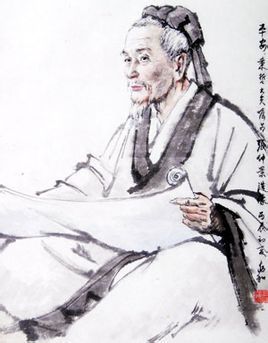
Zhang Zhongjing (a physician of the late Eastern Han) said: When a person's yin and yang, qi and blood are balanced and there is no illness or trouble, one need only take care in daily life and regulate one's diet; there is no need to take medicines.
Because of the natures, flavors, and meridian affinities of medicines, every medicine is one-sided in what it treats. Once medicine is taken wrongly, or for too long or in too great an amount, it may leave the organ qi out of balance, and when there is disharmony within, one is easily attacked by external evils.
Every breathing creature in nature nourishes its life with food; how can one not know which foods benefit oneself and which do not? It is only that people eat them every day, take them for granted, and are unaware of it, just as water and fire are close at hand yet hard to understand. I lament people's vagueness and carelessness, so in my spare time I have spent some ink writing on the benefits and harms of the five flavors, calling it the chapter “Treatment Through Food,” in the hope of enlightening the young and awakening the ignorant. If people consult it with a little care in daily life, it will surely work as surely as a shadow follows a form and an echo answers a sound.
The Records of Wei Xun of Hedong records that Bian Que (a physician of the Warring States period) said: What a person's life depends on is his own body; what throws the body's qi and blood out of harmony is illness; what regulates yin and yang, transforms poisons, and dispels vexation is medicine; what rescues from danger and saves life is the physician. The foundation of a secure life must be the nourishment of food, and the swift relief of suffering must rely on the power of medicine. One who does not know how food benefits people cannot keep life going; one who does not understand the taboos of medicines cannot achieve the aim of dispelling illness. Food and medicine, life and illness—these two matters must be understood by human beings, who are endowed with a living spirit; to neglect them and not learn them is truly a lifelong regret!
So it is said that those who are good at eating and drinking can expel evil qi and settle the organs, delight the spirit and refresh the will, and help the blood and qi flourish. One who can use food to balance yin and yang, dissolve chronic illness, relieve depression and release the emotions, and send illness away can be called a “good physician.” Those who over many years take food by extraordinary methods may be said to have brought the art of nurturing life to its height.
Every physician must first thoroughly understand the source from which the illness arises, know what the patient has violated, how the cause of illness came about, and why the illness was contracted. Then he should first treat it with food; if dietary therapy does not cure it, only then should he have the patient take medicine.
Most medicines are fierce by nature, like commanding troops in battle. The ferocity, violence, and cruelty of war can well be imagined; how could one be allowed to order the armies about at will? Deploying troops recklessly does immeasurable damage to the state; prescribing medicines at random brings disaster on the body and endless harm.
Wang Xi (a physician of the Wei and Jin) said: Do not have too many dishes at a meal. With too many flavors, some may clash; if they clash, they harm the body. Even if at the time one does not notice any distress caused by the food, over days and months, years and years, it will leave trouble behind.
Wang Xi also said: Delicacies and fine dishes, fish and rich, greasy foods should be eaten very sparingly. Fruits that benefit people may be eaten more.
In everyday eating and drinking one should always be moderate and frugal. If one craves many flavors, eats too much and too fully, and after the meal feels the stomach and abdomen full and bloated, the stomach and intestines become blocked, the breath short, the turbid qi rises counter and can hardly descend, and one may suddenly bring on an acute illness—or be made to vomit, have diarrhea, and fall into a daze, which becomes cholera.
Also, from the Summer Solstice until the Autumn Equinox one must be careful about eating rich, greasy foods, meat pies, butter, and the like. Both in theory and in the experience of eating, these foods clash severely with wine, drinks, melons, and fruits.
The reason the human body has so many illnesses is that in spring and summer people take too much food, drink, and cold things, without moderation. Moreover, raw sliced fish and all kinds of rank, raw, and cold things mostly harm people; to give them up altogether is best of all.
Cheese, yogurt, butter, and the like, eaten regularly in suitable amounts, make the sinews and bones strong and powerful and the skin moist. But if one suddenly eats too much of them at one time, they may cause fullness in the chest and abdomen, a swollen head, and even diarrhea and dysentery—though these will gradually heal of themselves.